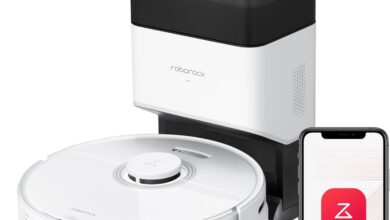
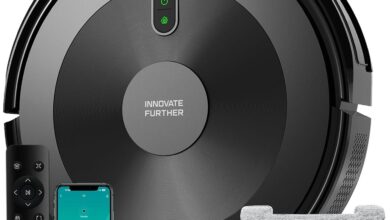
A low, steady hum announces it before you really notice the white disc skimming across the kitchen tiles. Lift it and the weight feels well balanced in your palm; the plastic top is cool and subtly grained, the rubber bumper gives a little under your finger. This is the eufy X10 Pro Omni, and in the room it reads as a compact, deliberate object rather than a flashy gadget. Up close you watch the mop pads rotate with a soft swish and the brushes skim crumbs at the edges, while the charging station sits quietly with a faint warm-air whisper as it dries the pads. Your first impression is mostly of presence — how it occupies the floor, the modest sound it makes, and those small tactile details that reveal how it was put together.
A day with the eufy X10 pro Omni in your living room
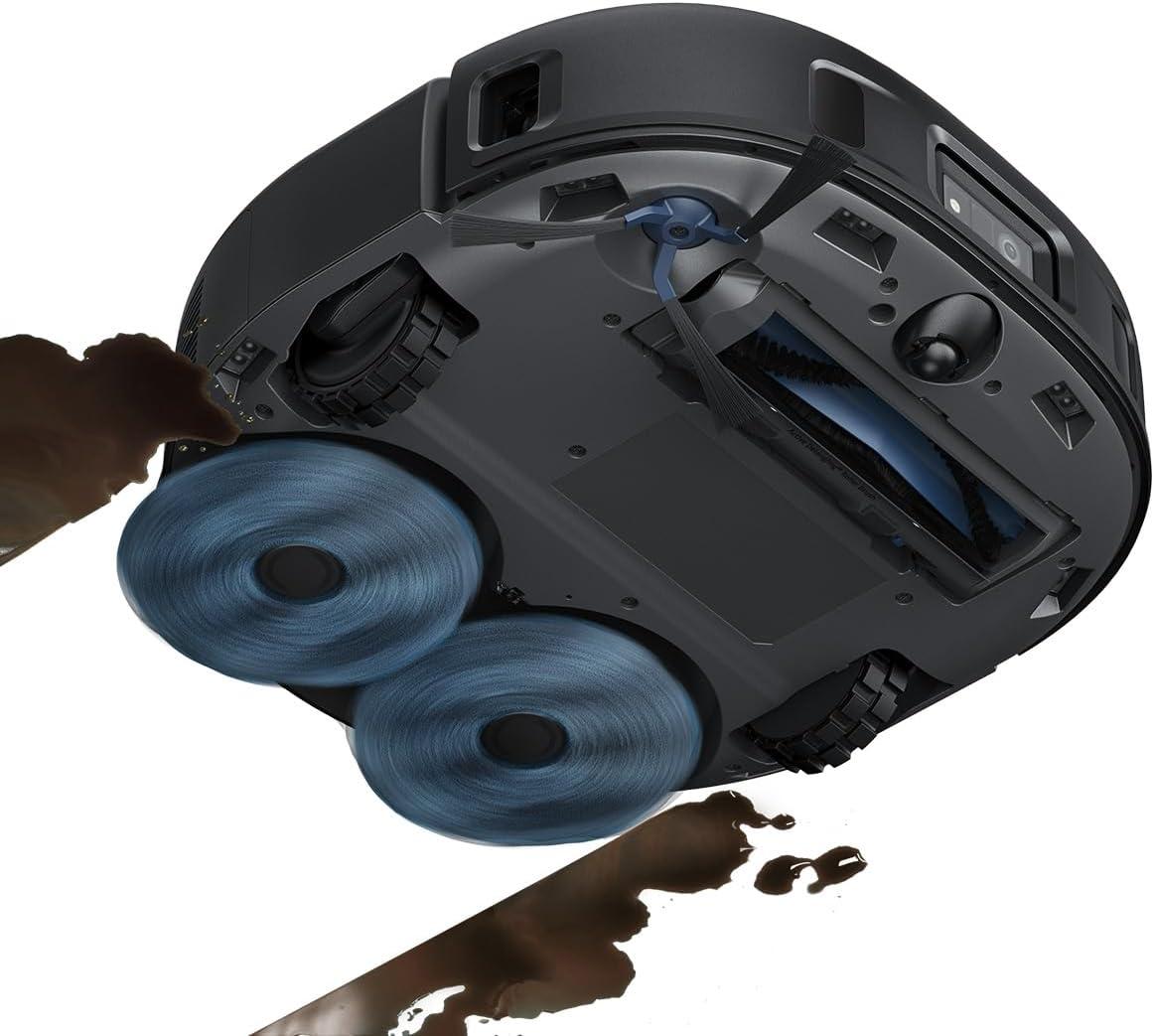
You start the day by tapping the cleaning command and the robot slides away from its station like a small, purposeful presence in the room. It charts a path around the sofa, threads under the low coffee table and pauses at the base of the TV stand before angling out into open floor. When it reaches the area rug you notice the mopped sections stay visibly drier along the edges — there’s a subtle change in motion as it negotiates the transition and it rarely leaves a wet trail across soft surfaces. Noise tends to be present but not intrusive; conversations or the TV remain intelligible,tho the device’s motors become more obvious when it accelerates past thicker debris.Now and than it hesitates at a cluster of toys or a tangle of cables and takes a slightly wider arc rather than forcing through, which means you sometimes find the remote on the armchair nudged a small distance after a pass.
Over the course of the afternoon you glance at the live map on your phone and see a tidy sweep across the seating area, a cropped outline where the rug sits and a few tight turns around legs and plant pots. Small day-to-day interactions become routine:
- Speedy clearance: you pick up a toy or two before a scheduled run and it rewards that by finishing faster;
- Pet curiosity: the cat watches from the windowsill and the dog sniffs once, then gives the robot space;
- After a heavy hair day: you notice the bin fills up sooner and you deal with it as part of the day’s tidying.
The unit finds its way back to the station when activity ends and sits flat against the wall until the next cycle, a familiar object in the room’s daily rhythm rather than an occasional interruption.
First moments in your hands: size, material feel and the little details you notice
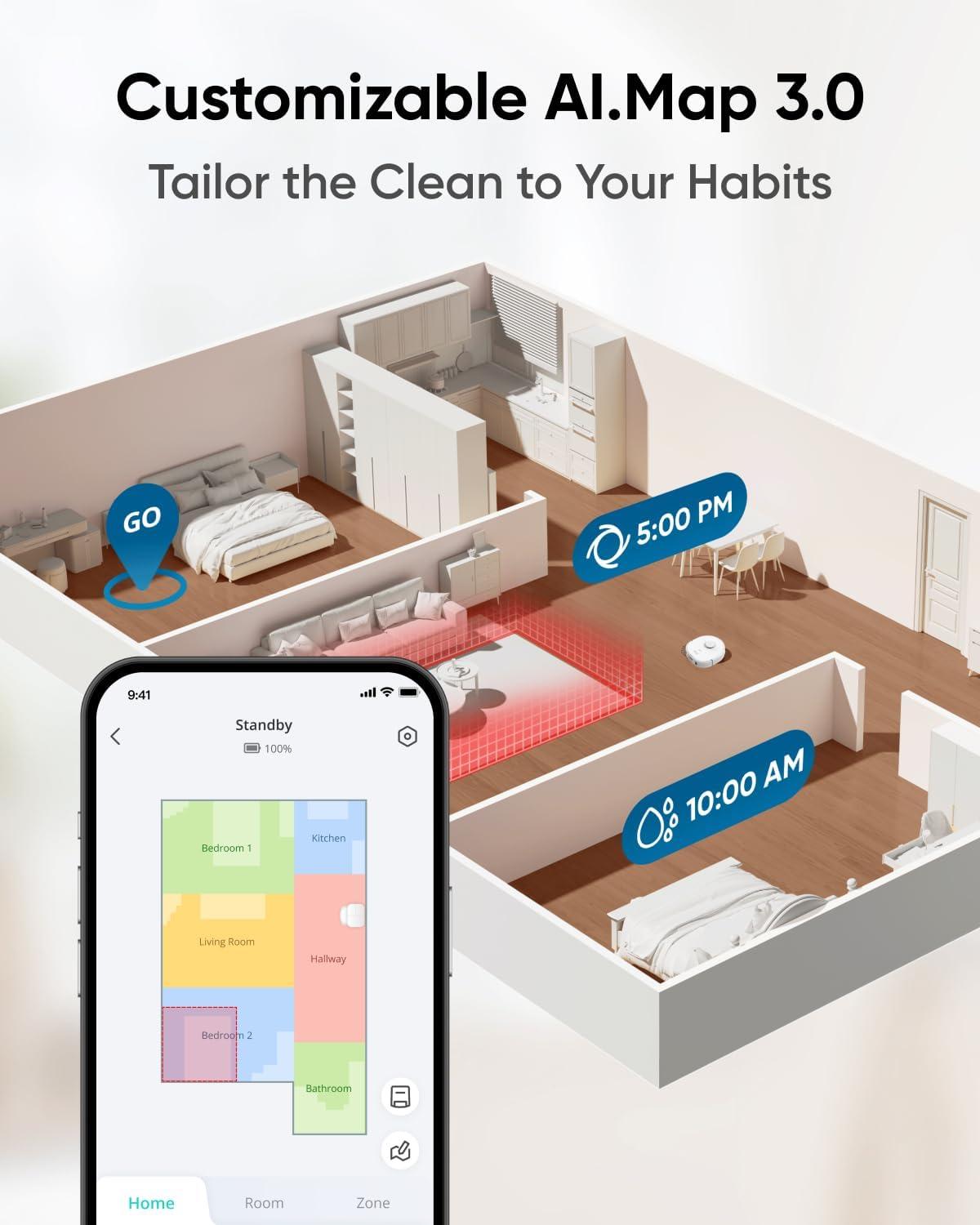
When you first pick it up, the robot reads as compact and intentionally low-profile — not so light that it feels insubstantial, but light enough to lift with one hand from the box or the station. The shell is mostly a smooth, matte plastic that tends to disguise fingerprints; a narrow, glossier band around the upper edge catches the light and makes the top look a touch more refined. Your fingers notice the shallow carry recess more than a dedicated handle; it’s enough to move the unit between rooms, though you find yourself pausing to shift your grip on narrow thresholds. Buttons and sensor housings sit flush rather than protruding, so the silhouette feels uninterrupted when you cradle it in your palms.
Turning it over or peeking under the skirt reveals a few small, practical details you weren’t expecting to catalog: the wheels have a rubbery texture that suggests traction, the brush well is accessible without much fumbling, and the mop pads have a compact, slightly dense nap that feels like standard microfiber to the touch. Latches and seams click with a concise, not-tingy sound when you open covers, and the bumper has a soft, slightly yielding edge rather than a hard impact point. You’ll notice small scuffs hide well on the matte areas but show up on the glossy trim,and handling tends to include a couple of habitual adjustments — a tilt here,a reposition there — as you move it from the station to a cleaning spot.
Where it sits in your home and how its footprint behaves around couches and shelves
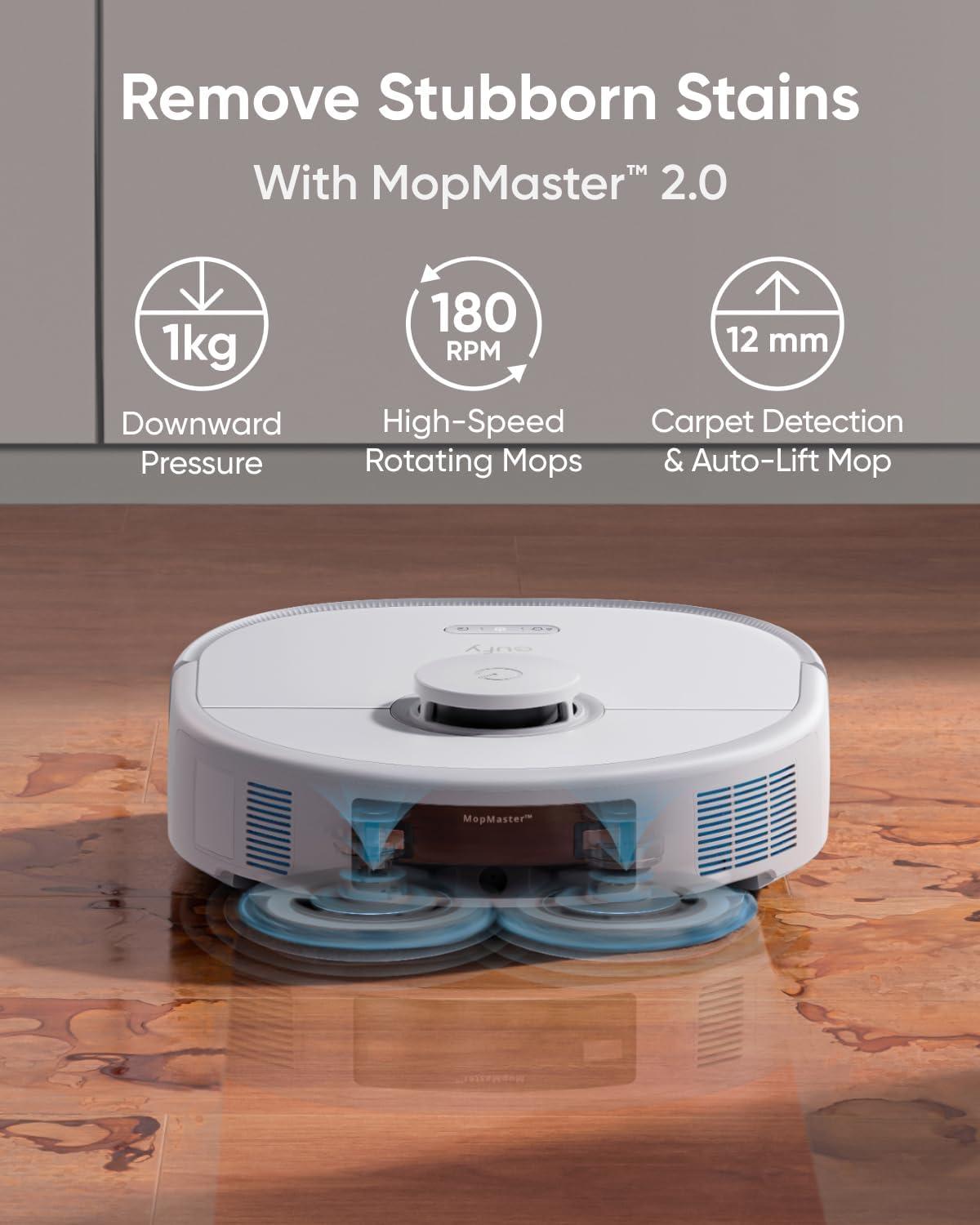
When you pick a spot for the station it tends to live against a wall or along a low console where there’s a fairly straight approach path. In daily use you’ll notice it prefers a few inches of clear space to each side so it can line up and dock cleanly; in practise that means shifting a plant pot or angling a runner rug every so often. Left idle, it sits low and compact, not drawing much attention, but you’ll still find yourself nudging nearby cables behind a shelf or moving a stack of magazines off the floor when you want the area to feel tidier for its next run.
Around couches and shelving the robot’s footprint shows up as a combination of cautious probing and tight turning. It will inch along sofa edges and pause at legs, circling to reach lint caught near the base rather than driving straight through tight gaps; if the clearance under the couch is only a small amount it will hesitate at the threshold and often only clean the perimeter. Shelves with overhangs or exposed crossbars change its route: it will either pass beneath if there’s enough height or redirect and trace the outer edge, sometimes backing out to re-attempt a different angle. This behavior means you sometimes find yourself moving a footstool or sliding a low tray to allow a smoother sweep, and occasional quick tidying (picking up a stray toy, loosening a cable) becomes part of the usual rhythm.
- Open approach space: a few inches each side helps the station align.
- Under-couch access: shallow clearances usually limit it to perimeter passes.
- Shelf/overhang behavior: either passes beneath or skirts the outer edge depending on height.
| Furniture feature | Observed footprint behavior |
|---|---|
| Couch with low clearance | Perimeter cleaning; hesitant entry; often circles before backing out |
| Shelves with exposed legs | Weaves between legs or traces outer edge if tight |
| open floor near TV console | Straight docking runs when side clearance is maintained |
What your cleaning routine actually looks like — docking,starting cycles and swapping the washable mop cloths
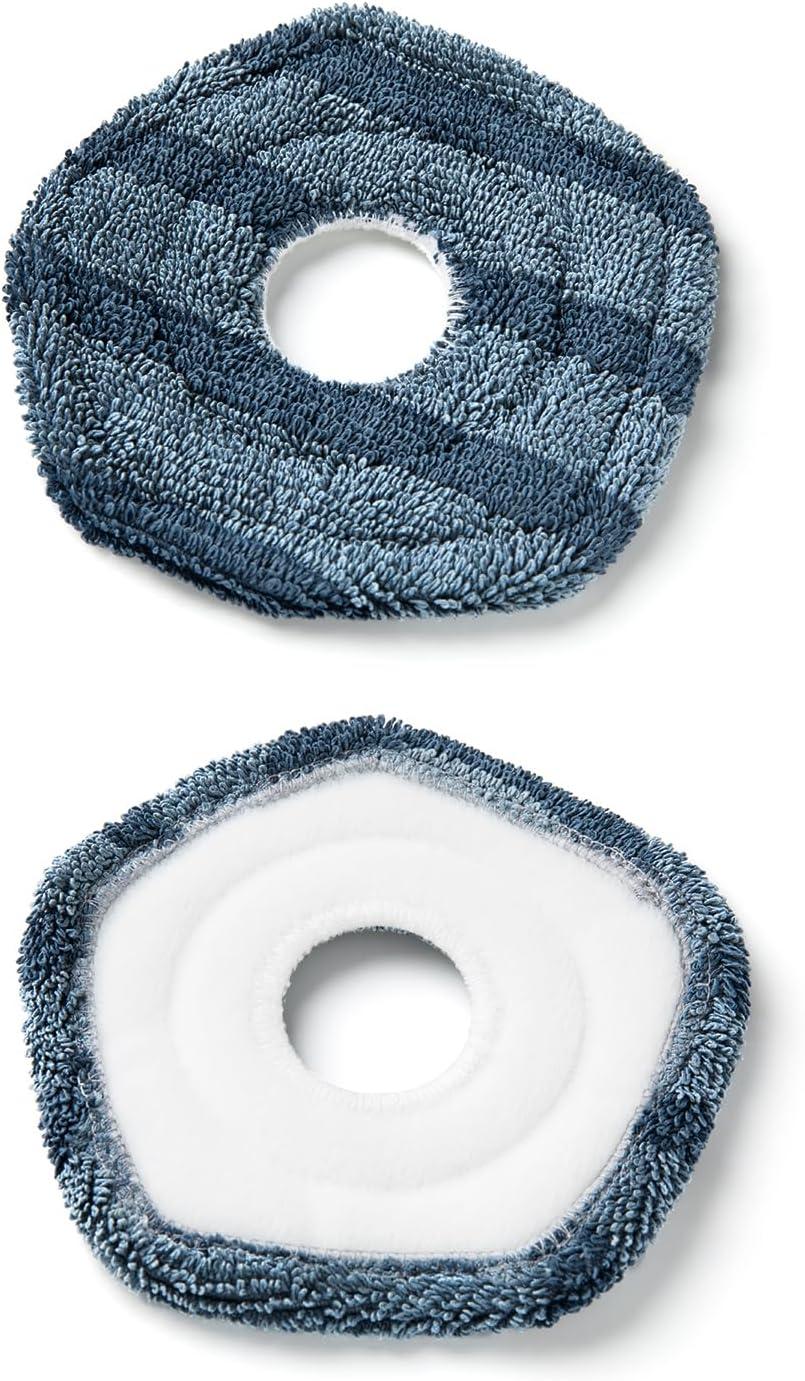
Docking and starting cycles — when you set the dock against a wall and leave it, the robot becomes part of the background rhythm of the home. You’ll normally kick a run off from the app or by tapping the top button; scheduled runs will also start themselves at the time you set,so you often only notice because the house begins to smell a bit fresher or you hear the motors winding up. During a session the robot will wander, pause at thresholds, and eventually return to the dock to recharge or end the job; the dock’s LEDs and the app notifications are the usual cues you glance at to confirm progress. Small, everyday adjustments creep in: you might shift the dock a few inches to avoid a loose rug, silence a notification when guests arrive, or manually start a quick spot cycle while cooking. Typical, visible signals that a cycle has begun or ended include a brief beep, a status change in the app, and the brush or mop pads slowing down as the machine approaches the dock.
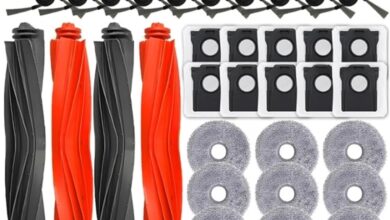
Mop cloth swapping and how it fits into your routine — swapping the washable mop cloths becomes a quick, habitual task rather than a chore. When cloths look visibly soiled, smell faintly of spills, or stop leaving streaks you take them off, give them a rinse or put them with the laundry, and rotate in a dry spare kept near the dock. The cloths usually attach and release with a simple snap or magnetic fit, so the physical action is brief; you’ll notice edges need straightening sometimes before a run so they don’t catch. In practice you end up with a small rotation system: a clean cloth on the robot, a damp one air-drying, and a laundered spare folded nearby. Signs it’s time to swap are frequently enough obvious,but here’s how households tend to space swaps:
| Typical household pattern | Observed swap cadence |
|---|---|
| Low foot traffic,no pets | Every few runs (2–3) |
| Moderate use,occasional spills | After each day’s mopping |
| Pets or heavy soiling | Daily or after particularly messy sessions |
How the X10 Pro Omni measures up to your expectations and where its limits become visible
In everyday use, the robot mostly behaves like a capable, predictable cleaner: it moves through open rooms with a steady cadence, returns to its base between tasks, and tends to follow the mapped paths rather than darting randomly. On hard floors the cleaning passes typically remove visible dust and tracked-in grit in a single cycle,while carpets see a more deliberate traversal that lingers over soiled patches. There are moments when small, low objects or loosely coiled cables make it pause and reroute, and dense fringe or very high-pile rugs can slow progress noticeably. The station’s involvement in the routine—washing and drying cloths and handling debris—becomes part of the household rhythm, with the mechanics and space the station occupies felt as an ongoing presence rather than a one-off setup step.
where limits become visible is in those everyday edge cases that surface over time: cluttered thresholds, narrow gaps beneath low furniture, and sticky or set-in spills that sometimes need an extra pass or a manual touch to fully resolve. The detangling behavior reduces hands-on trimming but does not eliminate occasional hair wraps, and mop pads can leave a faint damp band where a hard floor meets a carpet edge. Routine upkeep—emptying the dust receptacle at the station, laundering the washable pads, and occasionally nudging the base back into alignment—shows up as small, repeat actions rather than heavy maintenance. For a closer look at the product listing and full specifications,see the complete product details here: product listing.
Daily upkeep, storage and the practical rhythms of living with the robot
Living with the robot quickly becomes a set of small, habitual touches rather than a weekend project. You’ll notice certain micro-routines forming: a quick glance before you head out to pick up any loose cables or socks, a habit of draping the washed mop cloths somewhere to air-dry, and the occasional nudging of a chair leg so the robot can pass. In practice this looks like a handful of repeated, short actions that slot into your day — nothing elaborate, but regular enough that you mentally factor them into leaving the house or settling in for the evening.
- Quick daily checks: scan obvious trip hazards, confirm the dock is reachable
- Short weekly tasks: set the mop cloths with laundry, free any hair-wrapped brush areas you spot
Where you place the dock and how you store the spare cloths shape the machine’s role in the home. It often ends up near a hallway or tucked into a corner with an accessible plug, and over time you might repurpose a small shelf or basket for the extra cleaning cloths and a spare dust bag or two. App alerts and completion chimes tend to punctuate times when you’re already at home — an evening run,a mid-morning tidy — so your routines adapt around those beeps rather than the other way round. A few practical details show up again and again in daily life,captured below for quick reference.
| Placement | What you notice in practice |
|---|---|
| Dock footprint | Typically occupies a corner; becomes a small staging area for cords or keys unless consciously cleared |
| Accessory storage | Cloths and spare bags often live near the laundry or on a low shelf for easy reach between runs |
How It Settles Into Regular Use
Living with the eufy B0DG5G9HQMeufy X10 Pro Omni Robot Vacuum White + 2 Washable Vacuum Mop Cloths over several weeks turns initial curiosity into routine. It moves through rooms in quiet, sometimes tentative patterns, slipping under low furniture and brushing past rugs so that corners and floor edges begin to look lived-in rather than freshly staged. In daily rhythms it becomes a familiar background presence, something checked on between other tasks as the mop cloths soften a little and surfaces take on small, ordinary changes as it’s used. After a while it simply settles into routine.
As an Amazon Associate I earn from qualifying purchases. Amazon and the Amazon logo are trademarks of Amazon.com, Inc, or its affiliates. All images belong to Amazon