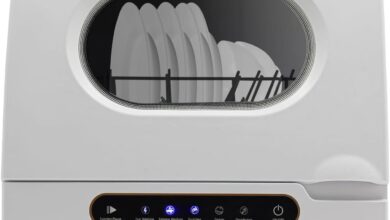
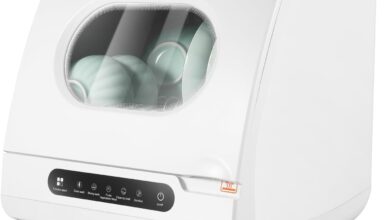
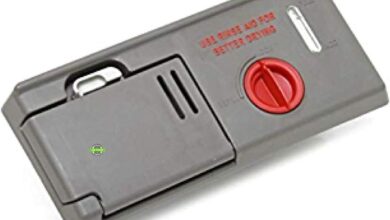
You lift it by the base and the unit has a reassuring, not-too-light heft; the sprayed white plastic feels smooth with a faint texture under your fingers. The lid opens with a soft magnetic click and the clear window catches a strip of kitchen light, showing the interior without shouting for attention. The unit, sold simply as the Portable Tabletop Dishwasher, reads as compact and deliberate — it’s proportions tidy, edges clean, and the little control display sits low-key on the front. Switch it on and a quiet, conversational hum begins; the first moments are all about fit and presence: how it looks, feels, and quietly inhabits the counter.
A day in your kitchen with this compact tabletop dishwasher
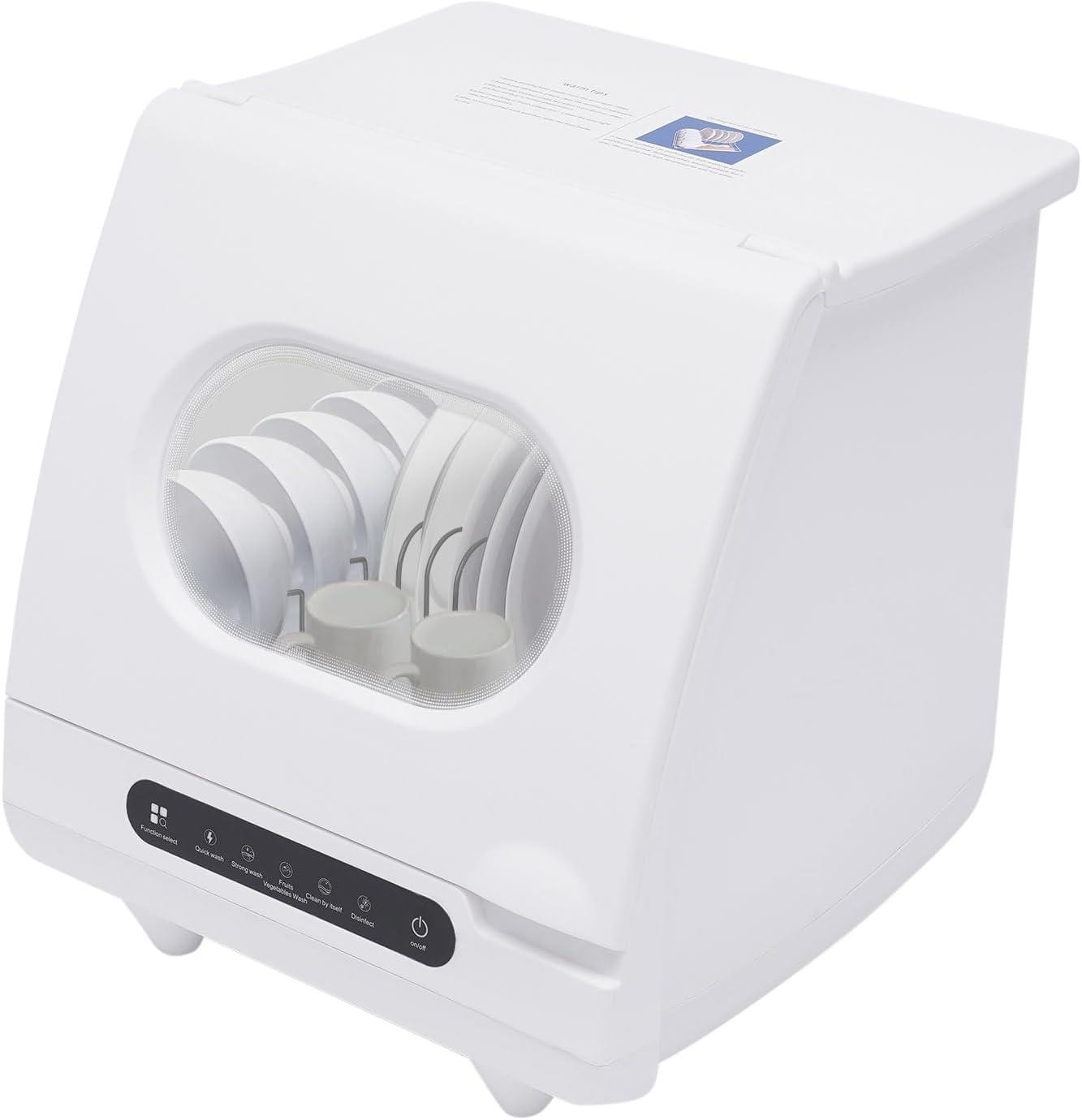
You start the day by sliding the unit into its corner on the counter and dropping in the breakfast bowls and mugs as you clear the table. While your morning routine continues — coffee, checking messages, clearing crumbs — the machine fills and begins a cycle; through the clear window you can see the spray and hear a steady, conversational hum rather than a loud motor. Small habits settle in quickly:
- Scrape and stack: you knock off big scraps and nest plates so they sit neatly inside.
- Run fast loads: a short program takes care of a few items while you make lunch.
- Use the view: glancing through the window tells you when a mid-cycle soak is happening.
These little rhythms make the appliance feel like another morning task rather than an interruption.
By evening the rhythm shifts to larger loads and a couple of adjustments — heavier wash selection for pans, a fruit-and-veg cycle before dinner prep, or a disinfect sequence you might start after bedtime. You leave plates inside to air off and, now and then, tap out the removable strainer or run a quick wipe around the door seal as part of putting the kitchen to rights; those small maintenance moments fit into the cleanup routine rather than becoming a separate chore. The machine’s presence alters how you pace washing across the day: some items go in promptly, some wait for a fuller load, and once in a while you find yourself rearranging a basket or two to make everything fit before a cycle begins.
What the exterior feels like: size, weight and materials under your hand
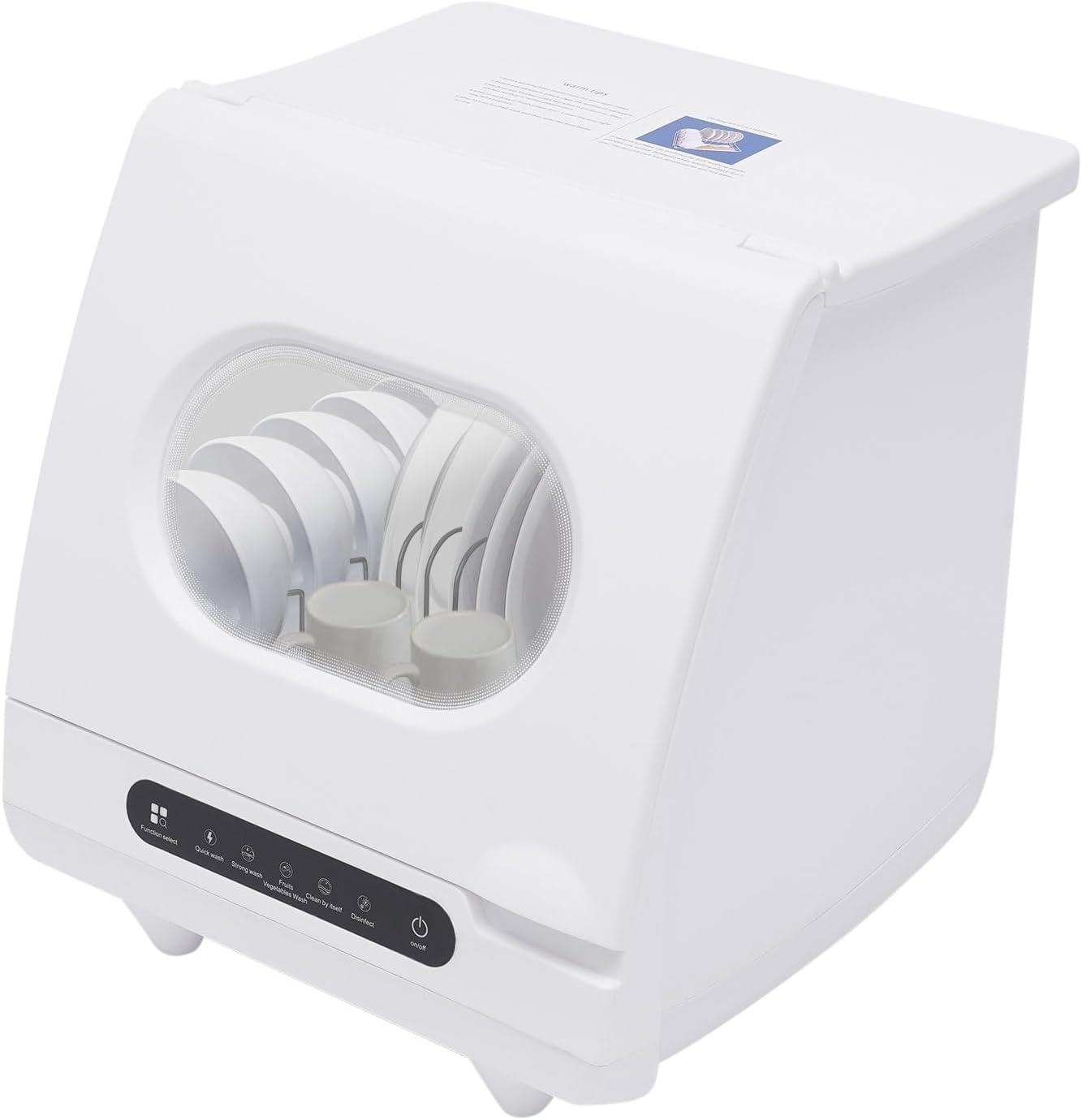
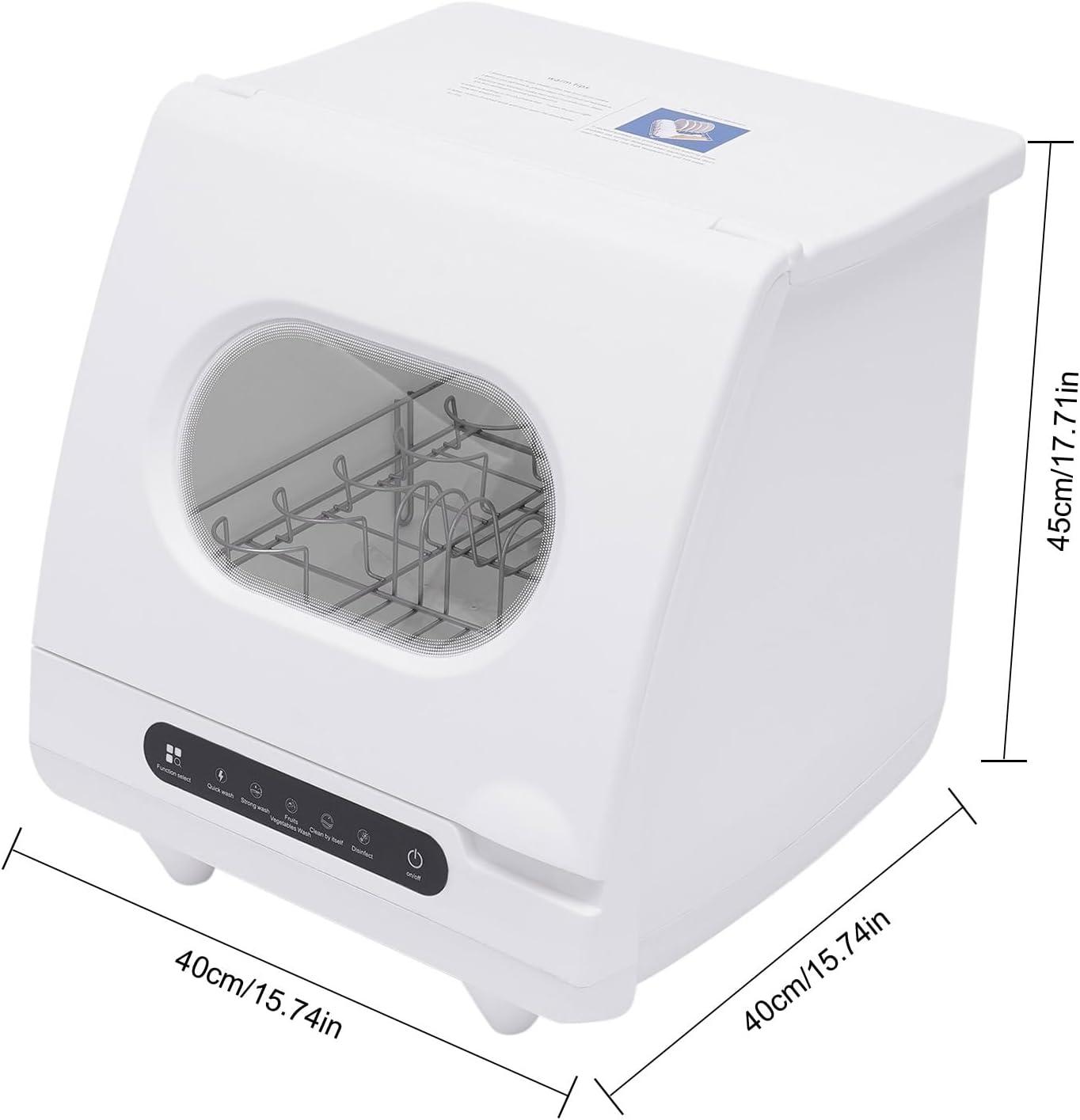
When you place the unit on the counter it reads as compact and boxy rather than streamlined; it sits more like a deep bread box than a small oven, so you notice its footprint right away and arrange things around it. At roughly 40 × 40 × 45 cm in profile, it feels substantial on a crowded surface but not unwieldy — most routine movements involve sliding or nudging rather than full lifts. The net mass is light enough that you can reposition it with two hands, though you tend to brace under the base rather than lift from the lid. The lid hinge and front edge give you a clear point to hold when opening, and the rubberized feet keep the unit steady if you press or pivot it on the counter; there’s little lateral wobble when you load or remove items.
The exterior finish is molded PP/ABS with a sprayed coat that feels slightly matte and fine-textured under your palm; it isn’t slick, and it takes fingerprints and dust in ways you notice during everyday upkeep. The clear viewing panel is smooth and cool to the touch, contrasting with the softer painted shell, and the control buttons are low-profile with a light tactile response when pressed. Hose connections and the removable strainer are made from firmer plastics that click into place with moderate resistance — you feel a tactile “give” rather than a fragile snap.Small seams where panels meet are visible and sometimes catch a fingernail, while the magnetic seal at the door edge feels snug when the door closes. For quick reference, the basic physical figures you’ll notice during handling are shown below.
| Characteristic | Contextual note |
|---|---|
| Footprint | About 40 × 40 × 45 cm — sits like a compact countertop unit |
| Net weight | Approximately 7.5 kg — typically moved with two hands or slid into place |
Where it settles on your counter and how much room it actually takes
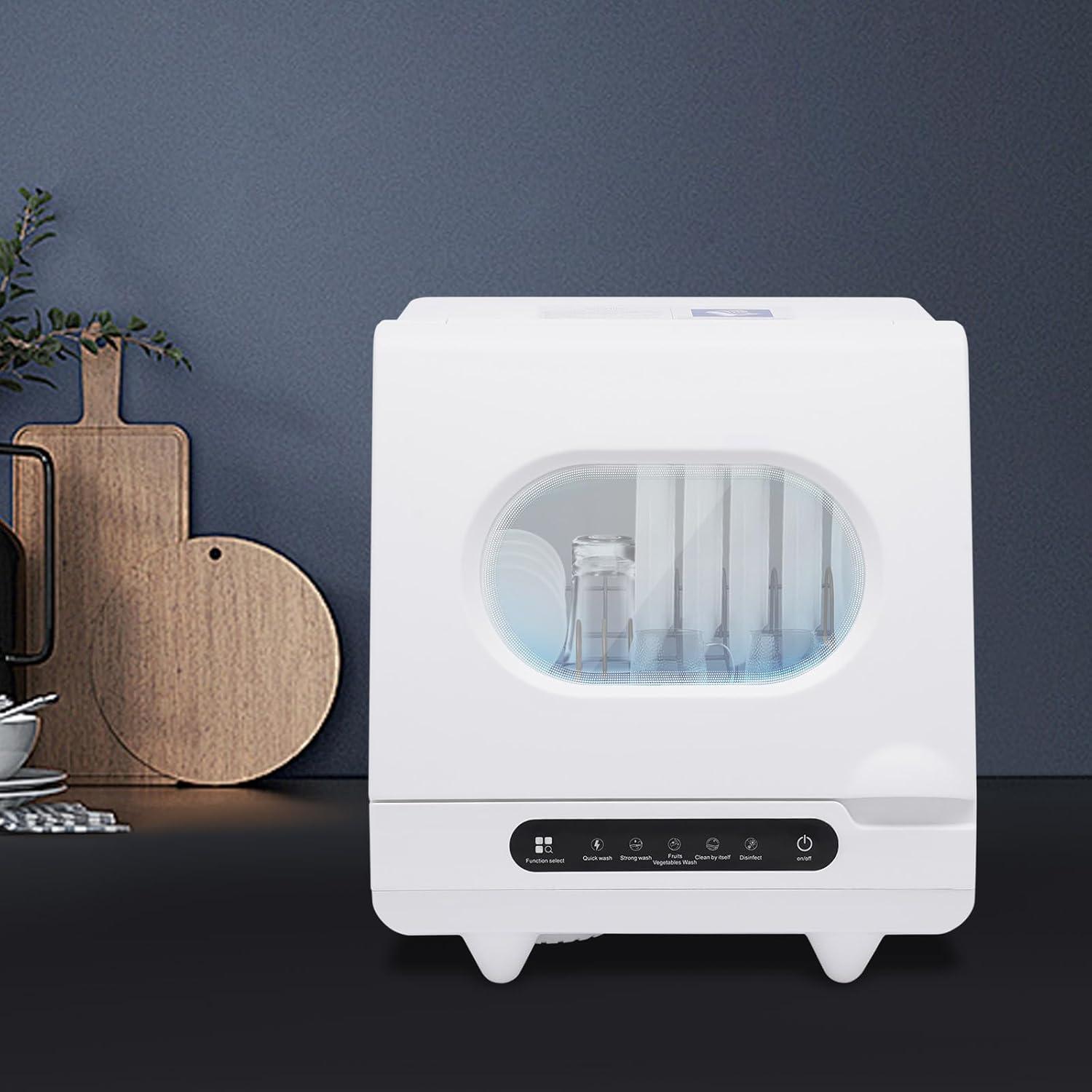
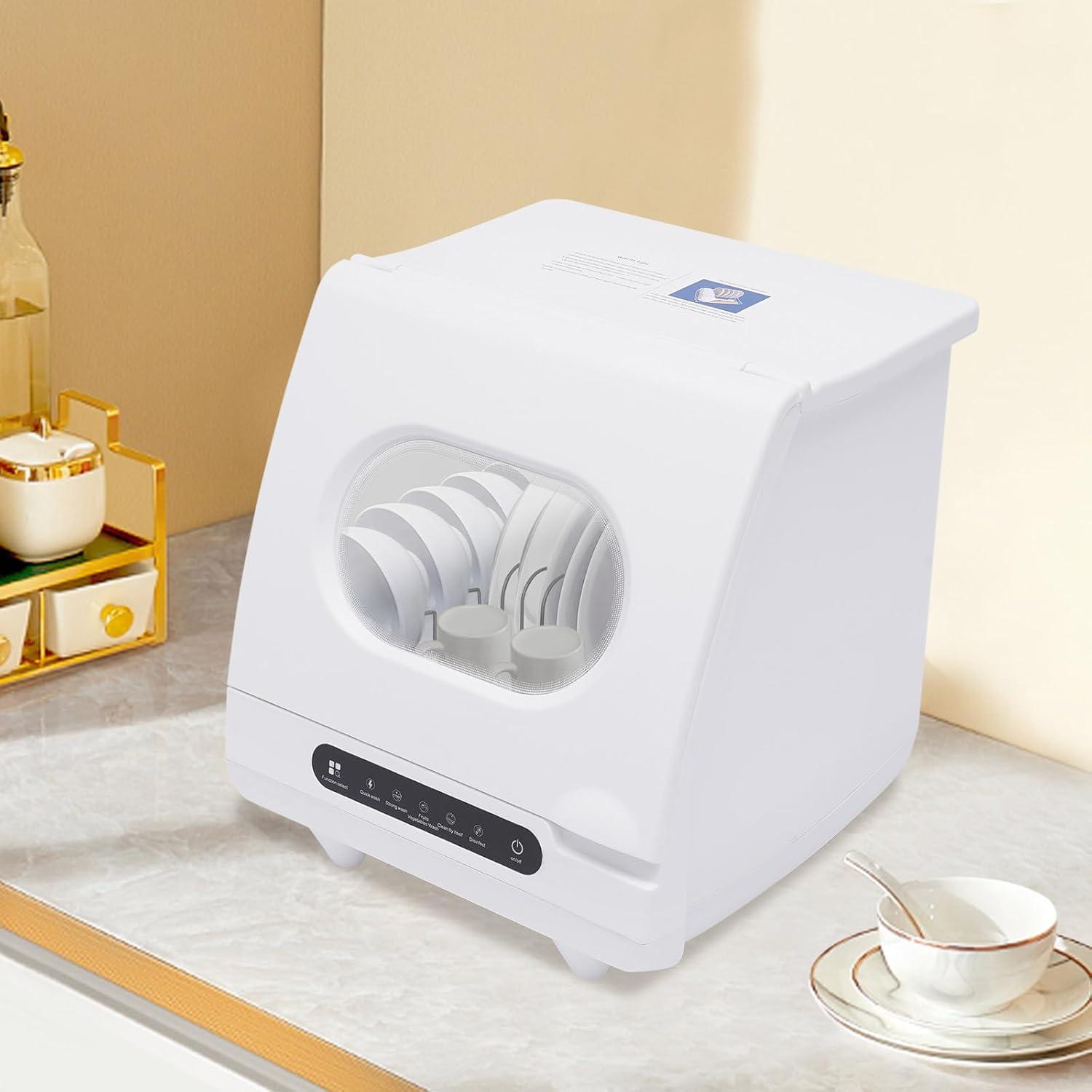
When you set it down on your counter it feels like another small appliance rather than something that takes over the kitchen. Visually it occupies a squat, nearly square footprint that sits comfortably on a stretch of counter beside the sink or in a corner; in everyday use you’ll notice the front stays accessible for loading and the top can be used as temporary staging for a dish or two. Because the inlet and drain hoses come out the back, the appliance tends to sit with a little gap behind it — enough that you’ll wipe the counter there now and then — and the surrounding space is where you’ll notice whether the unit feels tucked in or just placed on top of everything else. A few routine observations:
- Front clearance: you’ll leave room to open the lid and reach in without having to shuffle other items.
- Rear gap: a small space behind the unit is practical for the hoses and occasional wiping.
- Side room: it can sit tight against a wall but frequently enough feels less cramped with a hand’s width on one side.
In practise you’ll find it fits into most short stretches of counter that you’d normally reserve for a toaster oven or coffee maker, and it rarely forces you to clear an entire countertop to make space.If you like to keep a cutting board or small appliance next to it, you’ll probably shift things around a little when you want to use both at once; for some households that’s an everyday shuffle, for others it’s an occasional adjustment. The table below gives a quick sense of typical placement situations and what they mean for the immediate area around the unit.
| Typical spot | Practical note |
|---|---|
| Beside the sink | Short hose runs, easy loading; you’ll still leave a little rear space for connections. |
| Corner of counter | Feels tucked away but you may need to reach around when opening the lid. |
| Shared appliance strip | Works alongside other gadgets but can mean occasional rearranging during use. |
How you use the controls: the display, the three to five wash programs and the hum of a twelve hundred watt motor
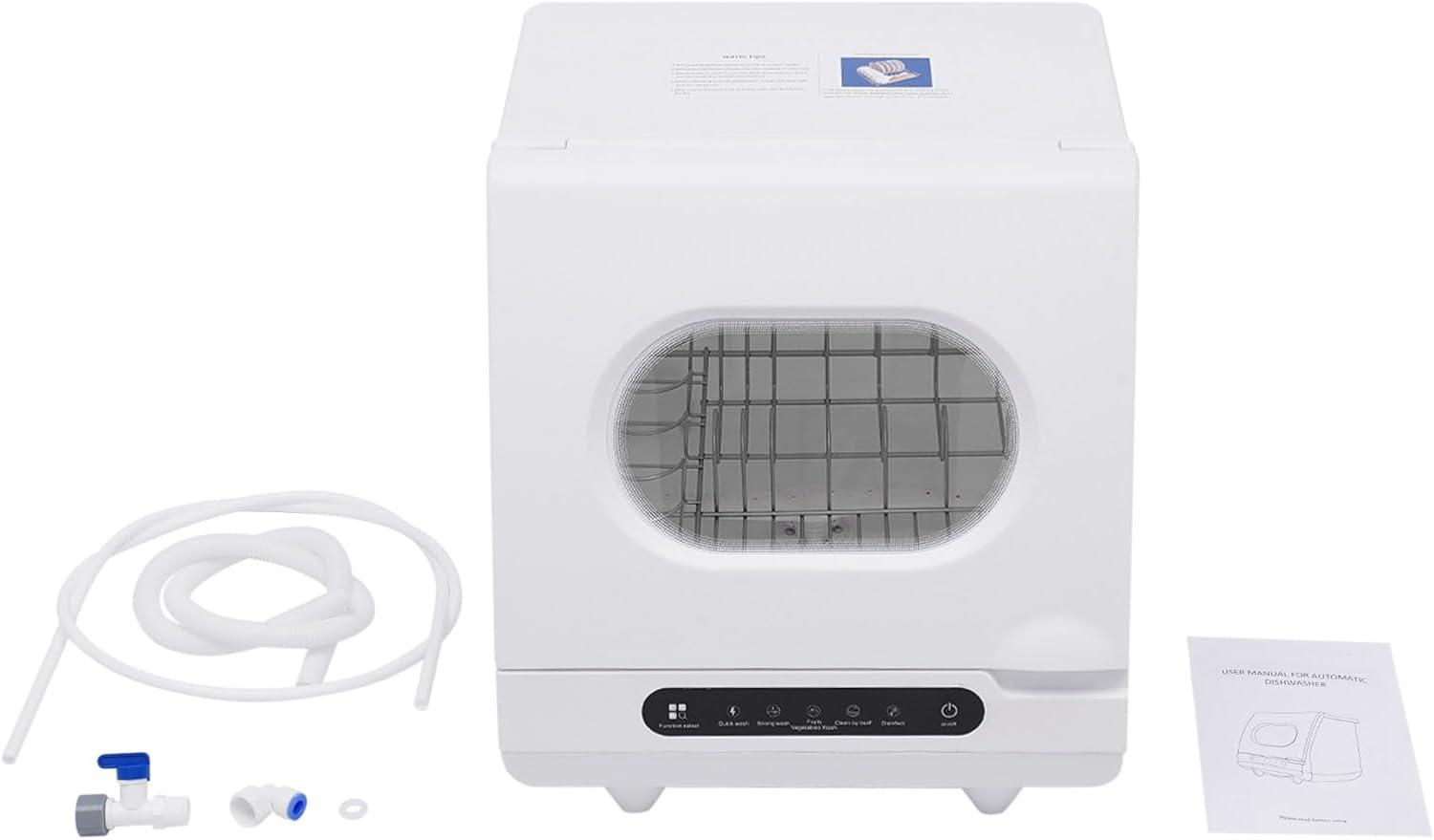
You interact with the control panel as a short, deliberate ritual: press the power button, watch the small display light up, and cycle through program icons until the one you want is highlighted. The screen doesn’t try to do too much — it shows the selected program and a simple progress indication — so you find yourself checking it a few times during a run to confirm the stage. The tactile feedback is straightforward; buttons respond with a quiet click or an LED change rather than a long beep, and you can usually tell whether a press registered without fumbling. In everyday use you develop a few habits: tap the program button twice if you think you misselected, pause briefly before hitting start if you’re loading a last plate, and wipe the panel now and then so fingerprints don’t obscure the icons.
- Program — cycles through the wash modes and is the one you use most often.
- Start/Pause — begins a cycle or stops it mid-run so you can add or remove an item briefly.
- Display/Indicators — shows remaining time and simple status lights rather than dense readouts.
When the cycle begins the twelve hundred watt motor announces itself with a steady hum that you quickly learn to read. The hum has character: on lighter cycles it’s a softer, higher-pitched whine; on the stronger program it becomes fuller and more constant. You can feel a slight vibration through the countertop at times, but it rarely forces you to move the unit — instead you notice it as part of the background noise of the kitchen. Over a few uses you come to associate certain sounds with stages of the wash (short bursts, a steady wash tone, then a quieter winding down), so a quick listen can tell you roughly where a load is without checking the display. Routine interaction around this sound includes small adjustments — nudging the unit for stability or glancing at the screen during the louder portions — rather than any formal maintenance rituals.
How it lines up with your expectations, where it meets limits and what it changes about your kitchen habits
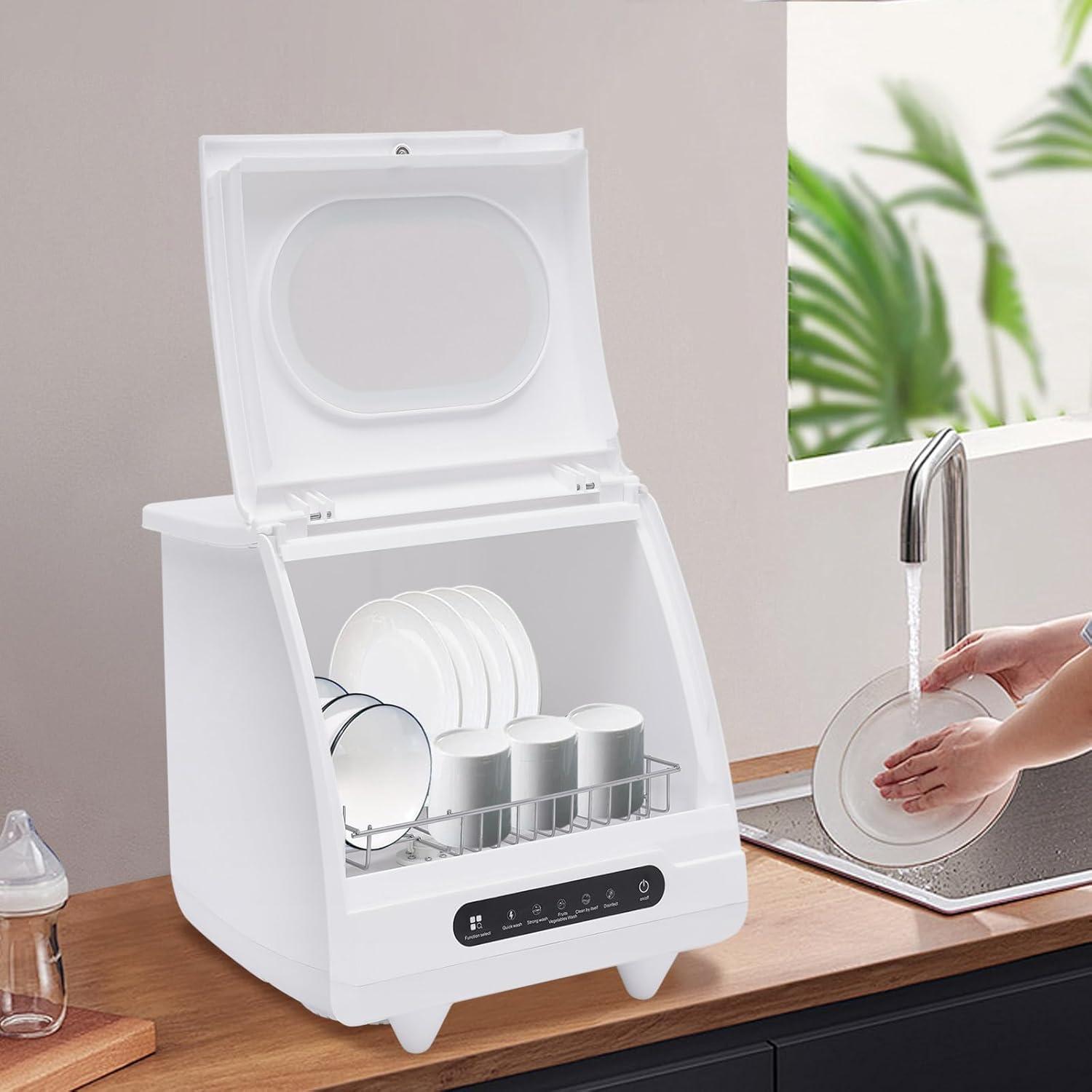
Expectations met and observed limits: In regular use the unit often shortens the time spent actively scrubbing and rinsing, and the visible cycle progress helps keep dishwashing from becoming an open-ended chore.It tends to handle routine plates, bowls and glasses predictably; heavily soiled pans or oddly shaped items, however, regularly require pre-soaking or a follow-up wash. Several practical constraints become apparent during day-to-day interactions:
- loading geometry can feel fussy when trying to fit larger cookware;
- some heavily crusted residues may need an extra pass rather than a single cycle;
- the top-to-bottom arrangement means rearranging habits for certain utensils.
These are not abstract flaws but habitual trade-offs that appear as the appliance is integrated into a cooking rhythm.
What changes about kitchen habits: The presence of a compact washer reshapes when and how weekly cleanup happens — chores are more frequently enough batched, and users tend to delay a run until a fuller load accumulates. The routine gains small rituals: a quick visual check through the door before starting, an occasional wipe of the drain area, and a habit of moving delicate items out before a cycle. Noise and cycle cadence influence timing choices too; runs are sometimes scheduled around quieter periods or started while doing other tasks in the home. For those tracking upkeep, the machine becomes an ordinary part of the countertop routine rather than an occasional convenience. See full specifications and listing details
Storing and maintaining the unit between uses and what the interior racks look like up close
When the unit is not running you’ll usually treat it like another small appliance on the counter: tucked to one side, sometimes slid under an overhang, or, for short breaks, left in place with the door slightly ajar so the interior air can dry. Your routine interactions with it tend to be quick — a casual wipe of the exterior and the magnetic seal after a cycle,a quick shake-out of the removable basket,and the inlet and drain hoses coiled loosely behind or beside the machine when it’s out of the way. The most visible maintenance actions you notice during normal use are attention to the filter/strainer, the door seal, and any standing water around the base; these points get tended to as part of everyday loading and unloading rather than as formal maintenance sessions. For some households the unit is moved in and out of a cabinet between meals, wich changes how you store the hoses and whether you leave the lid closed or propped open to air out between uses.
- Filter/strainer — often lifted out and checked after heavier loads
- Door seal — an area you’ll notice holding moisture if left closed
- Hoses — usually coiled and tucked during non-use
Up close, the interior racks look like molded plastic panels rather than separate metal wire tiers: the lower tray has shallow, evenly spaced slots for plates and a set of small fixed pegs for bowls and cups, while a compact cutlery area sits to one side as a perforated basket rather than a full upright tote. The finish inside feels like the same sprayed, slightly textured plastic you see on the exterior — matte, white, and easy to visually inspect for residue; seams and corners reveal small drainage channels and a removable strainer at the base that collects larger particles. You’ll also notice integrated rails and modest clearances that make fitting odd-shaped items occasionally fussy — there are no folding chrome stems or tall-tine metal racks to bend, so adjustments tend to be about repositioning pieces rather than reconfiguring hardware.
| Component | Visible detail |
|---|---|
| Lower rack | molded plastic with plate slots and fixed pegs |
| Cutlery area | Small perforated basket integrated to one side |
| Base/strainer | Removable mesh-like strainer that collects solids |
How It Settles Into Regular Use
Over time the Portable tabletop dishwasher becomes simply another presence on the countertop,its hum and occasional cycle woven into the apartment’s daily rhythm. plates and cutlery are loaded in habitual ways, and small water spots or faint scuffs mark its surfaces as it’s used. It subtly alters habits around the sink and counter, visible in the pauses and repetitions of regular household rhythms. after a while it settles into routine.
As an Amazon Associate I earn from qualifying purchases. Amazon and the Amazon logo are trademarks of Amazon.com, Inc, or its affiliates. All images belong to Amazon