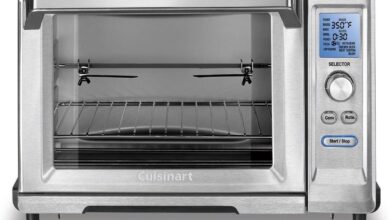
You open the door and the rack eases out with a low, mechanical clunk that makes the whole unit feel deliberately built.The NUWAVE Bravo XL Air Fryer Convection Toaster Oven Countertop — call it the Bravo — sits with a tidy visual balance: brushed stainless steel that catches light without shouting, a weight that’s noticeable when you shift it, and rounded edges that feel cool under your palm. As you fiddle with the controls the knobs click with a firm, slightly damped resistance, the interior lamp floods the cavity with a clear, clinical light, and the removable tray slides back with a faint scrape. Preheating brings a whisper of fan noise and the expected new-appliance scent that fades as the metal warms; close up, the door hinge and rack travel register as small, precise pieces of a heavier machine.
A day with the NUWAVE Bravo XL on your countertop — what you notice during routine use
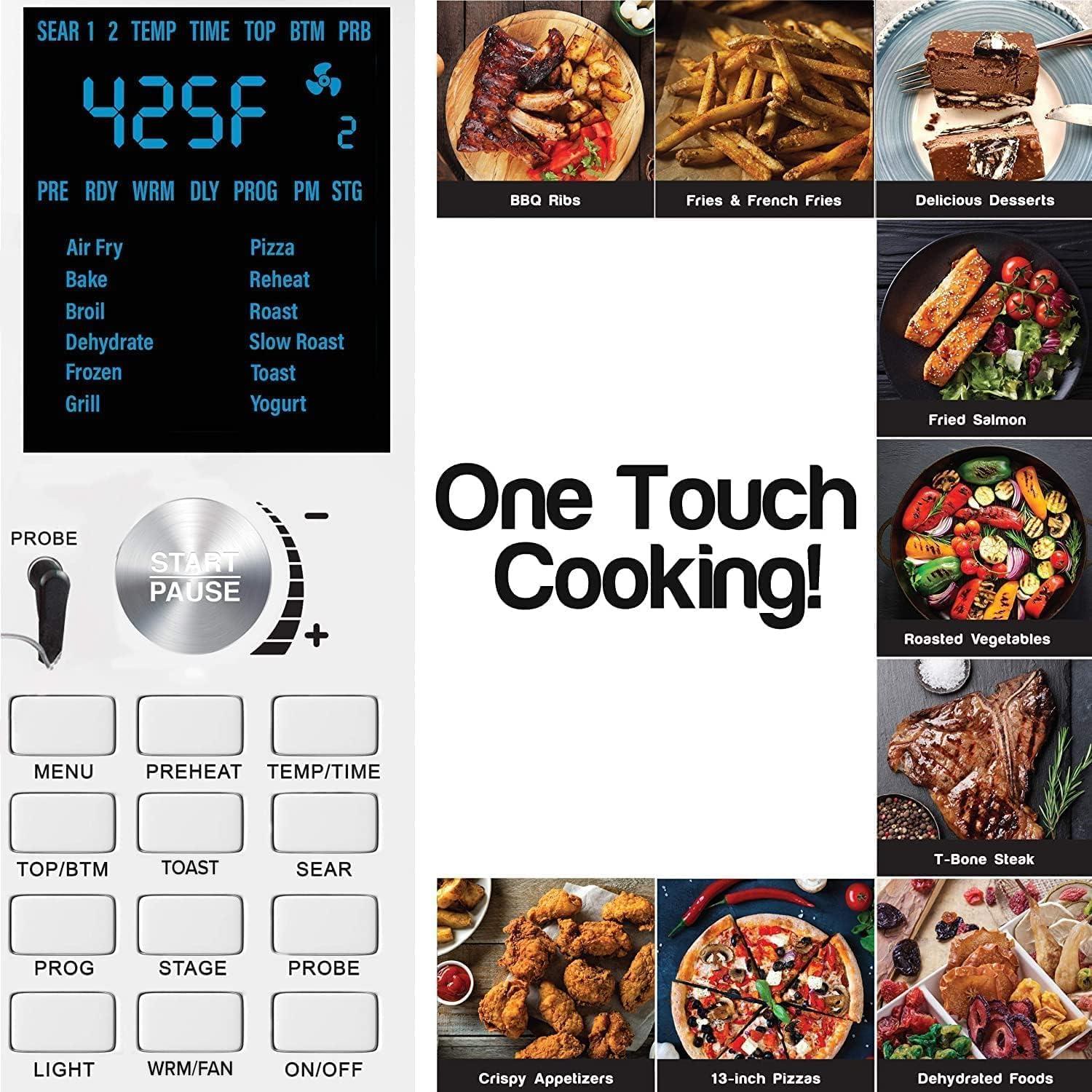
When you set it on your counter and go about the day, the oven quickly becomes part of the kitchen rhythm rather than an outsider appliance. In the morning you often find yourself popping in a slice of bread and watching the interior light as it toasts; the light and glass door make it easy to glance without opening. Midday reheats and quick bakes tend to be the most frequent interactions — you slide a tray in, tap a few controls, and walk away; the fan noise is present but generally fades into the background of conversation or a podcast. The exterior warms during use, and you automatically give it a little extra clearance from the wall when you start a longer cook. Small habits develop: you lean on the door to check progress, you reach for the probe you’ve left clipped to the side, and you nudge the rack forward to peek without fully exposing the heat.
There are a handful of recurring, practical details that show up in most days of use:
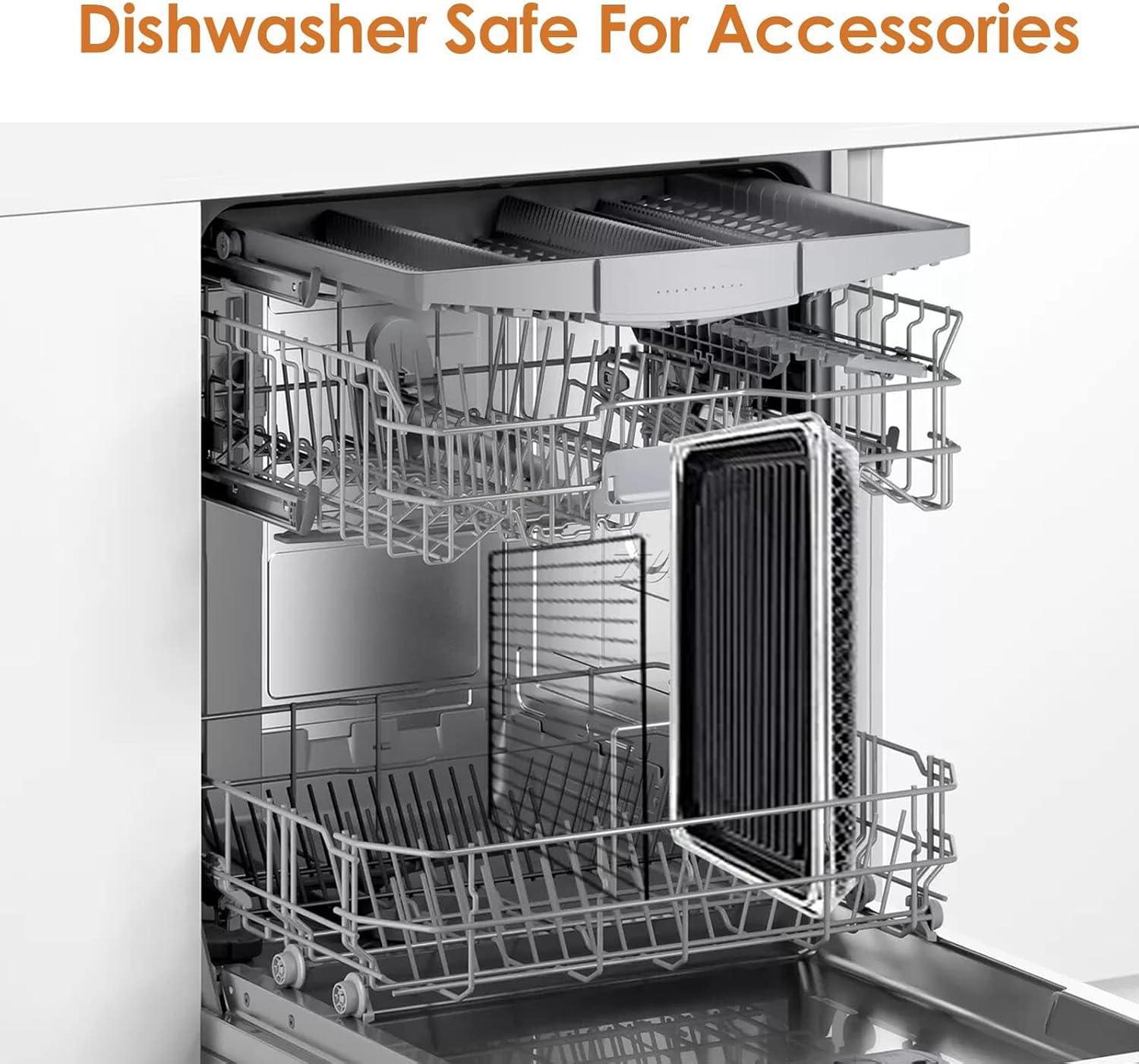
- Quick clean-up: crumbs and drips on the pull-out tray invite a wipe-down right after cooking, so the interior rarely sits grimy between uses.
- Preset pauses: selecting a program sometimes makes you pause to confirm the right button — you find a short routine helps,like preset-first,load-second.
- Accessory juggling: the grill plate and rack often live nearby because you swap them mid-week depending on whether you’re crisping, roasting, or reheating.
| When | What you notice |
|---|---|
| Breakfast | Fast cycle, visible browning through the door, habit of retrieving toast a touch earlier than the timer sounds |
| lunch | Convenient reheat without heating the whole kitchen; fan hum becomes background noise |
| Dinner | Multi-rack juggling and occasional rack nudging when checking progress |
The stainless-steel exterior, dials, and interior racks you’ll handle and see up close
Up close, the stainless-steel shell reads as utilitarian — a brushed finish that catches light and shows fingerprints more readily than a matte surface. When you run your hand along the top and sides you’ll notice the metal has a cool, solid feel at room temperature and tends to warm while the unit is operating; heat can be perceptible near the vents and around the door seam. The front controls are dominated by physical dials and knobs that sit slightly proud of the fascia; turning them gives a predictable resistance and a modest tactile click as they index between positions, and the surrounding markings are large enough to read without leaning in. Labels and markings sit next to the dials rather than on them, so glancing down to confirm a setting is straightforward during busy prep moments.
Inside, the wire racks ride on shallow, indented guides that leave a bit of play — the slots are intentionally wider than the rack edges, which means when you slide a loaded rack out to check food it can tilt or dip forward a little. The racks themselves are sturdy, composed of thicker-gauge wire that keeps its shape after repeated use; they carry grease and browned residue in predictable places, so you’ll find yourself pulling them out more frequently enough to wipe or soak. The crumb tray and baking surfaces slide in and out with a single-handed motion and sit flat when returned to their grooves, though accessories of different shapes will settle slightly differently into the same guides. In everyday use you’ll develop small habits — a quick nudge to level a pulled rack, a casual wipe across the door — that become part of how the exterior and interior feel in routine cooking.
Finding a home for it: where you’ll place it, the clearance you’ll need, and how it sits with your other appliances
When choosing a spot on your counter, think about how the unit behaves during everyday use rather than just its footprint. Place it near an outlet you can reach without stretching the cord, and leave a little breathing room behind and to the sides — enough that steam and heat can dissipate and you can slide trays in and out without bumping a backsplash or a wall. Also check the door swing and the height of nearby cabinets: the door opens forward and the handle sits at about chest level for many people,so you’ll want room in front to load pans and to pull the rack out comfortably. A few quick checks that are useful to run through while positioning it:
- Clearance: space in front for the door and room behind for ventilation
- Power access: an outlet close enough for the cord lay without tension
- Surface: a heat-resistant,stable countertop that you don’t mind wiping down
- Proximity to water: avoid placing it right beside the sink where splashes are likely
How it sits with the rest of your appliances tends to become part of your kitchen choreography. Side-by-side with a toaster or microwave, it will share counter real estate and contribute to a warmer microclimate when both are in use, so you may find yourself spacing them out or alternating use during peak cooking. If you keep it near a stove or range hood, anticipate a little extra heat and occasional steam transfer; if it’s on an island or a dedicated appliance zone, access and cleanup are generally easier. Routine interactions — pulling the crumb tray, wiping splatters from the front, and putting away accessories — happen naturally while it’s in its spot, so plan a layout that keeps those small tasks convenient without crowding other frequently used items.
Measurements and scale you’ll work with when you slide trays,fit pizza pans,or tuck it away
When you slide trays in and out you’ll notice the interior feels like working with a countertop oven rather than a shallow air fryer — there’s room to maneuver, but not unlimited wiggle.The racks sit in four stepped positions, so you tend to pick the height that keeps a broiler or griddle plate from brushing the element; for thicker pans you often angle the front up slightly as you push them in, then lower once they seat. As the side grooves are a touch wider than the rack, the tray can rock or tip forward a little when you pull it toward you, so you’ll find yourself steadying heavier pans with the other hand. In everyday use you’ll often judge clearance by sight (it feels like roughly a foot to a foot-and-a-quarter of usable depth), and you may pause to nudge a pizza pan or rotate a baking sheet so it slides past the grill bars without scraping.
Countertop scale and storage show up in routine moments: lifting it to move or tucking it under a cabinet, you notice the footprint is wider than a compact toaster and that the door swing and handle need a bit of front clearance. The removable bottom tray and grill pieces make the unit look and feel lighter when you carry it for storage, and you tend to wipe or drop the crumb tray into the sink as part of the everyday rhythm rather than a special chore. Below is a simple reference so you can picture how common pans and sheets behave in the cavity during regular use.
| Common item | How it fits in daily use |
|---|---|
| 9″ pie/tart plate | Slides in flat with room to spare |
| 12″ pizza pan (standard) | Fits, sometimes snug front-to-back; you may angle slightly when inserting |
| half-sheet pan (commercial size) | Too large to sit flat; won’t fit without switching to a smaller pan |
Where the 112-in-1 promises meet your real kitchen needs and where you’ll see limitations
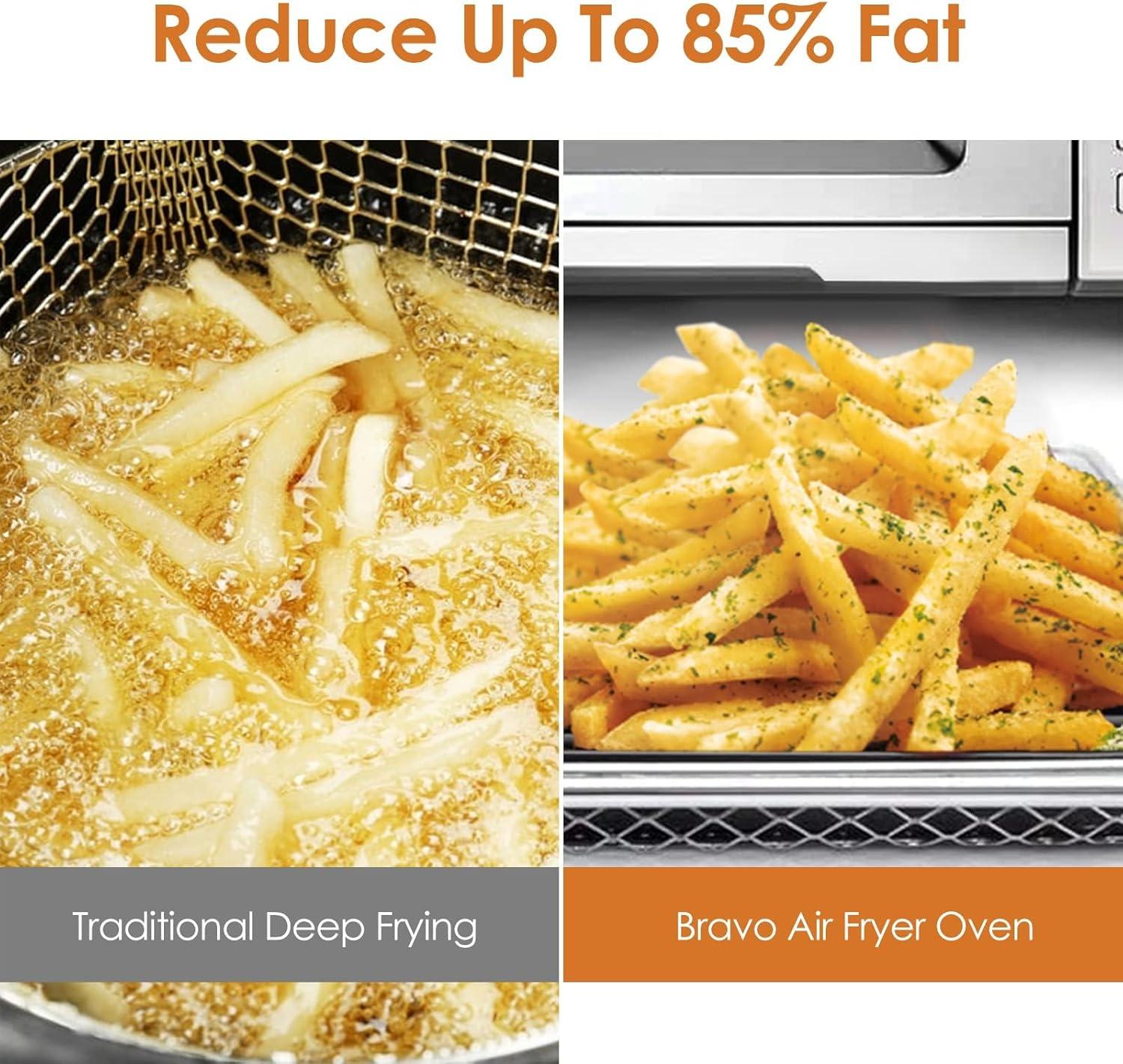
Across everyday use, the oven’s broad feature set frequently enough lines up with common kitchen tasks: many reviewers report that presets and the integrated probe simplify timing for roasts and pizzas, and the option to run different heat zones helps achieve a crisp bottom crust without overcooking toppings. The larger internal space and multiple rack positions show their value when cooking more than one item at once or using specialty modes like proofing and dehydrating; several accounts describe baking two loaves or drying a starter without constant babysitting. Routine interactions—loading trays, wiping the removable crumb pan, and nudging settings mid-cycle—tend to feel familiar to people who already work with countertop ovens, and the ability to adjust time and temperature on the fly is repeatedly mentioned as a convenience during actual cooks.
At the same time, a pattern of practical limitations appears in daily operation. The control logic and numerous presets create a steeper learning curve for those expecting simple, toaster-like behavior, and there are recurring reports of electronic idiosyncrasies such as the unit pausing after preheat unless a control is re-engaged or the display acting intermittently. Physical interactions can also be awkward: exterior panels and the door handle run hot during use, some racks droop forward when pulled out, and a few accessories hold on to baked-on juices that require soaking before a rinse. These tendencies don’t erase the oven’s functional capabilities, but they do influence how often hands-on attention, small workarounds, or extra cleaning steps come into play in normal kitchen routines. View full specifications and configuration details
How your pizza nights, family roasts, and quick reheats play out when you cook with it
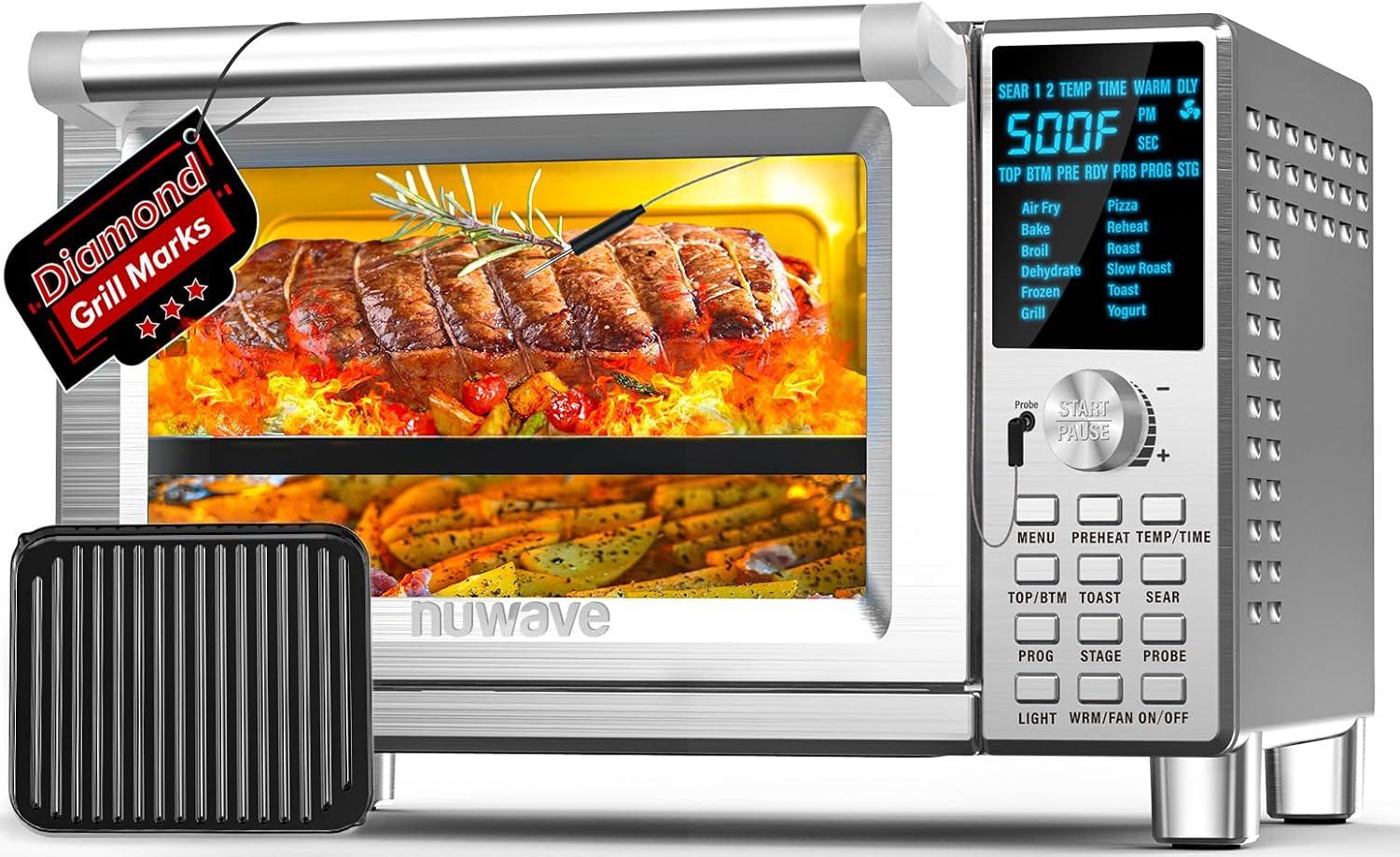
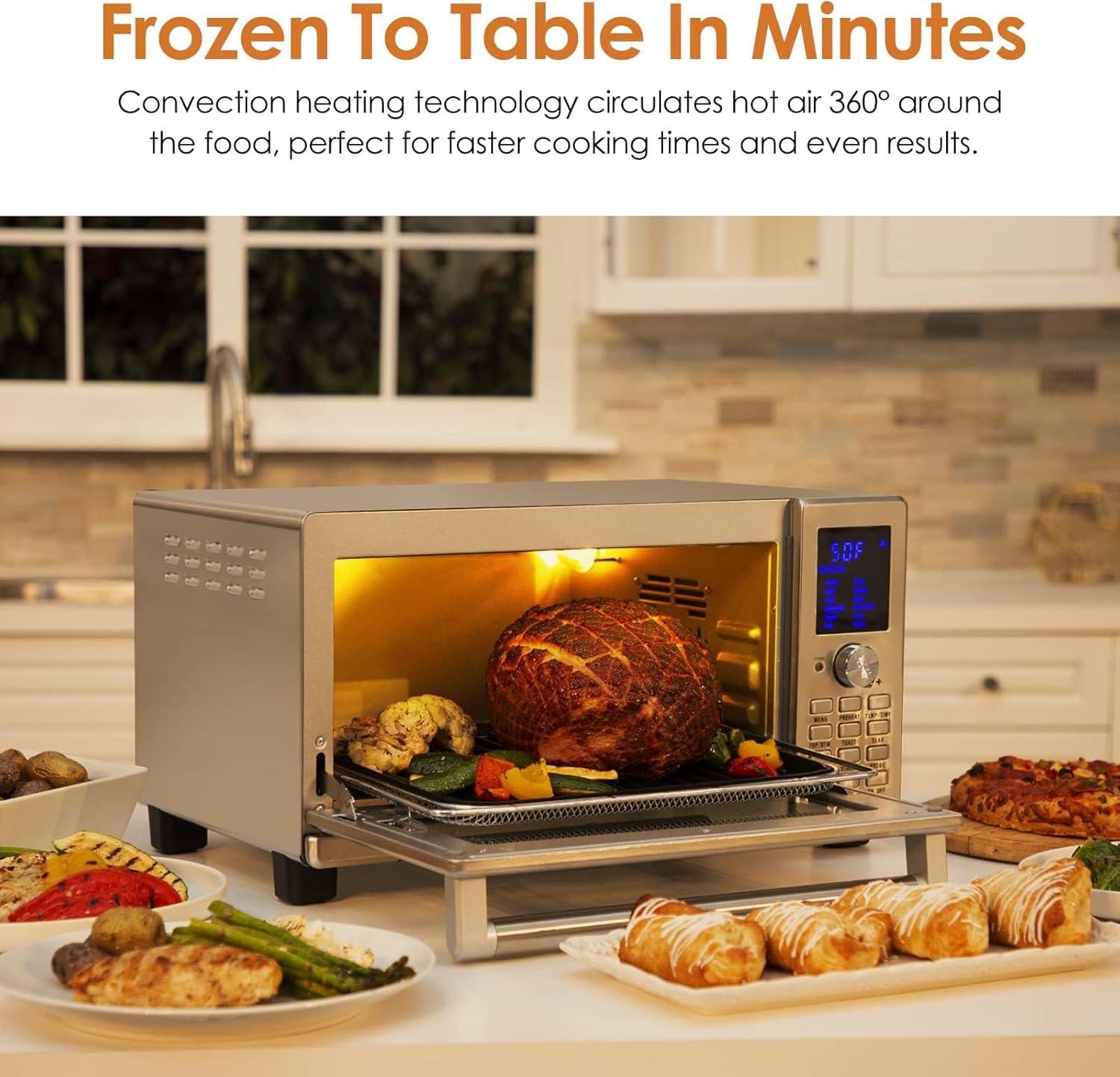
When you set up for pizza night, the routine becomes tactile and almost automatic: you slide the rack to the level that gives the crust the lift you want, preheat until the oven signals, then pop the pie in and watch the cheese bloom through the glass. For thin-crust evenings you tend to use the lower position so the bottom crisps quickly while you nudge the top heat down a touch; for deep-dish or loaded toppings you give the pie a bit more time and sometimes rotate it once halfway through so the edges brown evenly.Family roasts play out differently — you’re juggling a main and a couple of sides,often using two rack positions and timing the trays so the vegetables finish during the carve. The internal probe (when you choose to use it) removes the guesswork at the end of a roast, and you’ll notice a few minutes of carryover warmth as the meat rests, so you often pull things a touch earlier than you might with a conventional oven. occasional tweaks — nudging a rack, swapping a pan, or letting a tart sit under the top heat for a last-minute glaze — feel like part of the evening pace rather than a setup chore.
Quick reheats and weekday leftovers are where the oven shows its everyday rhythm: short cycles, a glance through the door, and often a slightly different approach than when you cook from raw. Pizza slices regain a decent crunch if you give them a moment on the rack instead of trapping them on a tray, and casseroles thaw and bubble back without the soggy middle that a microwave sometimes leaves. for frozen snacks you usually cut time back compared with package directions and open the door to check texture rather than relying purely on a timer; that habit helps prevent over-drying, which can happen if you leave something in a touch too long. Cleaning tends to be part of the end-of-night rhythm — a quick wipe of crumbs and setting the removable tray aside — and while you don’t deep-clean after every short run,those small tidy-ups make the next pop-in reheats go faster and with fewer surprises.
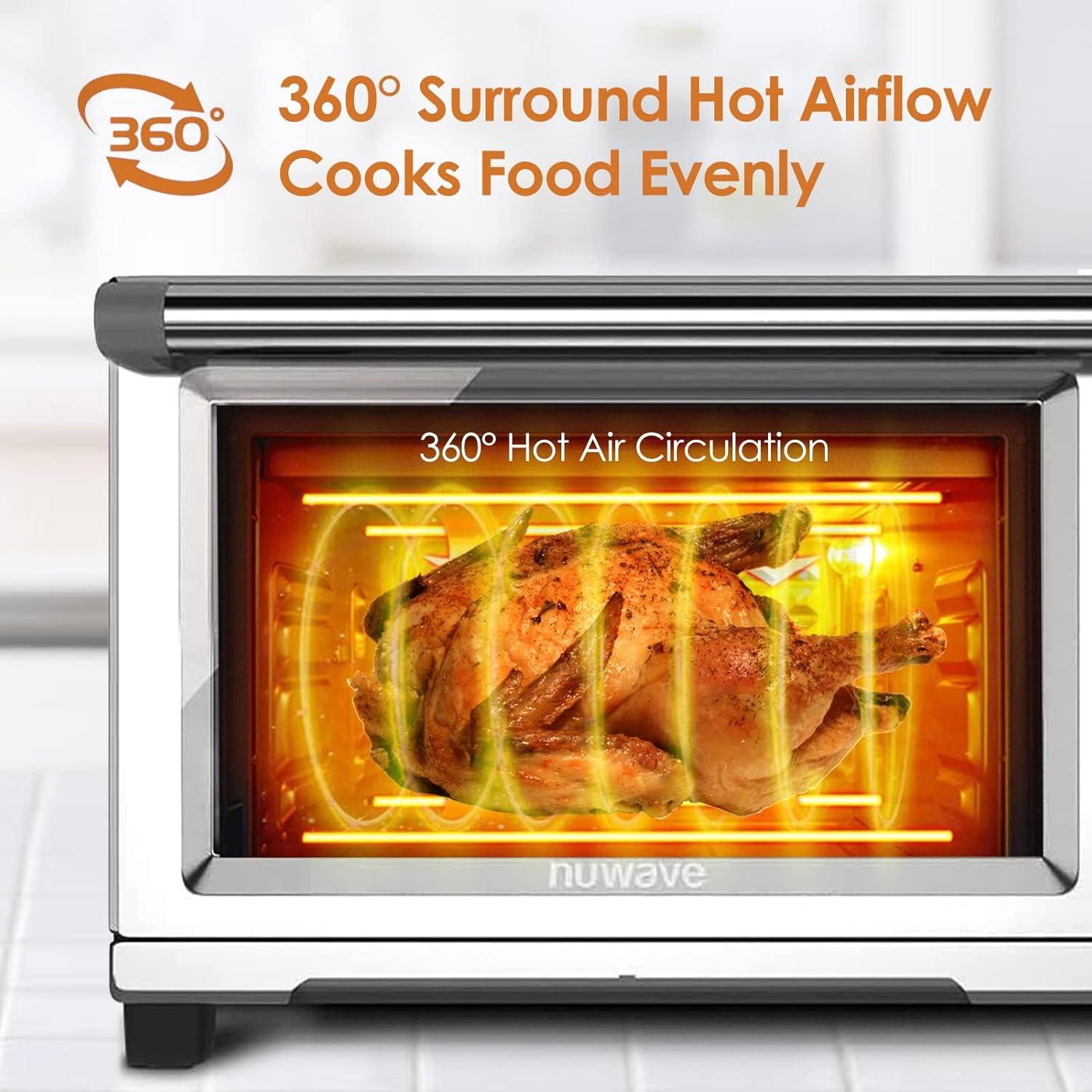
A Note on Everyday Presence
After a few weeks of quiet use you find the NUWAVE Bravo XL Air Fryer Convection Toaster Oven Countertop, 112-in-1 Smart Grill Combo with Original Flavors & Marks, Adjustable Heating Zones for Pizza, Roast, Bake, 50-500°F, Stainless Steel, 30QT parked in the same corner of the counter, more a part of the kitchen’s rhythm than a thing that announces itself.In daily routines you reach for it at familiar times and it slips into the background, while the stainless surface picks up the usual fingerprints and the occasional smear from hands or baking trays. The space around it subtly rearranges — a jar moved, a cutting board leaned differently — small traces of regular use that make it feel lived in. Over time it settles into routine.
As an Amazon Associate I earn from qualifying purchases. Amazon and the Amazon logo are trademarks of Amazon.com, Inc, or its affiliates. All images belong to Amazon