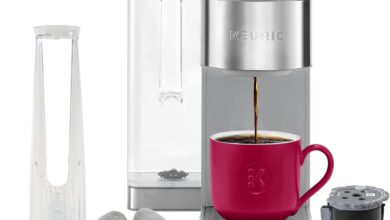
You lift it out of the box and the first thing you notice is the steady weight under your hands—solid,not flimsy,and oddly reassuring. The Keurig K‑Duo Single Serve & Carafe arrives in a satin-black shell that looks matte from across the room but picks up fingerprints along sharp edges when you run your fingers over it. Slide the removable water reservoir and there’s a firm,clean click; the plastic feels textured where you grip it and smoother on the glossy trim. Visually it balances a vertical profile with the rounded glass carafe, so it registers in the kitchen as a purposeful object rather than something that disappears into the background. Press a button and you get a crisp mechanical snap followed by a low heating hum—small cues that mark it as an appliance you interact with, not just glance at.
how the K Duo looks and behaves on your kitchen counter as you start the day
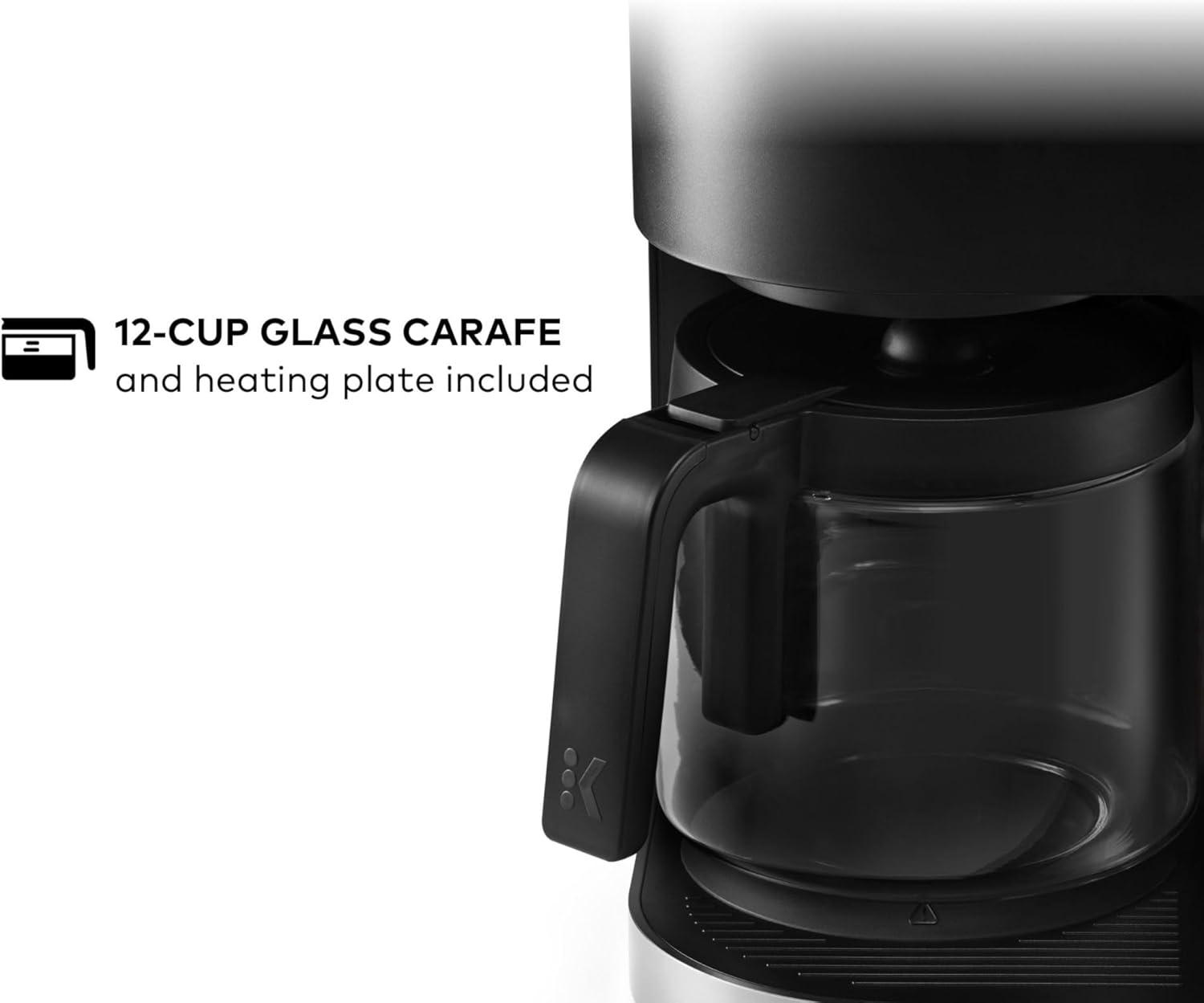
When you come into the kitchen in the morning the brewer presents itself as a familiar, slightly glossy block of black at the edge of your counter. It sits where you expect it too — not so small that you forget it’s there, not so large that it dominates the work surface — and the controls and brew area are promptly accessible from whatever side you’ve tucked it into. Because the water reservoir can be moved around, you’ll find yourself nudging it once or twice early on to make room for a bowl or a cutting board, then leaving it be. Small details catch your eye only when you use them: the carafe resting on it’s warming spot, the brew head that opens when you lift the handle, and the little drip and splash marks that tend to appear during the busiest part of the morning. A few recurring morning interactions you’ll notice include:
- First touches: reaching for the handle, selecting a size, or flipping the reservoir when you need more water;
- Sound and motion: a brief mechanical hum as it heats and a steady, predictable pour into the carafe;
- Rapid upkeep gestures: wiping around the base or rinsing the carafe as part of your routine.
Behaviorally, it becomes part of the rhythm of getting ready: you press a button and the kitchen fills with a low-level mechanical noise and the expanding scent of brewed coffee, and if you lift the carafe or slip a mug under the spout during a cycle the machine pauses long enough for that quick pour. The warming surface keeps the brewed pot at hand and then quiets down after a while, so the appliance doesn’t stay an active presence on the counter indefinitely. You’ll often make tiny, unplanned adjustments — sliding a mug forward, nudging the unit a fraction to the left to clear a drawer, or pulling the reservoir out to top it up — and those micro-interactions are how it settles into daily use more than any single specification. Routine wiping of the base and occasional emptying or rinsing of the carafe feel like part of the morning ritual rather than a separate chore.
When you first lift it out of the box what the finish the weight and the seams tell you
When you lift it from the box the first thing your hands pick up is the surface. the black plastic has a low-sheen, almost satin feel that catches a little gloss where your fingers press; it doesn’t scream mirror-bright but it does show fingerprints and smudges if you handle it right after unboxing. The top and front areas feel slightly different under the fingertips—one plane a bit smoother, another with a faintly textured finish—so you find yourself shifting your grip without thinking. The overall heft is noticeable but not cumbersome; you can carry it with one hand for short moves, though you tend to steady the base with the other palm when setting it on a counter.On first lifts you may pause to adjust how you hold it, the way the weight settles revealing whether you’ll reposition it frequently enough or leave it in one spot.
The seams and joins are where the maker’s assembly becomes obvious.Where panels meet you’ll see molded lines and small gaps at removable sections; snap-fit tabs are visible if you peer underneath or along access covers.Those junctions make it easy to learn where parts separate for routine cleaning,and they also collect the kind of crumbs and splashes you notice when you run a finger along an edge. A few quick tactile checks tell you what to expect during everyday use:
- Panel joins: faint mold lines and join gaps at removable areas
- Access points: visible tabs and seams that indicate where components lift away
- Underside finish: a slightly rougher texture where clips and fasteners sit
These cues make routine upkeep—wiping seams, nudging crumbs from tight corners—a normal, occasional part of living with the appliance rather than an unexpected chore.
How you move through a brew the buttons you press the pod you seat and the carafe you lift
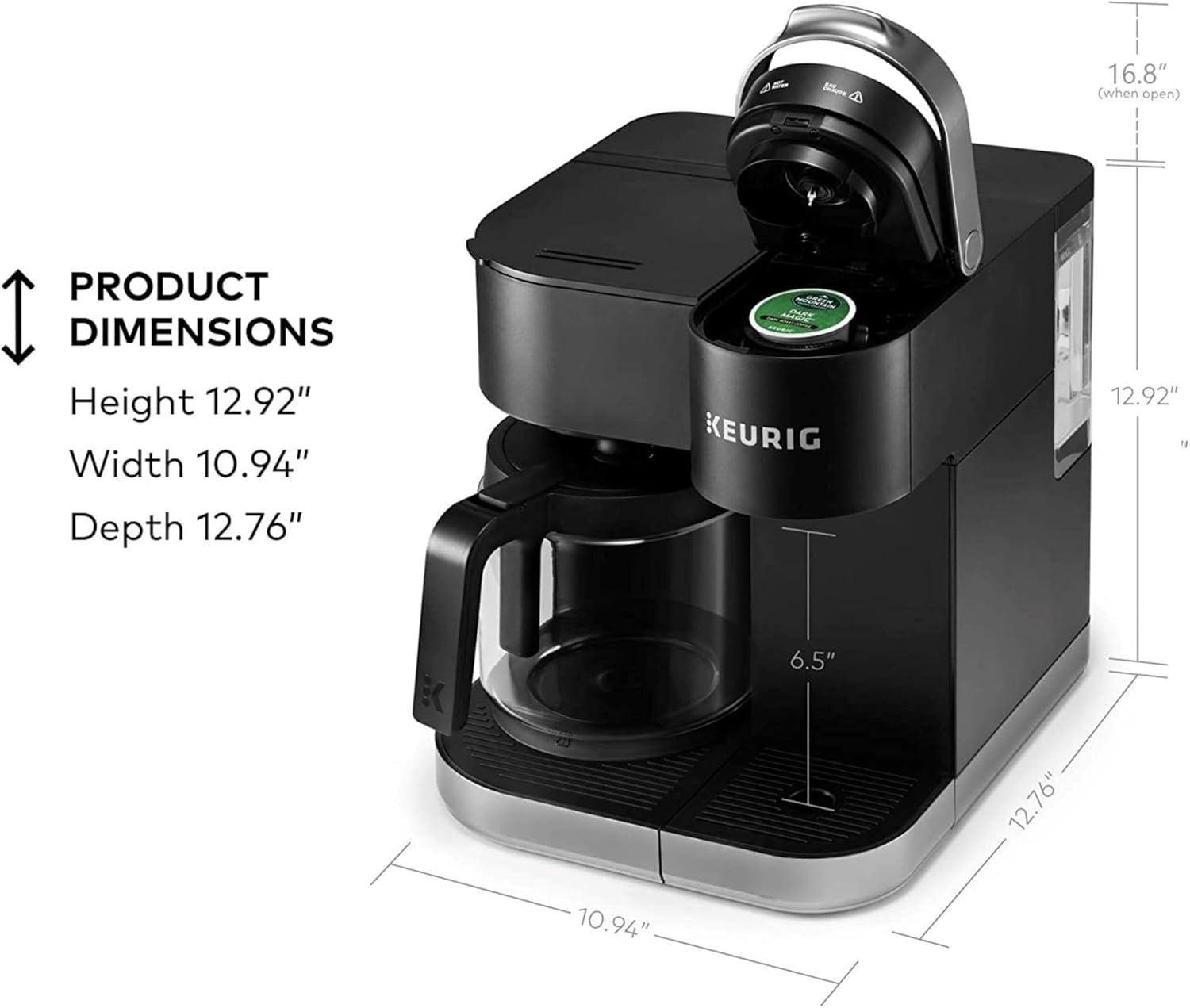
When you start a brew you move through a few small motions that quickly become routine: lift the handle, drop a pod into the cradle until it seats with a soft click, close the handle and position your mug or the carafe where it belongs. The cluster of buttons is compact and labeled; you press the size you want and then the central brew control. If you choose the carafe path, you’ll notice a slightly longer hum as the machine runs through multiple cycles; for a single cup the flow is immediate and briefer. Little habits crop up — you sometimes nudge a misaligned pod before closing, or hover a finger near the handle while the carafe fills so you can lift it smoothly when the pause kicks in — and wiping the pod area after a few brews becomes part of the routine without much fuss.
In use the buttons and physical interactions map closely to what you do next. the basic pattern is simple: seat the pod, select cup or carafe, press brew, lift the carafe when it’s ready. common touchpoints you’ll notice include:
- Size buttons — press to choose cup ounce or carafe volume, the light confirms selection.
- Strong Brew — a single press before brewing for a bolder extraction.
- Carafe pause — the brief automatic pause lets you lift the carafe without splashing.
| Button | Immediate Response |
|---|---|
| Size (cup/carafe) | Selection light; machine primes for single or multi-cycle brew |
| Strong Brew | Engages longer brew time for the next cycle |
| Brew/Start | Starts pumping and heating sequence; audible water movement |
Routine upkeep shows up naturally: after a few uses you empty the spent pod basket and give the area a quick wipe, and you learn the modest rhythm of seating, pressing, and lifting that shapes your morning flow.
Where it finds a home on your counter and how the sixty ounce reservoir and carafe sit beside your mugs

On an everyday counter the brewer tends to claim a distinct zone rather than blending into a tight corner: the removable sixty ounce reservoir projects to whichever side it’s positioned, so lateral clearance and lid access shape where mugs end up. From a practical viewpoint the carafe sits on the warmer with mugs clustered either to its side or in front for quick pours; when the reservoir is moved to the left, mugs often occupy the right-hand space and vice versa. Small, routine adjustments — nudging a mug a fraction of an inch, tilting the carafe handle to pour, or sliding the unit a little forward to open the reservoir lid — are common during a morning run. A few quick placement outcomes can be sketched as:
- Left placement: reservoir fills a side lane, gives open front access to the carafe
- Back placement: frees both sides but needs rear clearance for refills
- Right placement: leaves the left side for mugs and stirring spoons
Daily interaction emphasizes reachability more than raw footprint: refilling the reservoir, sliding the carafe onto the warmer and setting a fresh mug under the single-serve spout are habitual gestures that define how the surrounding counter is organized. Upkeep shows up as a quick wipe around the base and occasional repositioning after a spill or when clearing space for a tray — maintenance becomes part of the appliance’s regular presence rather than a separate chore. The mini-table below describes how the different reservoir positions typically affect counter arrangements in most kitchens.
| Reservoir Position | Typical Counter Affect |
|---|---|
| Left | Mugs and stirring area shift right; front access to carafe remains clear |
| Back | Maximizes side space but needs rear clearance for refills |
| Right | Mugs settle left; useful when power outlet or sink sit on the left side |
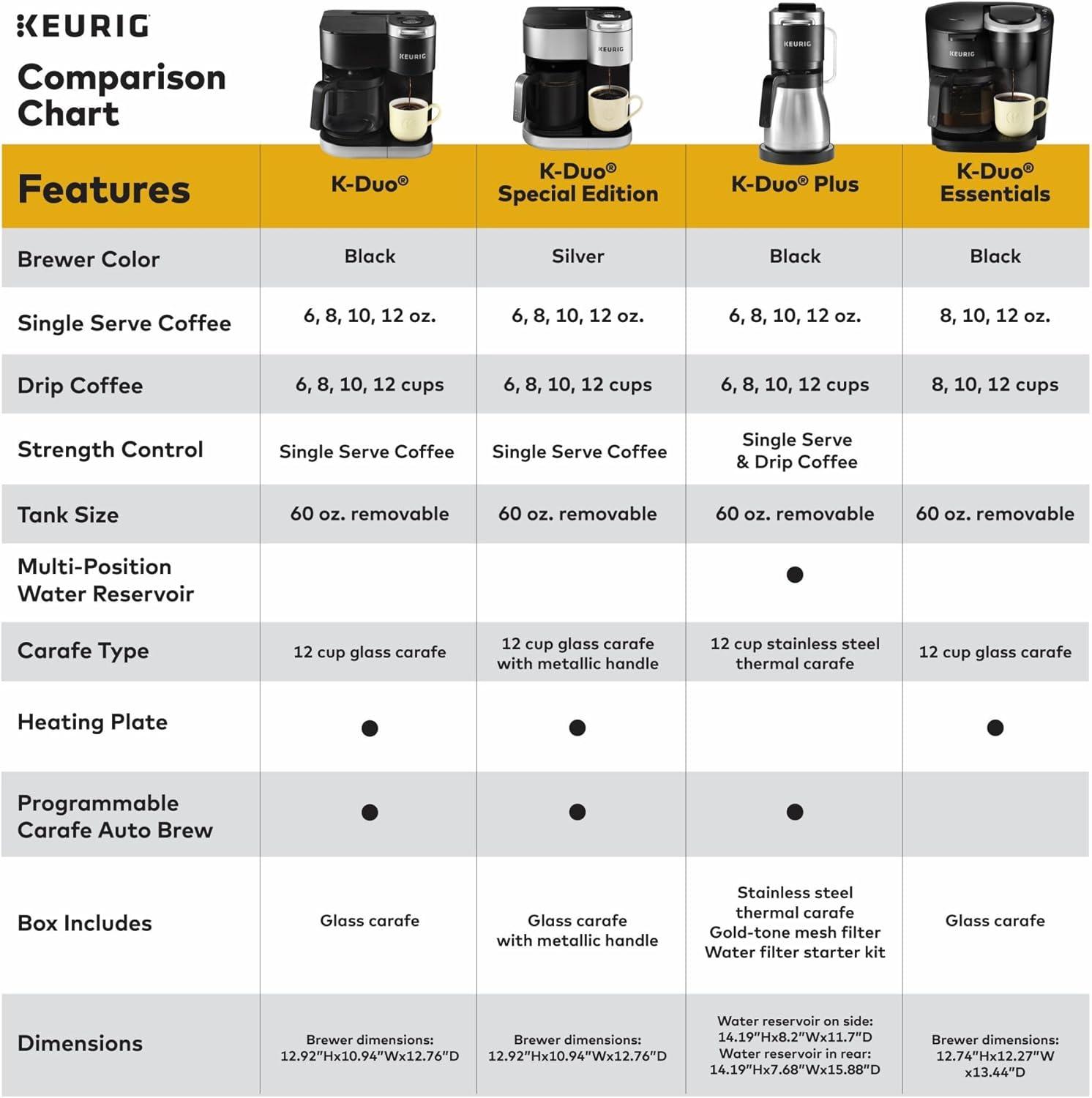
Full specifications and configuration details are available here: Product listing
How the K Duo lines up with your daily needs and the trade offs you notice in real use
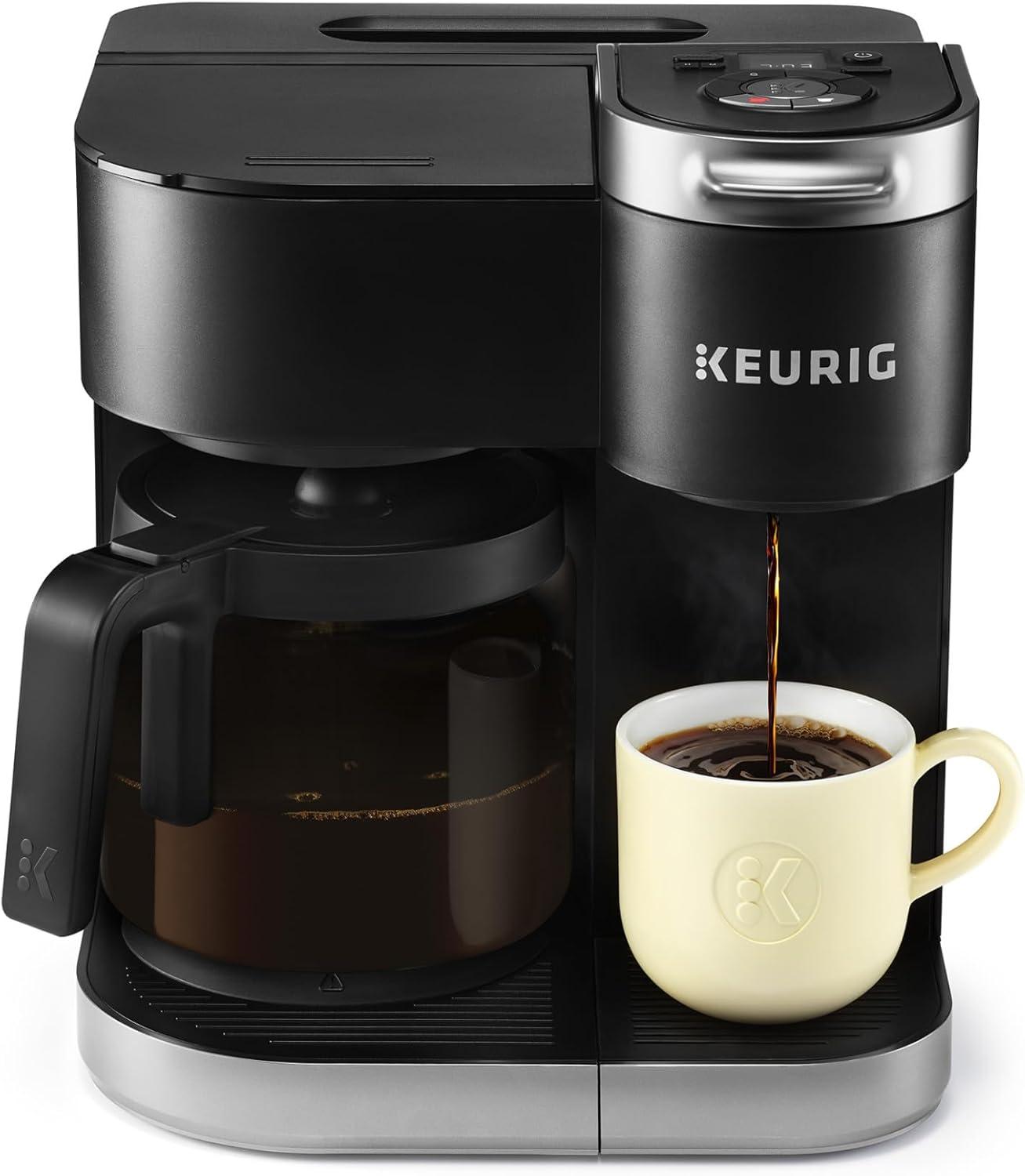
In day-to-day use the machine tends to become part of a routine rather than an object one actively thinks about. Users will switch between single-cup pulls and a full carafe depending on the morning’s needs, and that switching shows up as small habits: pre-filling the reservoir the night before, pausing a carafe mid-brew to pour a quick cup, or loading a pod when rushing out the door.The shared water source simplifies rapid transitions—there’s less fiddling with two tanks—but it also means attention to refill timing; if the reservoir is low mid-cycle the rhythm of a busy kitchen can be interrupted. The glass carafe on the warming plate makes it easy to see when a full pot is ready, though the warming element’s automatic shutoff after a couple of hours changes how long that pot will stay pleasantly hot without reheating, so users often pour sooner rather than leaving the carafe on late into the afternoon.
Practical trade-offs emerge in the small, repeated interactions that shape a week of use. Cleaning and emptying spent pods or grounds is a regular, quick chore and reusable filters or grounds require a touch more rinsing, which many households simply fold into the morning tidying. A few common adaptations observed include:
- Keeping a pitcher nearby to top off the reservoir without carrying the whole unit to the sink;
- Designating a pod bin so disposal doesn’t slow down a rushed cycle;
- timing carafe brewing so the heating plate’s auto-off aligns with when coffee will be consumed.
These adjustments are not challenging but they do shape how the appliance fits into the countertop workflow—the convenience of quick single cups and scheduled carafe brewing comes with small, repeatable habits. View full product listing and specifications
What daily upkeep and moving it around your kitchen actually look like

On an average day you’ll mostly be interacting with a handful of parts that shape ongoing upkeep: the removable water reservoir when you top it up,the carafe after pouring,the area under the brew head where used pods or grounds collect,and the surfaces that catch occasional splashes. Small, quick gestures dominate — a rinse or a wipe here and there, lifting the carafe back into place, nudging the reservoir so it seats cleanly — rather than lengthy tasks. Mineral deposits and a faint coffee oil film tend to show up over time, so those moments of attention don’t disappear entirely but arrive intermittently rather than daily. Below is a compact view of what you touch most often and how it figures into routine use.
| Part | How it shows up in daily life |
|---|---|
| Water reservoir | Removed or nudged to refill, can add bulk when full and sometimes needs a quick wipe where it meets the base |
| Carafe | Lifted to pour and returned, rinsed or emptied after use, and set down on the warming surface |
| Brew area | Where you clear used pods or grounds; occasional attention to stray drips or coffee bits |
When you move the unit around the kitchen — sliding it to clean the counter, shifting it to a different outlet, or reconfiguring it to suit morning traffic — the motions are pragmatic and a little ad hoc. It’s easiest to move it in stages: remove the carafe or reservoir if you want to make a single lift lighter, and get a feel for the balance before you slide it. The base doesn’t glide like something on casters; rather you’ll usually lift slightly and set it down, and the plug and cord frequently enough dictate how far you can nudge it without unplugging.For many routines this results in short, repeatable repositioning rather than frequent full relocations, and you’ll find yourself improvising small workarounds — a towel under the carafe, angling the reservoir one way or another — depending on counter clutter and how you flow through the morning.

How It Settles Into Regular Use
After a few weeks with the Keurig K-Duo Single Serve K-Cup Pod & Carafe Coffee Maker, you stop treating it like new and start noticing how it lives in the kitchen. It finds a favored corner on the counter, picks up faint fingerprints on the black surface and a pale mark where the carafe sits, and your movements around it become part of the morning rhythm. In daily routines you make the same small gestures—lifting the lid, loading a pod, or pouring from the carafe—and those repeated acts make it feel like a steady, ordinary presence. It simply blends into regular rhythms and settles into routine.
As an Amazon Associate I earn from qualifying purchases. Amazon and the Amazon logo are trademarks of Amazon.com, Inc, or its affiliates. All images belong to Amazon