You lift the hopper lid and feel the smooth, slightly grainy plastic under your thumb; the unit rocks a touch when you nudge it, its vertical silhouette taking more height than width. Havato’s Drip Coffee Maker with grinder Built In — the 10-cup grind-and-brew — looks like a black column capped by a clear glass carafe that feels light and a little thin in your hand. When you start a cycle the grinder announces itself with a sharp mechanical rasp, and the front panel’s soft glow is the only real sign it’s awake. Sliding your palm along the housing reveals seam lines and the matte texture, small details that shape your build impression. Those first fills, clicks and the warm carafe in your hand are the immediate, lived-in cues that let you size up the machine.
How this grind-and-brew slips into your morning routine
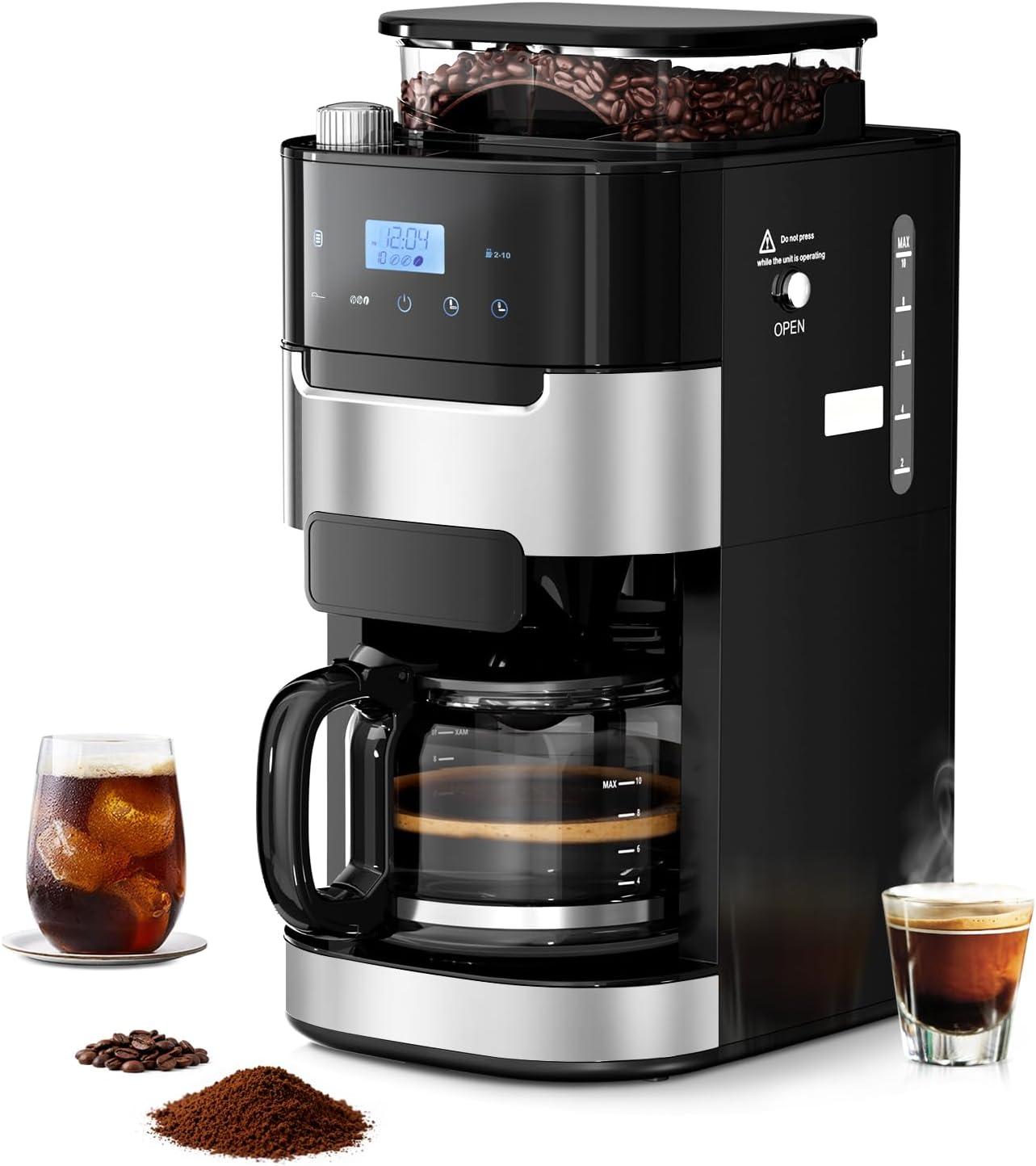
In the quiet minutes after you wake, the machine becomes part of your choreography.If you set a wake-up brew the night before, you walk in to the scent already starting to rise; if you start it manually, the ritual is immediate — you lift the lid, scootch the bean container into place, and press the button. The grinder announces itself in a way that makes you pause or step away for a few seconds; the noise, the rhythm of grinding, and then the slow drip all mark the transition from sleepy to alert. Small habits develop around those sounds: you might move a mug within reach before it starts, keep the device away from the bedroom door to avoid an early wake-up, or poke the lid to make sure beans are feeding right before you hit start. Programmed start and manual start feel like two different mornings — one is effortless, the other hands-on and a little ritualized.
Your routine with it includes a couple of speedy, almost unconscious maintenance touches that sit alongside making breakfast and checking your phone. You tend to rinse the reusable filter after the carafe is emptied, wipe the glass before you pour, and sweep the counter for stray grounds — small things that keep the morning moving. Occasionally you glance at the hopper to top up beans or slide the unit forward to reach the water fill point; these are interruptions, not chores, and they shape where the machine lives on your counter. A short checklist usually runs through your head on busy days:
- check beans
- top off water
- set start or press brew
these actions fold into how you prepare the rest of your morning — a few familiar motions that make a fresh pot part of the flow rather than a separate task.
What you notice on the counter: size, weight and the materials under your hand
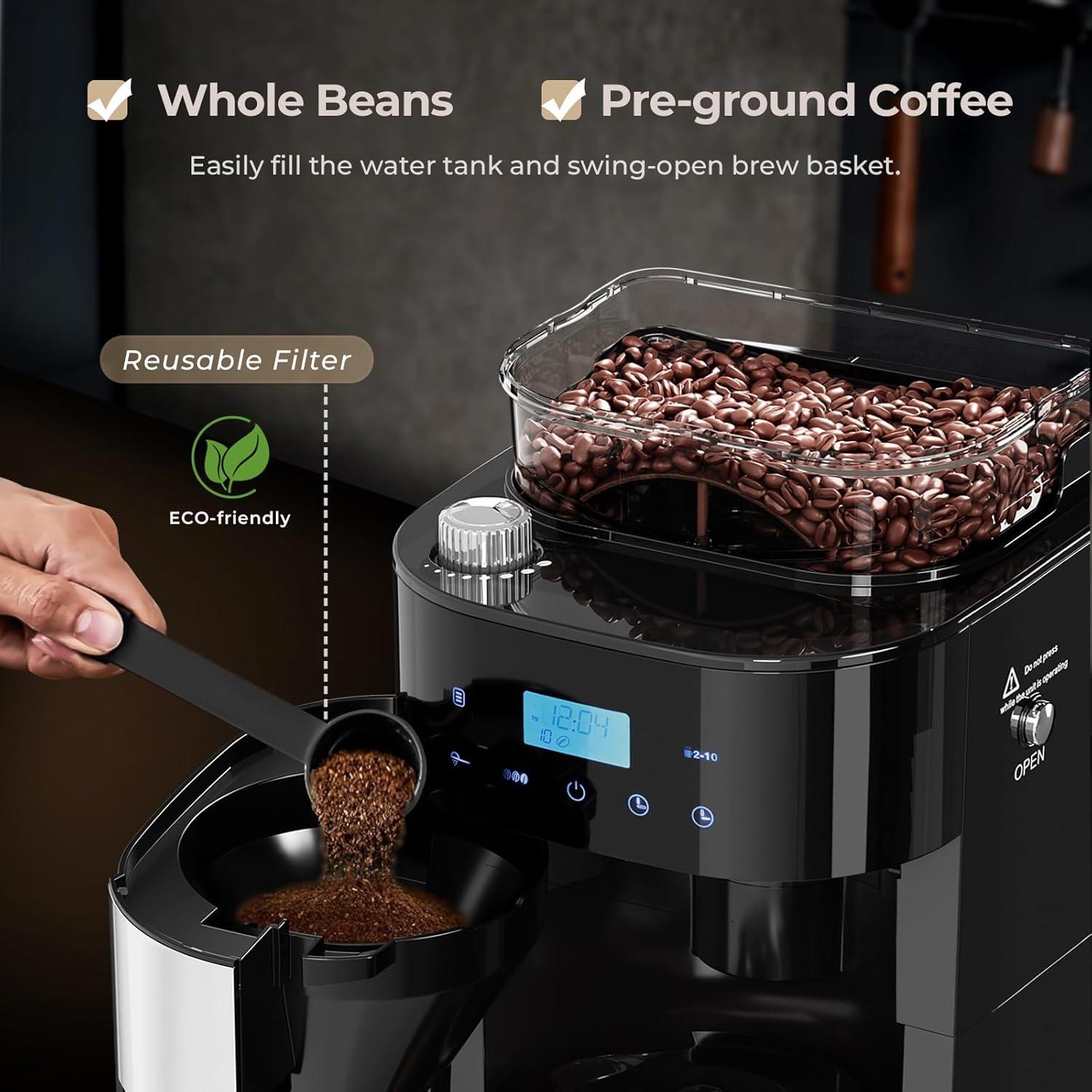
On the counter the machine has a definite presence: it occupies a vertical slice of space rather than spreading out, so you notice its height before you do its depth.From across the kitchen you can tell where it sits — it rises above low-profile appliances and the bulk is centered around the back where the hopper and reservoir live. When you reach to move it a few inches, there’s a clear, steady mass to it; shifting it is indeed a two-handed, casual task for most people rather than a one-handed lift. The base stays anchored by small rubber feet, which you can feel catch slightly against the countertop when you nudge the unit into position.
Under your hand the surfaces are a mix of finishes and temperatures. The housing around the controls is matte plastic that tends to feel cool and smooth; the control buttons and the grind knob have a firmer, slightly textured plastic that gives a small amount of tactile feedback when you press or turn them. The carafe handle is hollow and glossy, and the glass of the carafe itself feels thin and slippery until you get a grip on the handle. small details you notice in routine use include the contrast between the warm metal warming plate under the carafe and the cooler plastic edges, plus the bean-hopper lid which clicks when you open or close it. A short list of touch points you encounter most often:
- Housing: matte plastic, cool to the touch
- Controls/knob: firmer plastic with mild texture
- Carafe: glossy glass and hollow handle
- Base: metal warming surface with rubber feet
During everyday upkeep you’ll find yourself wiping the smooth plastics and quickly washing the carafe, simple interactions that keep those materials feeling familiar beneath your hands.
How you operate it day to day: buttons, the grinder dial and the feel of the glass carafe
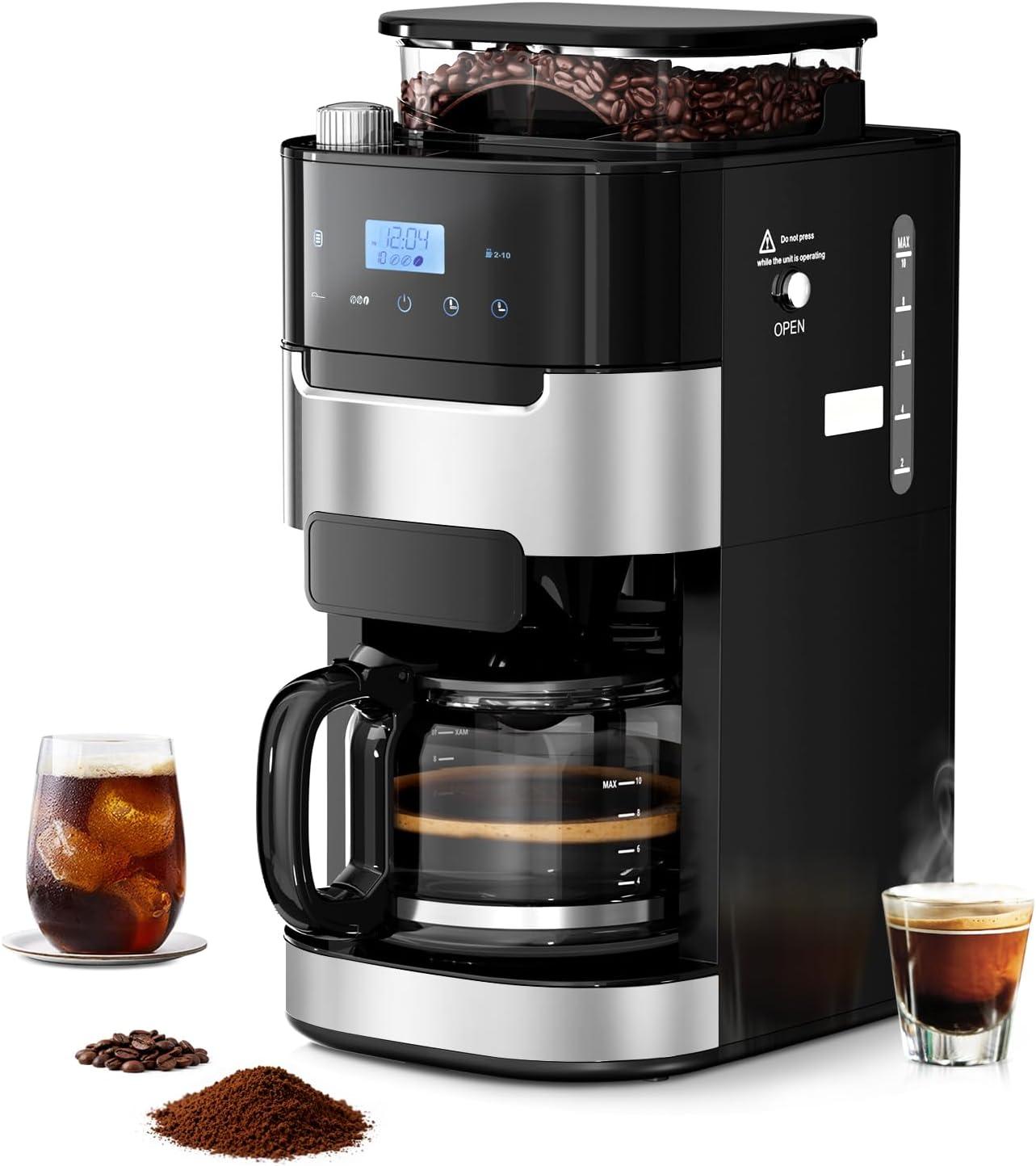
You interact with the control panel several times a day, so its feel and layout quickly become part of your routine. The buttons sit in a single row beneath a small display and require a deliberate press — not feather-light, but not stiff either — and they give a short, soft click when accepted. The lighting on the icons can be low-contrast in bright kitchens, so you may find yourself leaning in to see which indicator is active. A few functions are grouped close together; in practice you end up using the same handful of controls most mornings:
- Power — turns the unit on and off
- Cups/Timer — cycles through serving sizes and scheduled times
- Strength/start — toggles brew intensity and begins the cycle
When a cycle starts the machine will begin grinding first, then move into the brew sequence, so those first button presses are the ones you habitually check after setting it up.
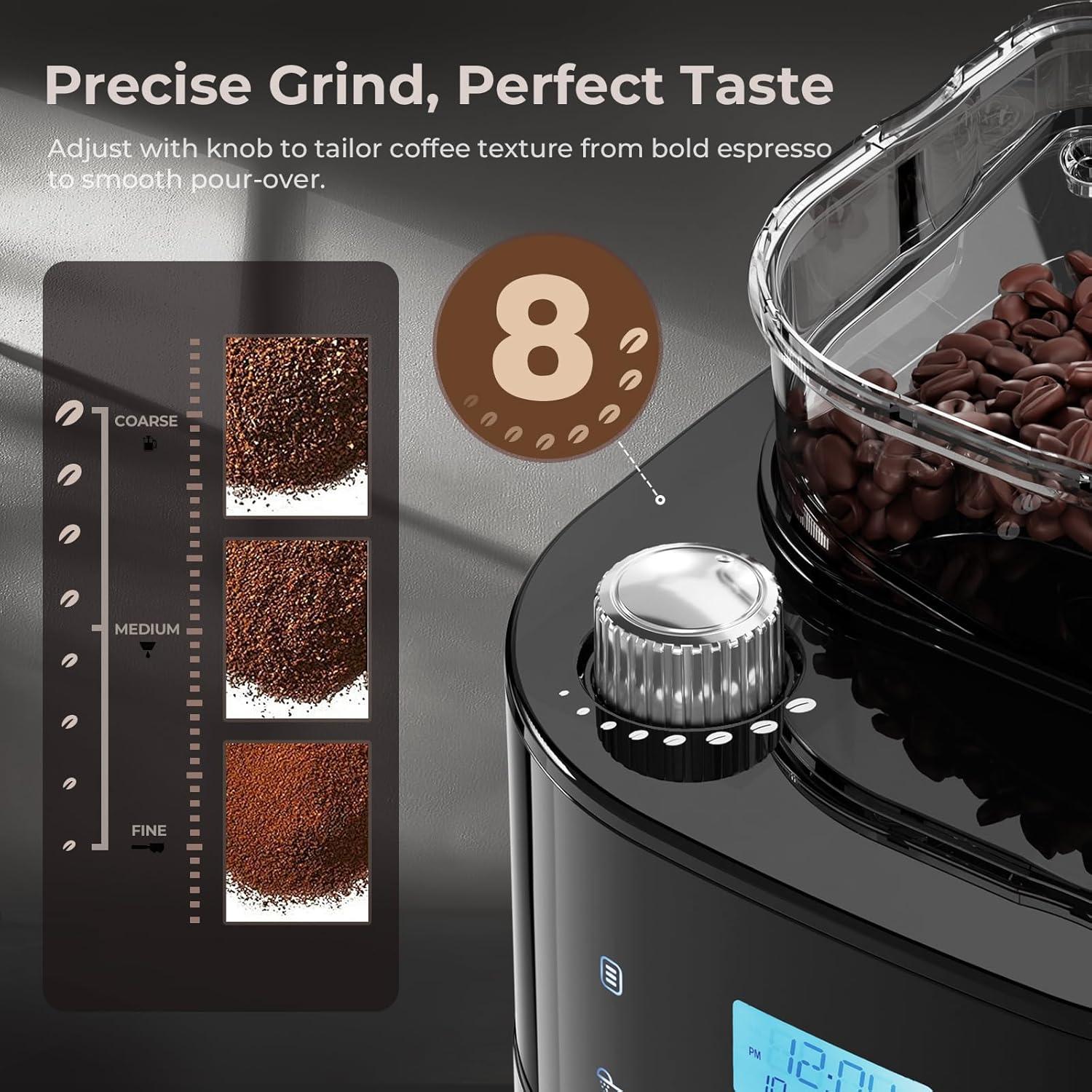
The grinder dial lives where you reach for beans, and its tactile behavior matters more than its markings. It turns with a modest resistance and a light detent so you can feel small adjustments without looking; most days you set it once and leave it, but the clicky increments make on-the-fly tweaks easy. The glass carafe feels thin and relatively light when empty, then predictably heavier when full — you notice that weight when you lift to pour or carry to the sink.The handle is molded plastic and gives a secure grip; the spout pours cleanly if you pour slowly, though a quick, high pour can splash. as part of daily upkeep you’ll find yourself wiping the carafe and checking for coffee residue; the smooth glass makes that quick, and fingerprints or water spots are the only things that tend to visibly accumulate between washes.
A week of cups you make: timing, noise and how the 50 oz tank handles your back-to-back pots
After several mornings and a few afternoon refills you start to learn the machine’s rhythm. when you tell it to make a pot you’ll first hear a concentrated grinding burst, then a steadier, wetter sound as water flows through the basket. In everyday terms that plays out like this:
- Grinding — a sharp, relatively loud burst that feels short but unmistakable;
- brewing — a quieter, steady pour with occasional gurgles from the tubing;
- Pause between cycles — a few seconds of settling noise while grounds drop and the heater readies for the next run.
If you set it to wake you up, the grinding is the thing most likely to catch someone’s attention; the brew cycle itself is much less intrusive. You’ll also notice small habits form — nudging the carafe into place,topping the water if you want a second pot right away,wiping a drip or two where the carafe sits.
Over a week of back-to-back pots the reservoir behavior becomes predictable: it will usually support a typical morning’s use and then require topping off if you start making several full pots in a row. Repeated brews mean repeated grind cycles, so the loud bursts recur each time rather than a continuous background hum. In practice that translates to a pattern you can plan around — a single full brew then a short refill if you want another immediately. The table below sums up what you can expect when you run one pot versus consecutive pots during a busy stretch.
| Sequence | what you’ll hear and do |
|---|---|
| Single morning pot | Pronounced grinding at start,softer brewing sounds,no immediate refill needed. |
| Back-to-back pots | Repeated loud grind bursts between cycles; reservoir will likely need topping between one or two full brews. |
Where the machine meets your expectations and where it doesn’t

The machine frequently enough delivers on the basic promise of grinding and brewing in one go: freshly ground beans are introduced into the brew cycle,the programmed start time reliably kicks the process off,and the hot plate keeps a recently brewed pot warm for a couple of hours. In routine use the filter assembly comes out easily enough for a quick rinse and the carafe pours without obvious spills. Observers note the flavor lift from on-demand grinding and, in most cases, the strength adjustments produce discernible differences in the cup—small, everyday effects that become part of a morning rhythm rather than headline features.
Simultaneously occurring, several routine interactions can fall short of expectations. The grinder tends to be noticeably loud during operation and the finest grind settings sometimes leave a bit of silty residue in the carafe; the water-reservoir and cup-count behavior also requires attention becuase the machine grinds to the programmed cup number rather than pausing for an exact poured volume, so mismatches can make a brew weaker or stronger than intended. The unit’s height and the placement of the hopper can make filling awkward under low cabinets,and the control lights can be hard to read in some lighting.There are occasional reports of mid-use interruptions—instances where a cycle cannot be easily stopped or where pump activity ceases after months of use—which are worth noting as part of how the machine behaves over time.Full specifications and current listing details are available here: Product listing and specifications.
How you care for it between brews: cleaning, refills and finding a permanent spot on your counter

Between brews you’ll quickly learn which little tasks become part of the routine: emptying the grounds basket after a run,topping up the water reservoir when it’s low,and wiping stray grounds or coffee oil from the carafe rim and brew chute.The permanent filter makes daily rinses straightforward, and the bean hopper sometimes leaves a faint ring of dust on the counter that you sweep away now and then. Small, habitual touches that tend to show up are:
- Rinsing the carafe and briefly wiping the lid to prevent film buildup
- Brushing out loose grounds around the grinder opening
- Checking the water level before you start a cycle
You’ll notice occasional, less-frequent maintenance too — a mineral spotting or an accumulation of oils — but those show up as part of the machine living on your counter rather than as a daily chore.
Where you place it shapes how those interactions feel. Counters near the sink make water refills and quick rinses easier; an accessible outlet and a bit of clearance behind the machine keep cord tucks and hopper access from feeling awkward.If the grinder wakes the household, you’ll find yourself shifting the unit away from sleeping areas or leaving extra space so the lid and carafe can be handled without contorting under cabinets. A thin mat or tray underneath often collects a day’s worth of stray grounds and a few drips, so it’s something you glance at when you pass by.
| Placement factor | What you tend to notice in daily use |
|---|---|
| Sink proximity | Refilling and rinsing feels quicker and less messy |
| Outlet access | Moving the unit for short tasks is easier when the plug isn’t tight |
| Noise and sightlines | Grinding is more noticeable if near bedrooms or open living areas |
| Cabinet clearance | Height can effect how comfortably you lift the hopper lid or pour water |
How It Settles Into Regular Use
After several weeks, the drip Coffee Maker with Grinder Built In has become a steady presence on the counter, part of the slow reordering of morning habits rather than a novelty. It takes up a modest patch of surface—often nudged by a dish towel or a jar of spoons—and shows the small scuffs, fingerprints, and water marks that come with ordinary handling.The little rituals around it—loading grounds, pausing for the familiar hum, tilting a mug to catch the first pour—have folded into daily rhythms and shifted where mugs live and when the kitchen feels ready for the day. It simply settles into routine.
As an Amazon Associate I earn from qualifying purchases. Amazon and the Amazon logo are trademarks of Amazon.com, Inc, or its affiliates. All images belong to Amazon