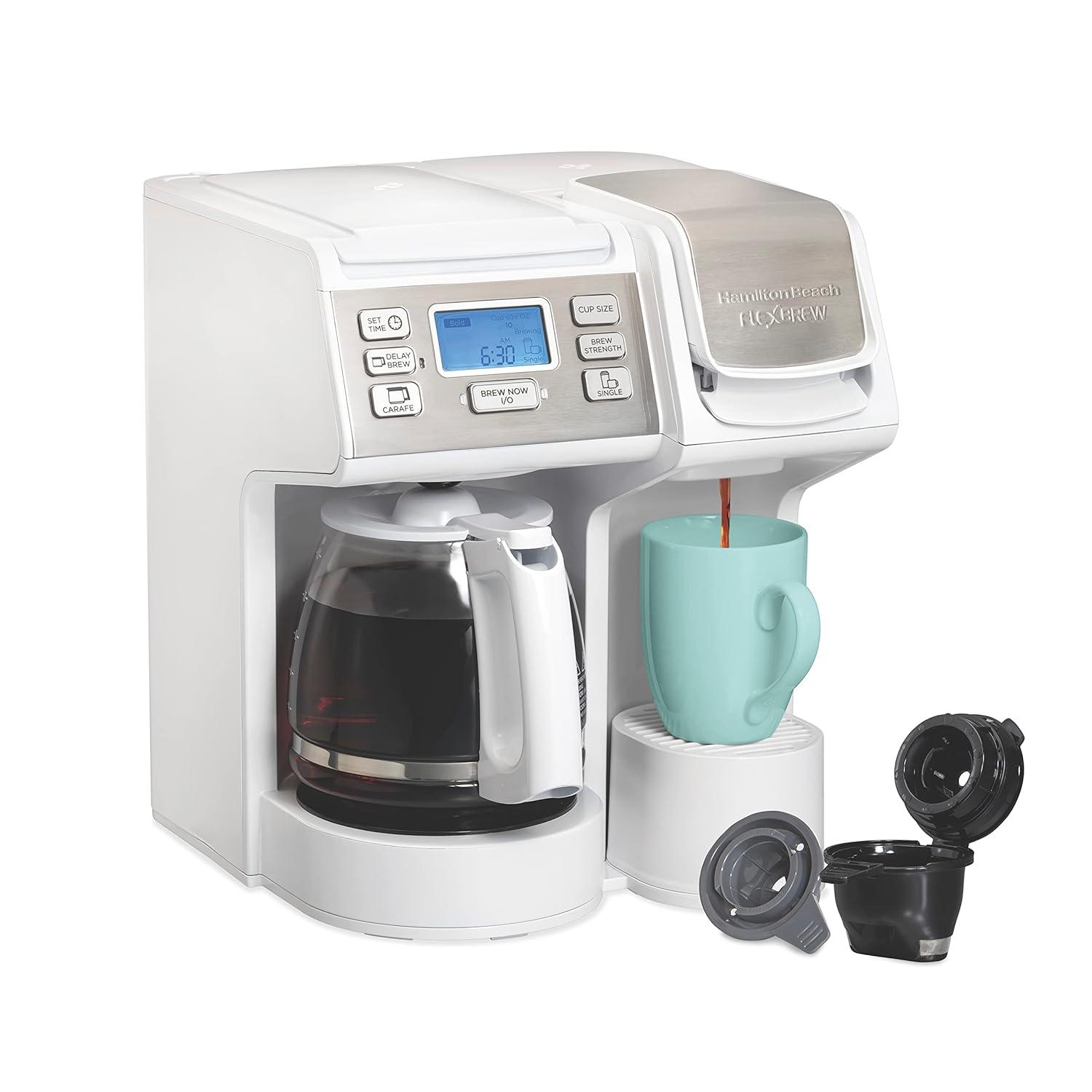
You run your hand along the machine and feel cool,slightly grainy plastic and a steady weight when you lift the reservoir. The Hamilton Beach flexbrew Trio was the one I unboxed for this write-up, and at first glance the white housing reads as two distinct elements—a narrow single-serve column tucking into a broader carafe bay—so the silhouette feels composed rather than awkward. Switch it on and a short, businesslike hum starts up; the buttons click with measured resistance under your thumb. Those textures, sounds, and the way it settles into the morning routine are the first things you notice, before any coffee has poured.
How the FlexBrew fits into your morning and what you notice first on your counter
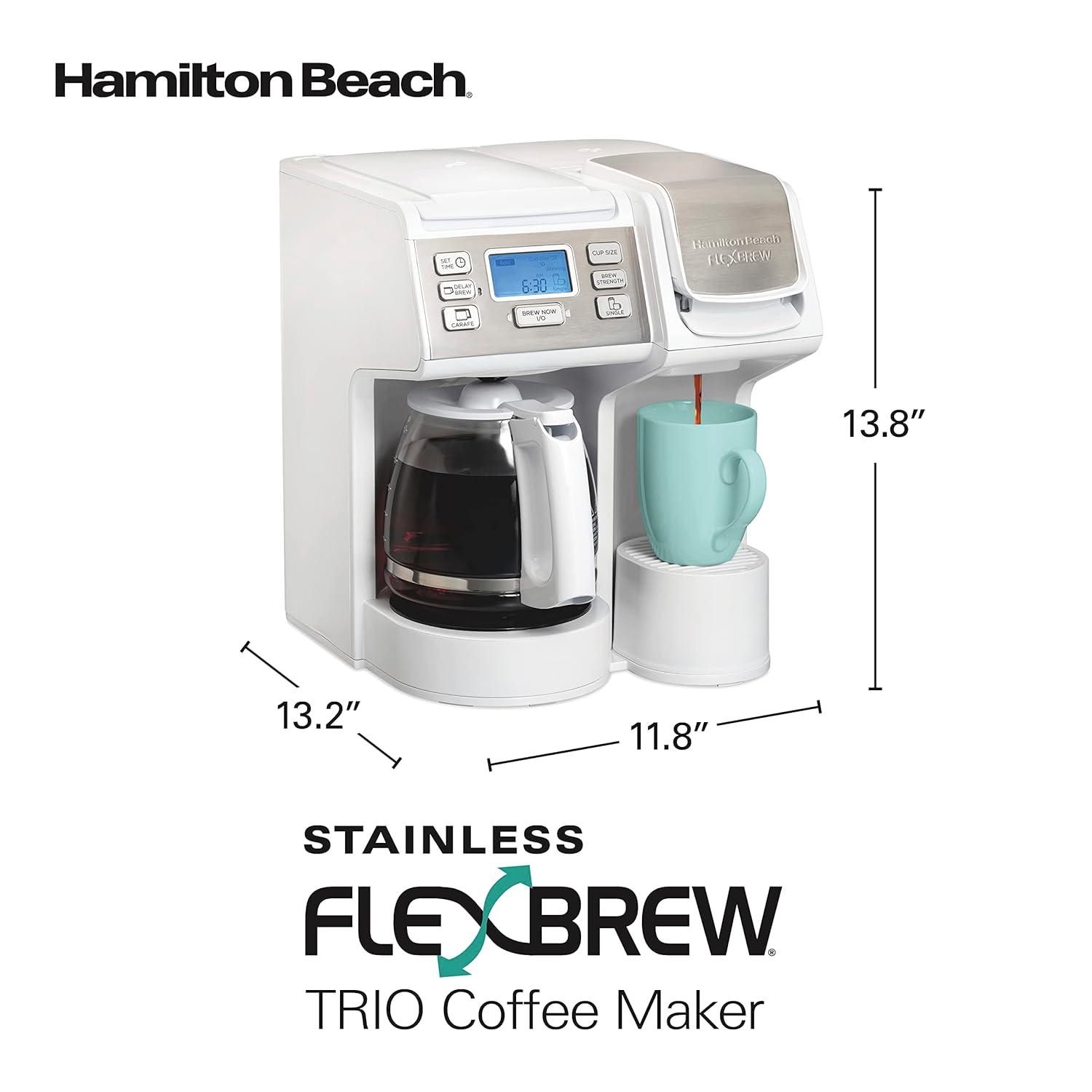
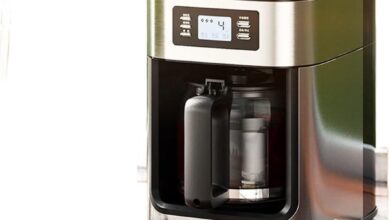
When you walk into the kitchen, the first thing that catches your eye is how the white surface reads against the counter — it tends to pick up the morning light and makes the whole station feel intentional rather than cluttered. The backlit clock and control area glow quietly, so even from across the room you can tell it’s set and ready. A quick scan of the counter reveals a few practical hints that matter in routine use: visual cues that signal readiness and access
- the display and buttons that are visible without leaning in
- a distinct space for a cup or travel mug where you usually place yours
- a removable top or section that shows where you refill water
As you move into the motions of the morning, the appliance slips into your rhythm — you shift the cup rest, pop in a pod or scoop grounds, and the machine becomes background activity while the kitchen comes to life. Smells rise and the carafe or single-serve side announces itself by sound long before the cup is ready; those small noises help cue other tasks, like opening a laptop or packing a bag.Routine upkeep appears naturally in that same flow: a quick wipe of the drip area, an occasional rinse of the carafe, and the little habit of checking the water section before you start. These interactions feel like part of getting ready rather than separate chores.
The parts you touch: how the white shell, buttons, carafe and removable reservoir feel in your hand
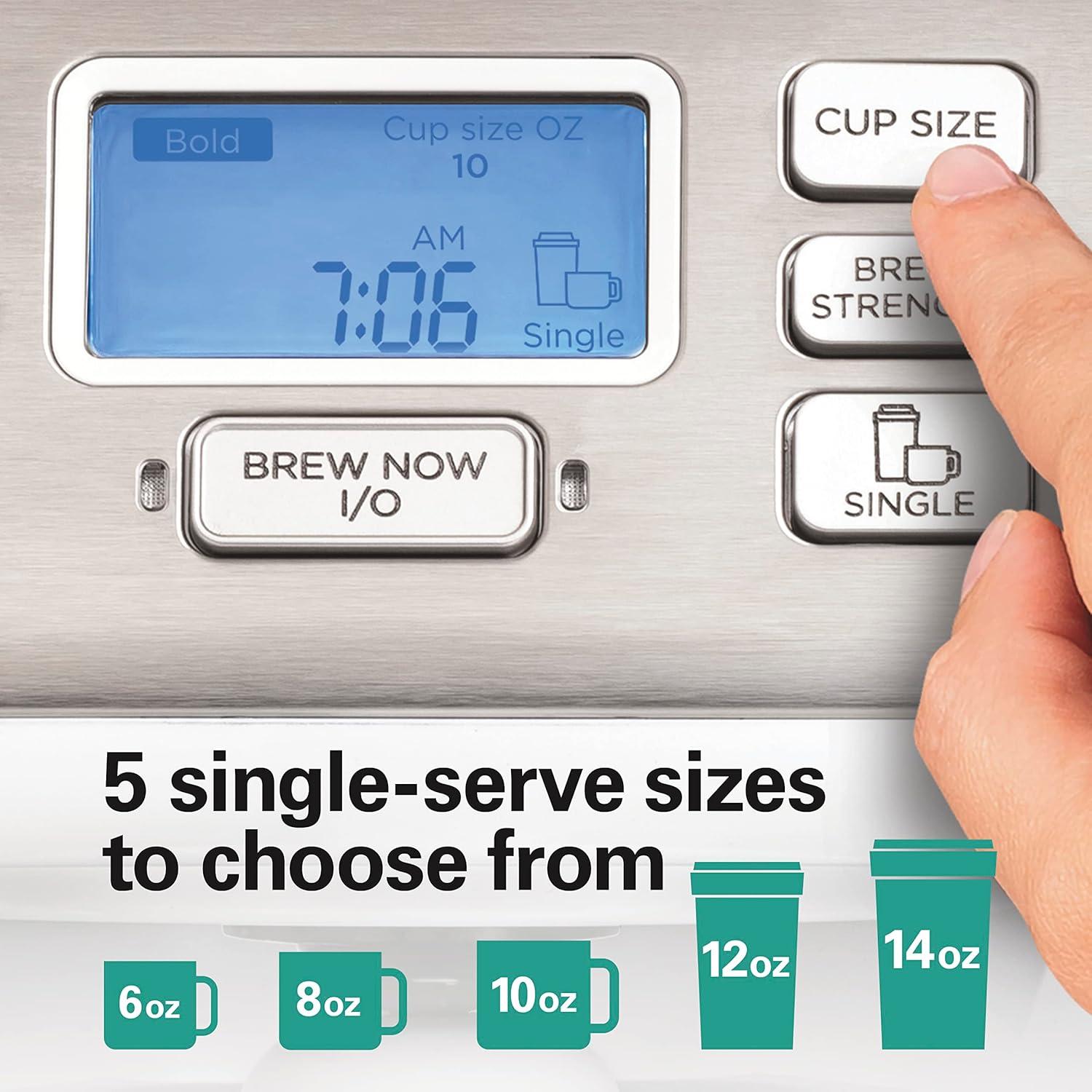
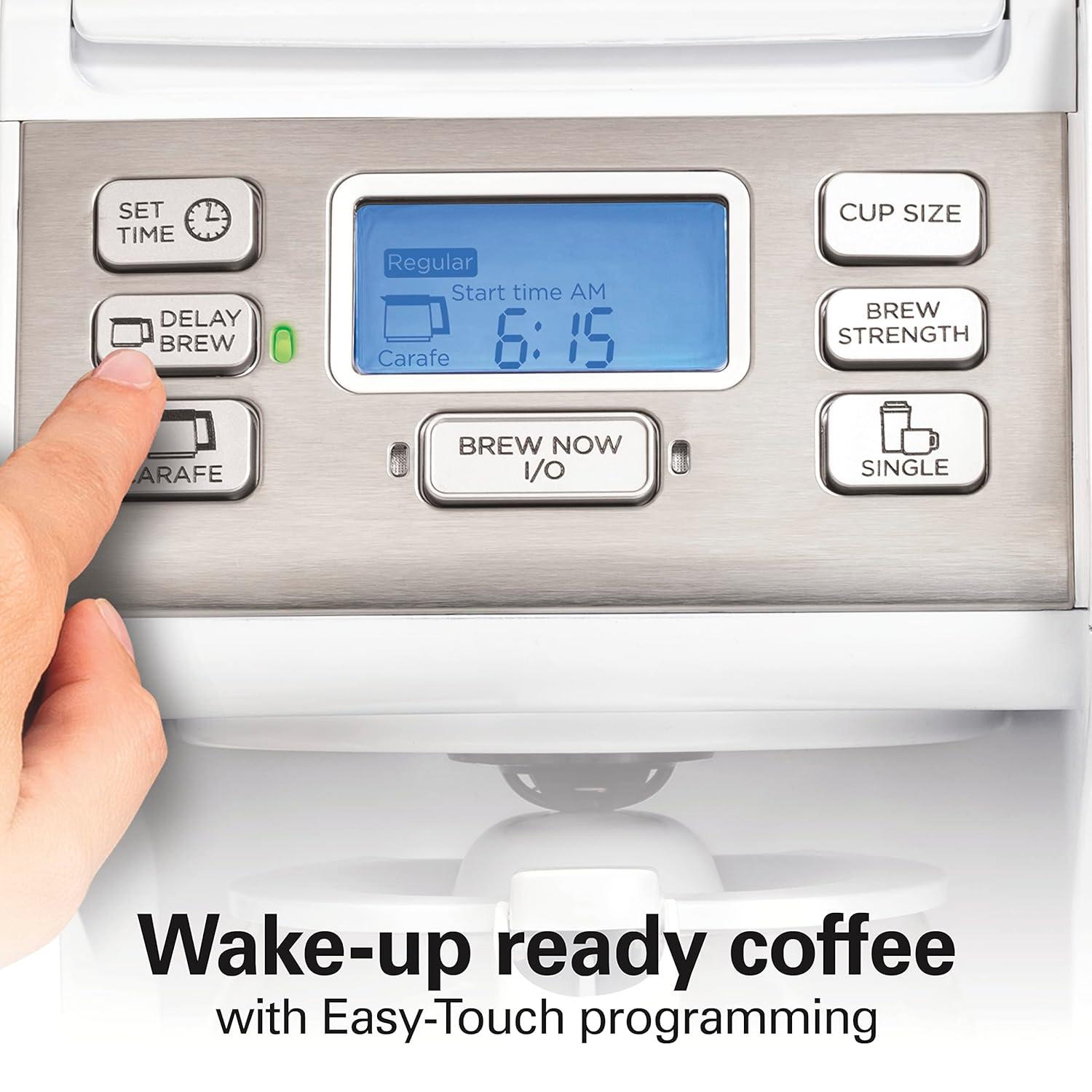
When you run a hand along the white shell, the surface feels like a slightly textured, hard plastic rather than a glossy slick — cool to the touch at first, then warming faintly if the machine has been running. The edges are rounded where you naturally grip, and routine wiping usually removes the light smudges that tend to appear; you’ll notice small finger marks more in certain light. the buttons sit low on the faceplate and respond with a short, muted travel; pressing them feels intentional rather than springy, and the backlit controls give a soft glow under your fingertip. You tend to use your thumb for the single‑serve controls and a forefinger for the carafe‑side buttons, making small positional adjustments as you reach around the unit during morning rushes.
Pick up the glass carafe and you’ll feel thin, smooth glass paired with a molded plastic handle that gives a secure, rounded grip; the balance shifts noticeably as you start to pour, so you frequently enough stabilize the lip with a slight tilt of your wrist. The lid hinges with a small, confident click and sometimes needs a brief two‑handed nudging when it’s hot.The removable reservoir comes away with a clean lift — its plastic rim offers a thumb groove you naturally find — and empty it feels light in your hands,while a partial fill adds a steady,predictable weight. Small tactile cues show up where the reservoir meets the housing (a faint catch and a ring where water can gather),and those spots are the ones you tend to check or dab during quick cleanups.
- Shell: textured plastic, cool then warm
- Buttons: low travel, muted feedback
- Carafe: smooth glass, balanced by a molded handle
- Reservoir: thumb groove, light when empty, heavier with water
| Part | Tactile impression |
|---|---|
| White shell | Matte, slightly grained; shows fingerprints in certain light |
| Control buttons | Low profile, short travel, soft audible click |
| Glass carafe | Thin, smooth surface with a molded, ergonomic handle |
| Removable reservoir | Light plastic with thumb groove and a faint catch at the base |
A hands-on run-through: how you load K-Cups or scoop grounds and use the controls

when you go to make a single cup, you lift the hinged lid on the single-serve side and either drop a K‑Cup into the circular pod cradle or remove the small brew basket to scoop in grounds. The pod sits with a quick little click; the grounds basket slips back into place and the lid closes over it with a short, definite motion. If you’re switching between pod and ground brewing you’ll often find yourself stowing the unused insert back in the cup-rest cavity or rinsing it briefly before the next use — a small,routine habit that keeps the area from getting messy. In everyday practice you tend to check that the cup or travel mug is aligned under the spout before starting, and you may nudge the removable cup rest out of the way when using a taller container.
The control area responds in predictable, tactile ways: tapping the size buttons steps through the available single‑serve volumes and lights the selection on the backlit panel, while the Select‑a‑Brew option toggles between two setting indicators for a bolder or more regular extraction when you’re using grounds. The carafe side has its own touch controls and a display that shows the current selection self-reliant of the single‑serve choices, so you use one side without disturbing the other. Below is a simple reference of the buttons and what they indicate during a typical interaction:
| button / Control | Observed Response |
|---|---|
| Single‑serve size | cycles sizes; corresponding indicator lights up on the display |
| Select‑a‑Brew | Toggles strength indicator between two settings when grounds are loaded |
| Single‑serve Start | Begins pod or grounds brew on the single‑serve side; lights confirm activity |
| Carafe controls | Separate start/programme buttons; display shows carafe status independently |
Finding its place in your kitchen, with the footprint, height and clearance that shape where you can put it

When you set the unit down on a counter, the first thing you notice is how much horizontal territory it asks for — it isn’t slim, so it needs a clear patch where the single‑serve side and carafe side won’t crowd each other. Think in terms of usable surface rather than exact specs: you’ll wont enough room to pull the glass carafe forward, to place a standard cup on the cup rest, and to remove the single‑serve pod or brew basket without bumping a backsplash. A few routine placement cues tend to matter most:
- Counter depth: leave space behind the base so the back can clear the wall while you tilt or slide it forward to refill.
- Front clearance: make room to slide the carafe in and out and to position taller mugs when the cup rest is removed.
- Top and side access: keep a bit of breathing room for lifting the lid and reaching the brew area.
Height and overhead clearance come into play when you tuck the brewer under cabinets or shelves. The cup rest can be removed to fit a roughly 7‑inch travel mug,so if you frequently enough use taller containers you’ll find yourself occasionally shifting the machine forward rather than raising the shelf above it. The water reservoir and pod/brew‑basket openings are easiest to use with a little extra space behind and above the unit,so in everyday use you’ll tend to pull it out from the wall to fill or clean rather than trying to reach over cramped edges. The simple table below shows the typical working clearances you’ll notice during normal use:
| Use case | Working clearance you’ll usually allow |
|---|---|
| Brewing into the glass carafe | Enough front room to slide the carafe out and set it down comfortably |
| Brewing into a travel mug (cup rest removed) | space to accommodate a ~7″ tall mug and to access the top lid |
how the FlexBrew lines up with your expectations and where it shows limits in your everyday use
In everyday use, the machine generally behaves the way many would expect: the single-serve side comes up to serving temperature quickly and produces a steady cup when a pod or grounds are used, and the carafe side delivers a predictable batch without drama. Mornings with staggered departures reveal the convenience of having both paths available at once — one person can grab a single cup while another pours from the pot — and the control settings tend to produce consistent results from one brew to the next. Small habitual actions become part of the routine, like nudging the cup rest into place before a tall travel mug is used or pausing briefly to check the brew basket after a bold setting.
At the same time,everyday interactions expose a few practical limits that become apparent over repeated use.Mode changes and handling of removable pieces can feel fiddly at moments: the single-serve holder needs correct seating to avoid spatter, and the water reservoir will be topped off more often than anticipated when several people make single cups in succession. Routine upkeep — rinsing the pod holder, wiping the carafe lip, or lifting the reservoir to skim a mineral film — becomes part of kitchen rhythm rather than a one-off task, and some taste differences between the quickest single-serve extractions and a full-pot brew show up on repeat mornings.
- Mode switching: requires a short, deliberate pause to align parts and select the intended brew path.
- Upkeep visibility: removable components sit on the counter for quick rinses after a few uses.
For full product specifications and the current listing details, see the product page.
How daily maintenance plays out for you when you switch between single-serve and full-pot brewing
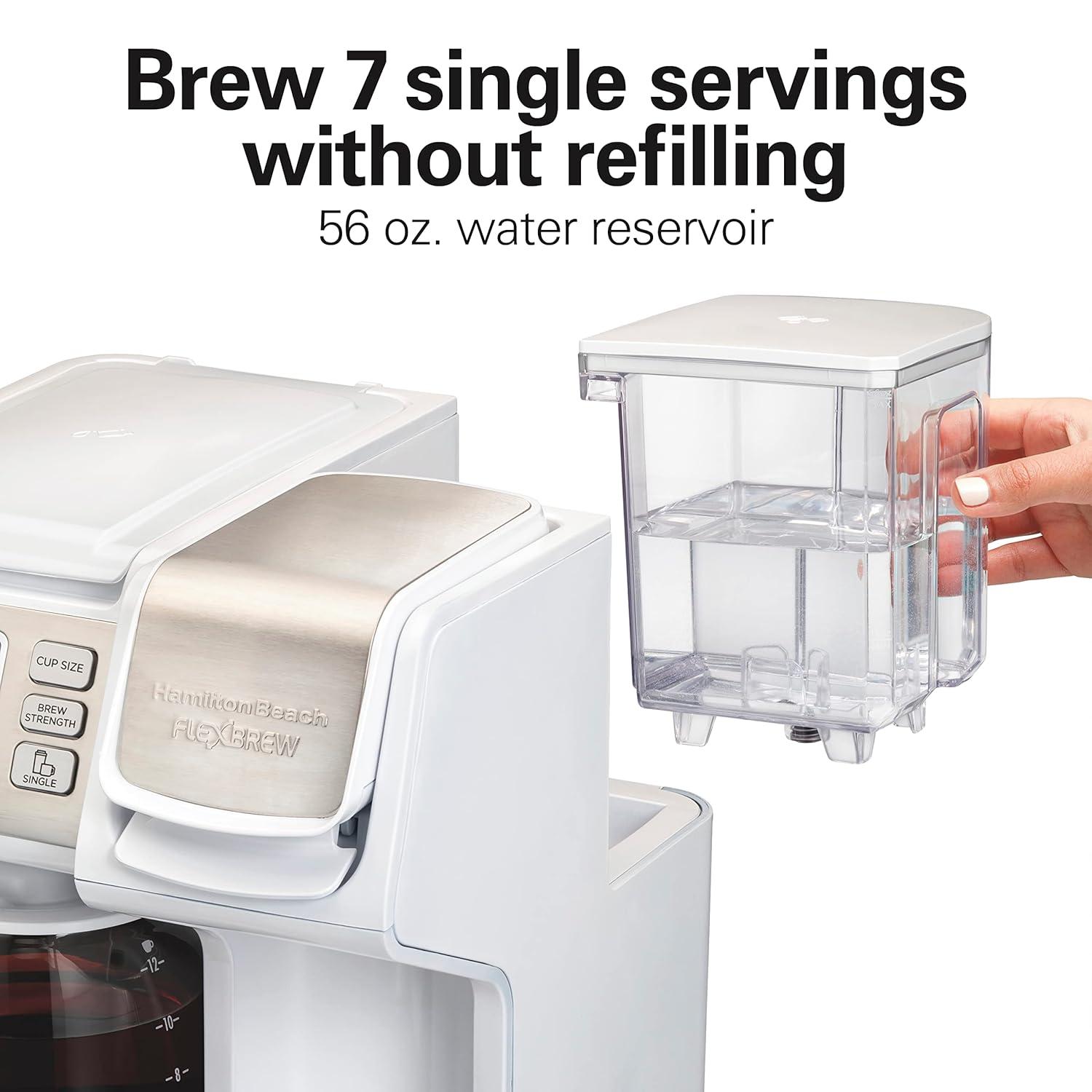
When you flip between a single cup and a full carafe, the day-to-day upkeep settles into a small rhythm you barely notice. Mornings when you grab a pod,you tend to check the little compartment for a spent pod or a stray bit of grounds,give the cup rest a quick wipe if there’s a splash,and glance at the water level before you start. Later, if you decide to make a full pot, that habit shifts: the carafe and paper or reusable basket become the focus, and you’re more likely to let the carafe cool on the warming plate for a few minutes before handling it, emptying any leftover coffee, and rinsing the basket area. you’ll also find yourself toggling between storing the pod holder and the full-brew basket in the little cup-rest space depending on what you used last — a tiny, everyday ritual rather than a chore.
Over the course of a week those small actions add up into predictable checks rather than a long cleaning session. A quick scan for these things tends to keep the machine behaving: whether it’s a damp drip spot under the single-serve face or a few grounds clinging to the full-pot basket, you notice and deal with them in passing. Common touchpoints you notice most often include:
- Used pod holder — whether it’s tucked away or needs clearing after a few single cups
- Carafe area — the glass and the basket that collects grounds during a 12-cup run
- Reservoir level — you check it before switching modes more than you probably expect
| Single‑Serve Moments | Full‑Pot Moments |
|---|---|
| Noticing a spent pod or a little splash on the cup rest | Emptying the carafe and shaking out or replacing the filter basket |
| Quick wipe of the pod area between uses | Occasional clearing of grounds from the brew basket rim or basket housing |
| Top‑off checks of the water reservoir when you want back‑to‑back single cups | Making sure the reservoir has enough for a full cycle before you start |
How It Settles into Regular Use
Living with the Hamilton Beach FlexBrew trio has meant noticing small rhythms more than headline features. Over time it finds a spot among mugs and jars on the counter, and as it’s used the plastic and white finish picks up the faint marks of everyday handling — a soft dulling around the lid, a tiny water ring that never quite disappears. In regular household rhythms it gets reached for without thinking, a short pause between other chores, a habitual button press and a casual rinse. It settles into routine.
As an Amazon Associate I earn from qualifying purchases. Amazon and the Amazon logo are trademarks of Amazon.com, Inc, or its affiliates. All images belong to Amazon