You open the glass door and the interior light comes on, the three shallow racks catching your eye before anything else — more like a compact convection oven than a basket-style fryer. The Chefman Multifunctional Digital Air Fryer+ arrived with the usual bits tucked inside; up close it reads as a solid, boxy appliance with a large viewing window. Its matte-black shell has a faint texture under your palm, the hinge gives a firm, controlled lift, and sliding the racks in and out produces a soft scrape that registers the unit’s weight and build. The touch panel responds without a click, and the whole thing settles into the kitchen’s rhythm as soon as you start using it.
A weekday glance: the CHEFMAN air fryer on your counter and in active use

On a busy weekday the unit tends to settle into the role of the kitchen workhorse: it sits within easy reach near your coffee maker and becomes the appliance you open without thinking. In the morning you tap a preset, pop in a small tray, and half your breakfast is handled while you finish other things; at lunchtime it’s the go-to for reheating leftover slices or crisping up fries, and by evening it’s doing the bulk of dinner prep while you set the table. The capacitive panel and presets feel intuitive in the moment, though the screen can sometimes need a firmer press than you expect. The large glass front and interior light make it easy to glance in mid-cycle to check browning without pausing the rest of your routine.
Active use during the week shows how the appliance fits into small rhythms: sliding racks are convenient when you’re juggling multiple dishes, the drip tray catches the usual mess of sauces, and the removable parts are items you sweep into your nightly tidy-up rather than a separate project. Noise is generally low while it runs,but the end-of-cycle beep is distinct and tends to repeat until the unit finishes its sequence,so you might catch yourself heading back to silence the kitchen. Crumbs and splatter collect in predictable spots and become part of the after-dinner wipe-down, and on a few occasions you may find yourself unplugging briefly to reset the display if you stop cooking early and the screen stays lit.
The look and touch of the unit — finish, viewing window, handle and interior trays as you open it
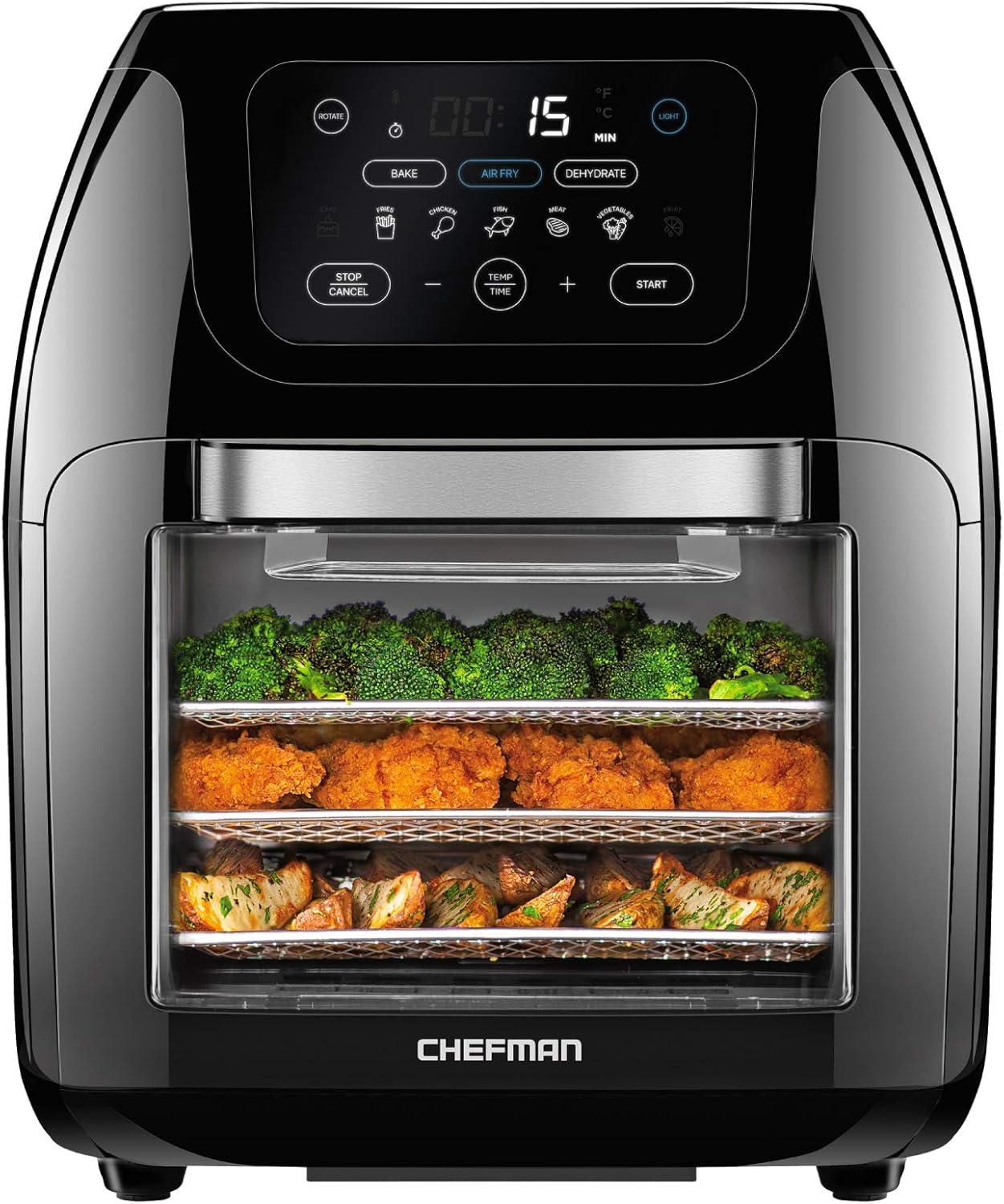
when you frist run a hand over the casing, the finish reads as slightly textured matte black plastic—pleasantly non-reflective but prone to showing fingerprints when your hands are oily. The door feels sturdy as you pull it open; the handle gives a firm, plastic grip that sits a little proud of the front so you don’t have to hunt for it.Looking through the large glass viewing pane while the oven is running, you can usually see what’s happening without opening the door; the interior light brightens the view, though occasional splatters and steam marks do build up and become noticeable over time. Viewing window and light combine to make quick visual checks easy while you’re juggling other tasks in the kitchen.
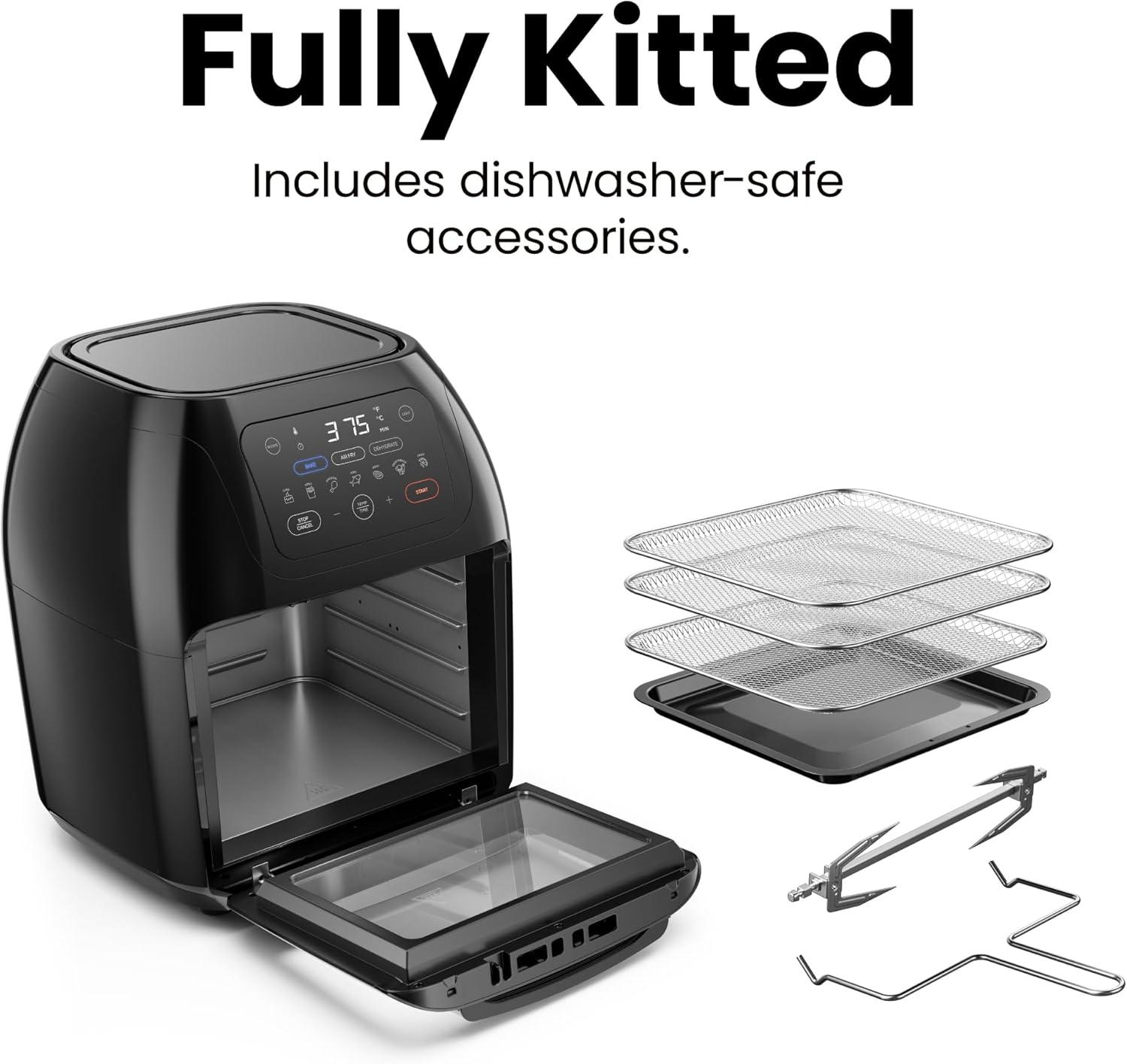
Open the door fully and the interior reveals the removable pieces that you’ll handle most often. The three wire trays slide in and out on fixed rails with a little give; they’re lightweight metal and can feel slightly springy when you pull them out to rearrange food. the bottom drip tray is broad and sits flush beneath the racks, catching crumbs and drips as you work. In routine use you tend to pause between batches—letting hot trays cool, nudging a rack back into place, or grabbing a mitt—so the tactile details (slippery when greasy, warm after cooking, edges that sometimes need a careful grip) shape how you interact with the unit. A short unpacking or cleaning swipe usually becomes part of the rhythm after the first few uses.
- Finish: matte, shows fingerprints when greasy
- Viewing window: large, aided by an interior light for mid-cycle checks
- Handle & trays: solid plastic handle; wire trays that slide and lift out for routine handling
How your fingers move across 17 touch presets and the digital display during typical cooking
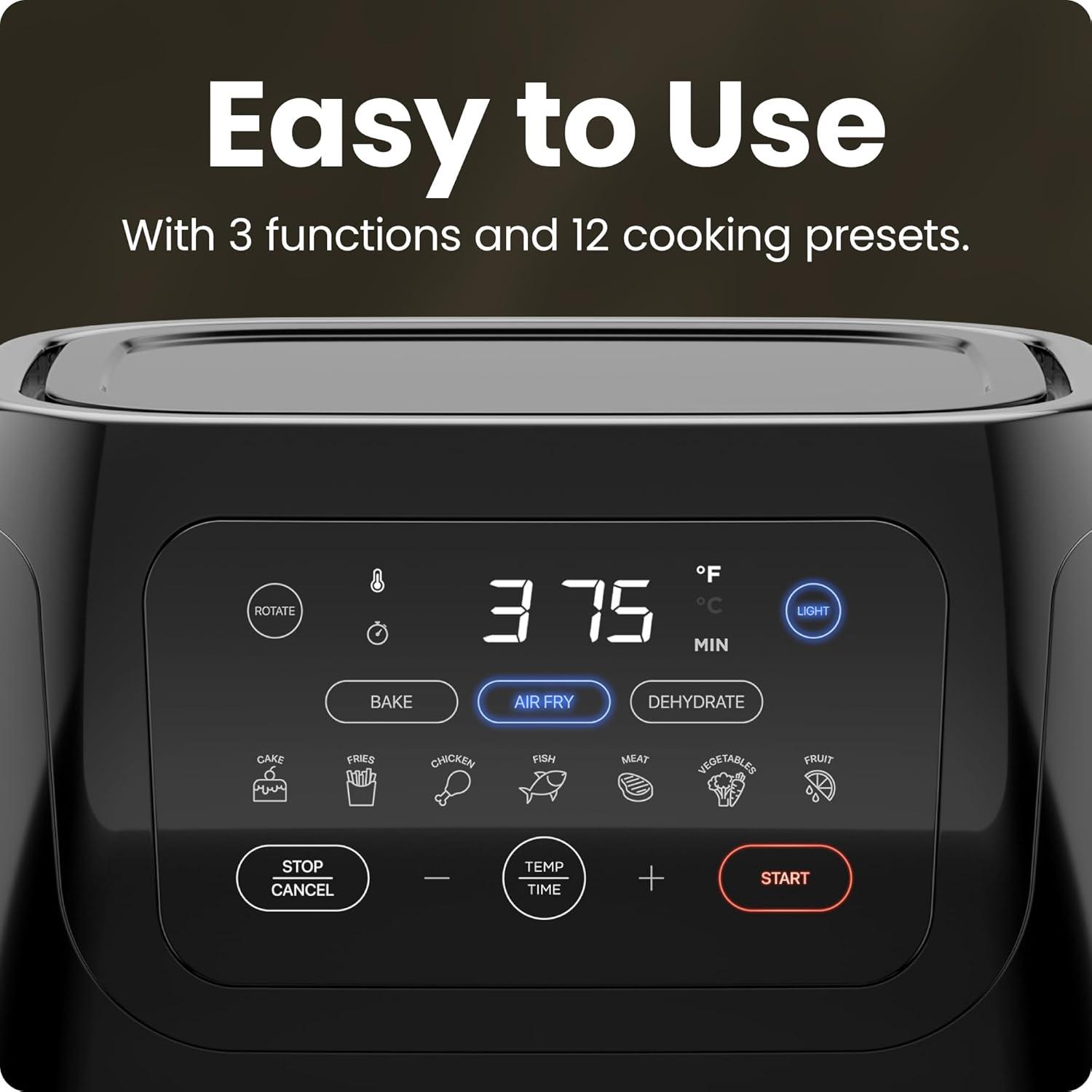
When you begin cooking, your fingers gravitate toward the capacitive panel and the row of presets laid out across the glass. A light tap on an icon is the most common motion — not a hard press — and the chosen preset briefly highlights while the numeric fields redraw to the preset’s temperature and time.You’ll notice the panel registers best with a flat fingertip; quick grazing or the pad of a knuckle can feel unreliable, so you tend to pause a fraction longer before lifting your finger. The screen gives a short audible tone and a visual flash when it accepts an input, and sometimes you tap twice to be sure the time or temperature change landed.Over the course of a session you also find yourself brushing away a fingerprint or two from the control surface; oil and seasoning splatters make the icons less distinct unless wiped down between uses.
During a typical cycle your motions become more about small adjustments than sweeping gestures: nudging the temperature up or down in preset increments, tapping the time to add a minute or two, or momentarily touching a display corner to bring the clock back into view. The display itself settles into a predictable pattern that you learn to read at a glance — which presets are active, the set temperature, and the countdown — so most touches are brief and targeted.
- Top row — preset icons that highlight when selected
- Center — large digits for time remaining
- bottom/side — temperature and small indicators (light, rotisserie, etc.)
| Display area | What you see while cooking |
|---|---|
| Preset strip | Icons light to confirm selection; switching presets redraws the numbers |
| Numeric center | Countdown in minutes and seconds that updates visibly each minute |
| Temperature readout | Set temperature displayed in coarse increments during adjustment |
You also notice small,habitual habits emerge: tapping the start area with the same finger,using a sleeve to avoid fresh-smudge marks,or pausing to re-confirm a setting if the screen seemed slow to respond. When the timer finishes, the final beeps and the static readout pull your hand back the same way they brought it forward at the start.
Fitting into your kitchen: measurements, the XL 10L footprint and where you’re likely to place it
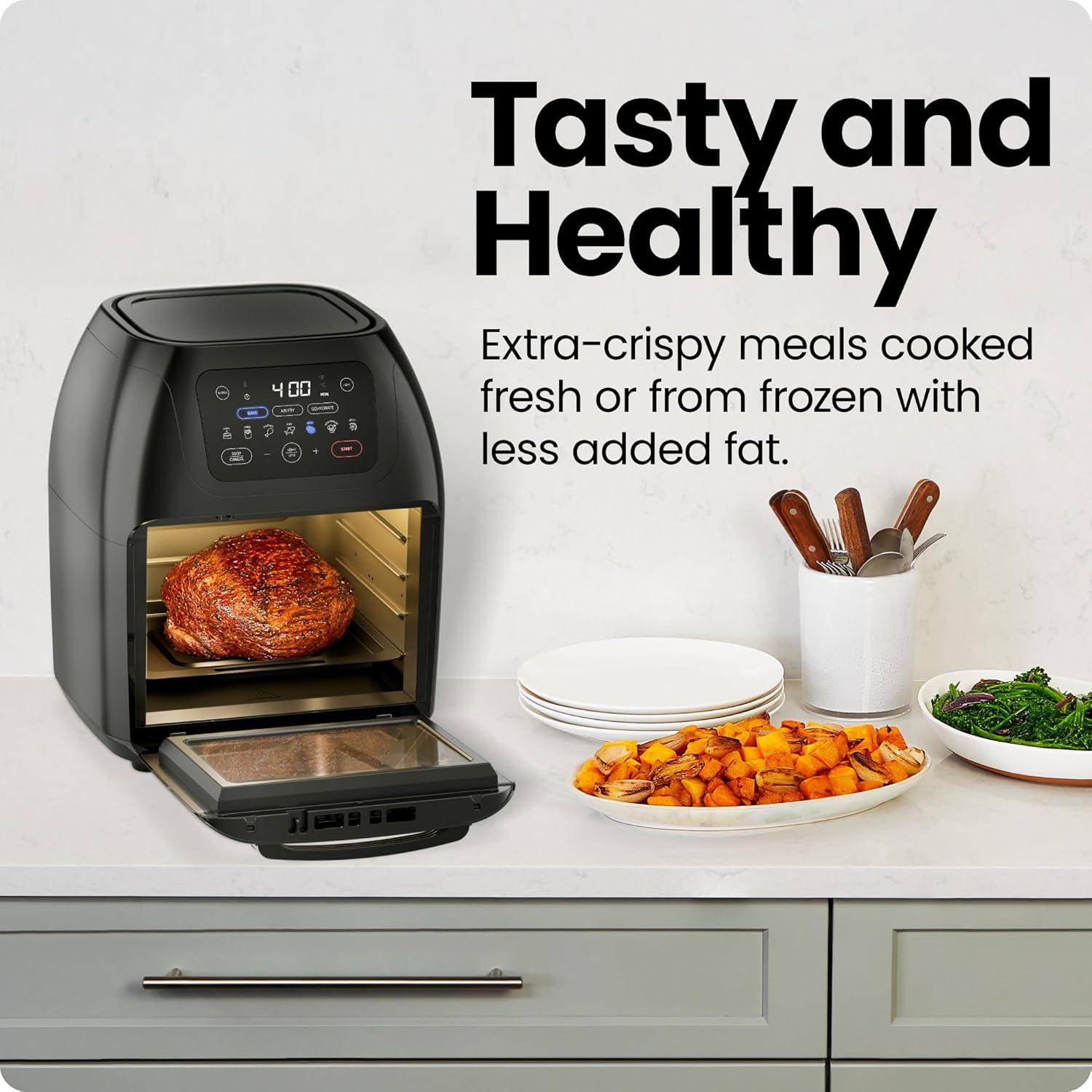
The unit takes up a noticeable patch of countertop space — think roughly a foot or so from front to back and a similar width,with a bit more height than a slim toaster. That means when you set it down you’ll want to account for the door swing and the space you need to reach the controls and pull out racks; a few inches of clear room in front is helpful. You’ll also notice that it gives off some heat around the back and sides during use, so most people don’t tuck it flush under low-hanging cabinets; instead it tends to sit with a short gap so air can move. In day-to-day use you might slide it forward when loading or to reach the cord behind, then push it back again, and it’s common to shift it to a different counter when you need the space for prepping or larger pans.
Where you’re likely to place it depends on how you cook and where you store other appliances. Common spots include:
- Against the backsplash with several inches of clearance above and behind for ventilation and ease of access;
- On an island or open counter where the viewing window faces you and you can monitor trays without crowding surrounding items;
- On a rolling kitchen cart or open shelf if you want it out of the way when not in use but still easy to wheel out for cooking;
- Near an outlet rather than a power strip, since you’ll occasionally unplug it to move or clean.
| Countertop depth (typical) | Placement note |
|---|---|
| Shallow (≈24″) | May sit near the edge; allow extra front clearance for the door. |
| Standard (≈25–27″) | Fits comfortably with room behind for venting and cord access. |
| Deep (≈30″ or more) | Plenty of room to keep it slightly set back and still reach controls easily. |
When expectation meets reality: what this appliance can and can’t handle in everyday family cooking

In everyday family cooking,the appliance frequently enough performs like a compact,fast countertop oven: quick cycles make it useful for reheating and crisping leftovers (fries and pizza surface frequently praised),and the multiple rack positions let households try to finish several small items at once. Common, repeated interactions show it handling simple roasts or a rotisserie chicken with minimal babysitting, and dehydration sessions that run for hours without constant attention; at the same time, preset programs can behave unevenly with very thin cuts or delicate seafood, and users tend to pause mid-cycle to swap rack positions or rotate pans so heat reaches every piece. Small,habitual upkeep appears alongside use — wiping the drip pan,shaking crumbs from drawer hinges,and occasionally dealing with sticky spots where the nonstick surface needs gentler cleaning — and those actions become part of the routine rather than a one-off task.
Across many real-world reports, a few recurring limitations emerge as part of normal use: intermittent touchscreen sensitivity, loud end-of-cycle beeps, and examples of units that stopped powering on after several months, which has affected how households plan backups on busy nights. Tray edges and some removable parts have been described as sharp or awkward to handle, and large or overfilled dishes can spill onto the bottom tray, so spacing and portioning tend to matter in practice. The table below summarizes typical family tasks and the observed outcomes from routine usage patterns in reviews and user reports.
| Common task | Typical outcome in household use |
|---|---|
| Reheating and crisping | Consistently effective for fries, pizza; fast cycles |
| Weeknight multi-dish cooking | Often workable with rack rearrangement; monitoring helps evenness |
| Rotisserie/roast | Good results when weight and balance allow proper rotation |
| Dehydrating/long cycles | Performs reliably over hours, with minimal intervention |
| Baking large or delicate items | Mixed results; thin items risk overcooking under presets |
Full specifications and variant details can be viewed on the product listing: View product listing
A day of dishes: observable cooking routines — frying, rotisserie turns, dehydrating cycles and cleanup steps you’ll repeat

On a typical day you’ll find the appliance cycling through a few familiar rhythms: a quick air-fry to crisp breakfast bacon, a longer rotisserie turn for a roast at dinner, and the occasional dehydrating session that hums away for hours while you get on with other things. When you fry, you tend to check through the glass and nudge a tray or two to keep things even; crumbs and little oil flecks mostly end up on the drip tray, so it becomes part of the after-meal shuffle. The rotisserie routine is more hands-on in a lived way — you wrestle the spit into place, notice how a poorly balanced piece will wobble and need a tiny repositioning, and use the spit retrieval tool when it’s done; juices collect beneath and the smell intensifies as the meat turns. dehydrating sits at the other end of the scale: long, low-heat runs that you set before bed or early morning and mostly ignore, coming back to crisp fruit or jerky and a faint, concentrated aroma left in the kitchen.
Your cleanup cadence develops quickly and predictably. There are quick wipe-downs after frying, a more patient soak-and-scrub after a rotisserie session, and a couple of recurring little fiddles — shaking crumbs from springs or wiping the door seal when it gets tacky — that you learn to slot into the flow.Small habits creep in: laying racks on a dish towel to dry, leaving the rotisserie spit to cool a while before you handle it, or putting a greasy drip tray in warm water to loosen stubborn bits. The pattern tends to be similar day to day, so you instinctively know which parts need immediate attention and which can wait until the end of the evening.
- Frying — quick checks,drip tray attention
- Rotisserie — balancing and juice collection
- Dehydrating — long runs,minimal intervention
| Component | Typical cleaning cadence | Usual effort |
|---|---|---|
| Racks | After heavy use / weekly | Rinse or soak,quick scrub |
| Drip tray | After each greasy cook | Empty,wipe or soak |
| Rotisserie spit & tool | After every rotisserie run | Cool,wipe,occasional soak |
A Note on Everyday Presence
After months of regular use, the CHEFMAN Multifunctional Digital Air Fryer+ Rotisserie, dehydrator, Convection Oven, 17 Touch Screen Presets Fry, Roast, Dehydrate, Bake, XL 10L Family Size, Auto Shutoff, Large Easy-View Window, Black has settled into a corner of the counter, part appliance and part background. Hands reach for it in familiar motions; controls are tapped without thinking, and the glass collects the occasional fingerprint that gets wiped away between meals. The kitchen’s small routines shift around it—trays parked near the sink, a spot cleared on the shelf, surfaces showing the faint wear of regular handling. Over time it settles into routine and stays.
As an Amazon Associate I earn from qualifying purchases. Amazon and the Amazon logo are trademarks of Amazon.com, Inc, or its affiliates. All images belong to Amazon