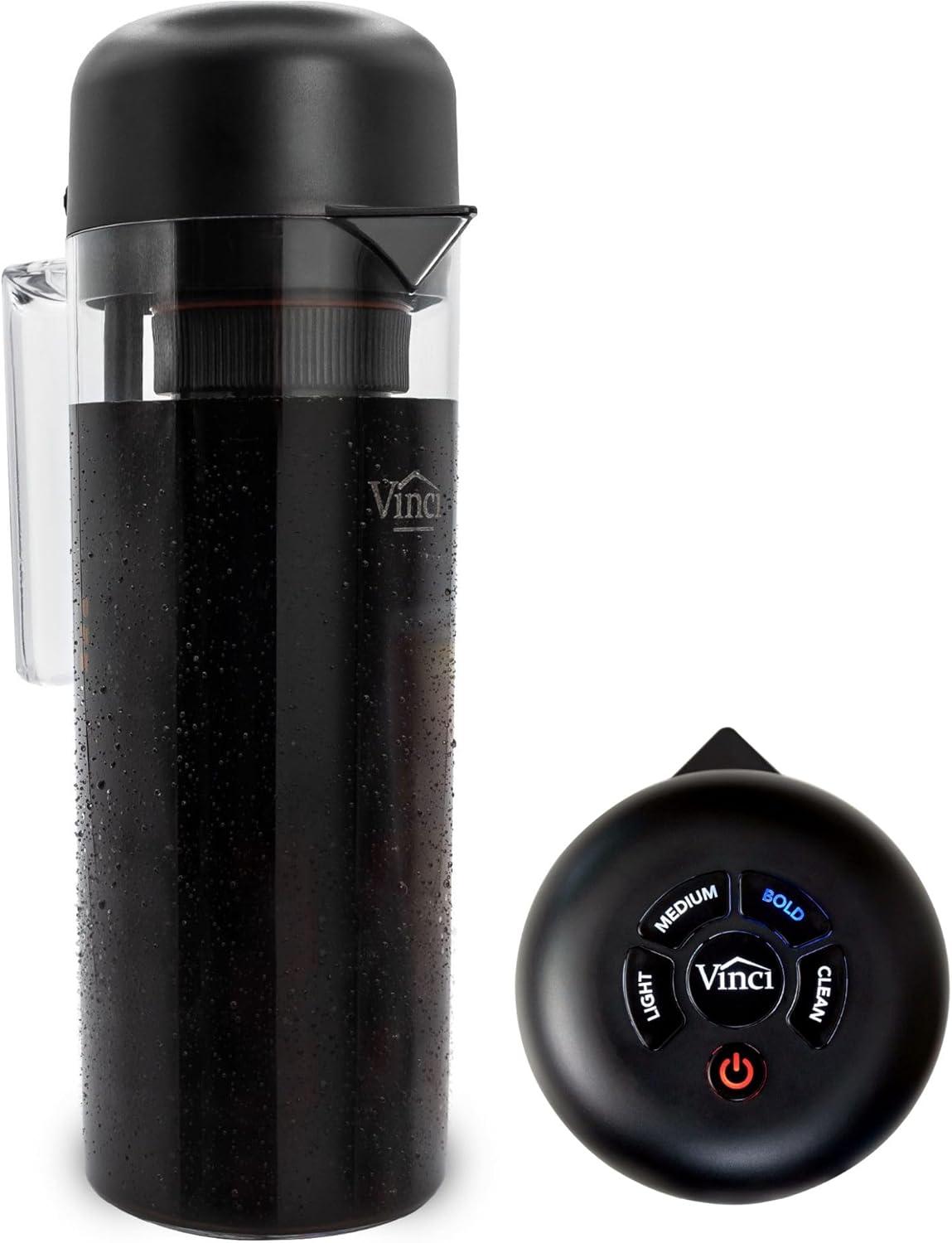
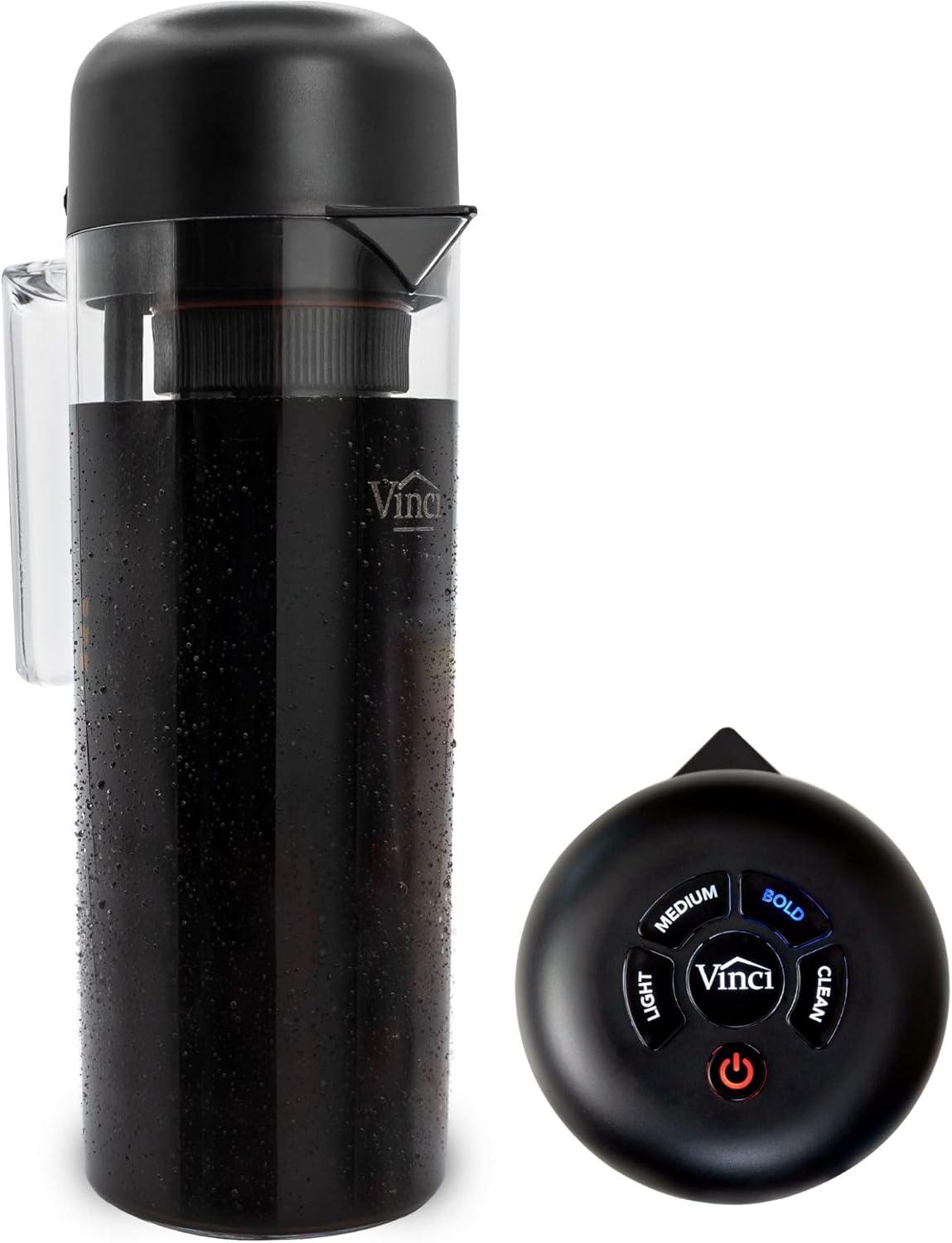
You lift the VINCI express 2 and immediately notice how light the plastic carafe feels in your hand; the exterior has a matte, slightly grippy finish that keeps it from slipping when damp. Balanced in profile—tall but narrow—it occupies a modest footprint on the counter, while the touchpad emits a soft glow when you reach for it. A crisp click, then a low, steady murmur as water moves through the unit; the lid seals with a decisive snap and the seams read tidy under close inspection. In those first minutes of use it registers as a compact, quietly mechanical presence in the kitchen.
Your first sight: the VINCI Express 2 on your counter as it prepares a cold brew
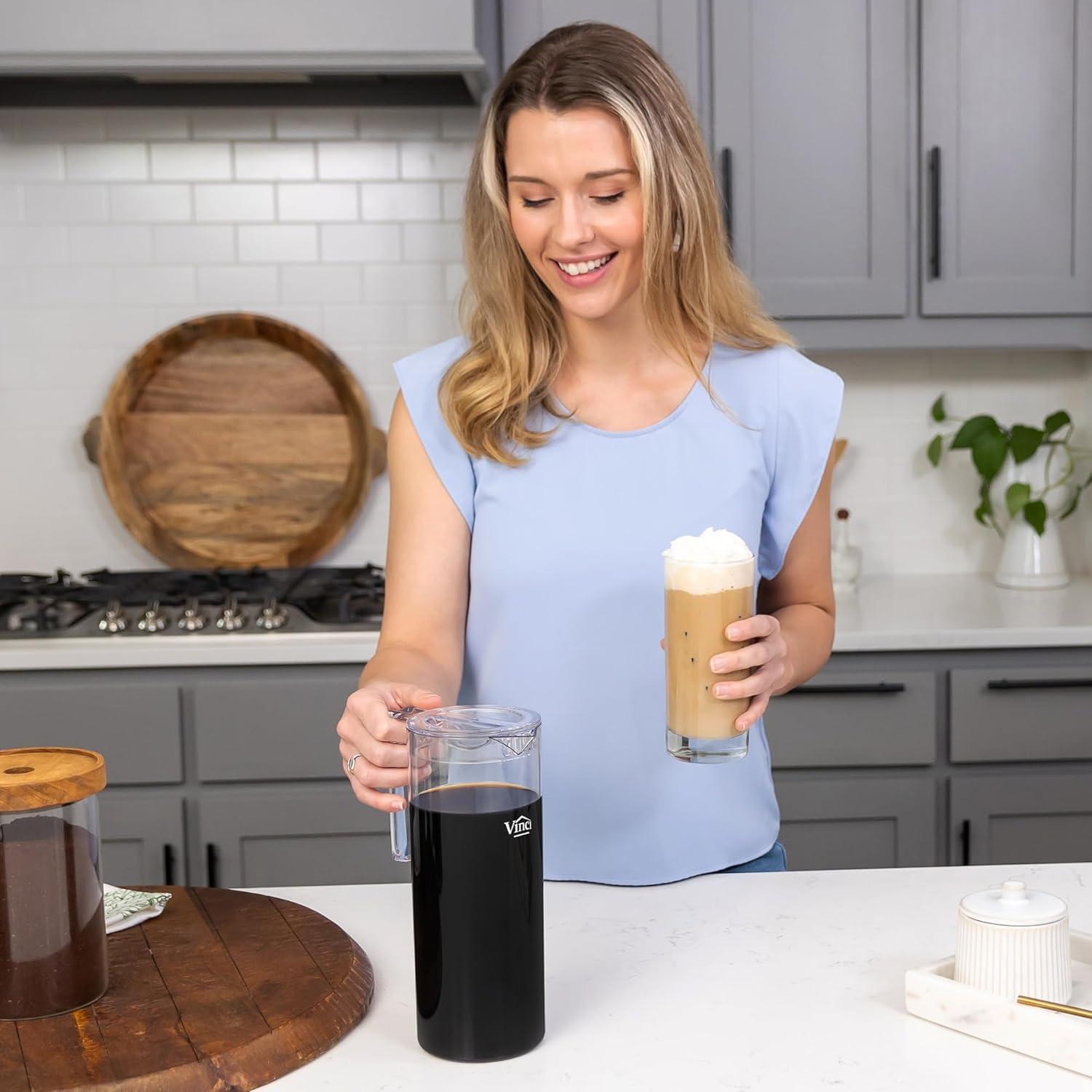
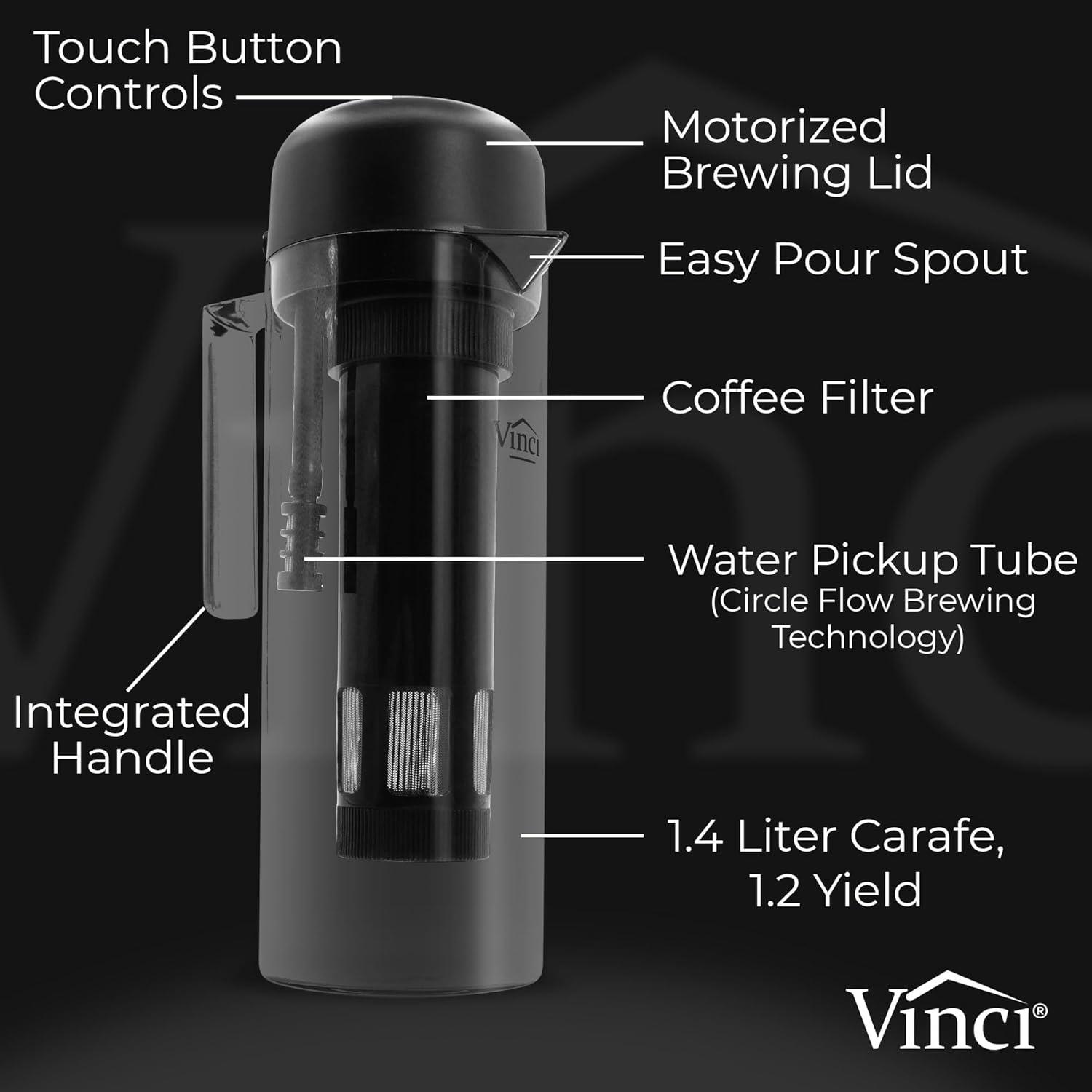
You see it first as a quiet presence on the counter: a clear carafe catching the light, the top unit perched above it with a small illuminated panel that indicates activity. Dark liquid slowly accumulates and deepens in color, swirling in a gentle motion you can watch through the pitcher. From where you stand you notice tiny ripples instead of a boil, the faint, regular thump or hum of the circulation, and a steady drip now and then as water moves through the central basket — grounds are contained and sit damp, not floating free.The lid sits flush,a pouring spout peeks out,and the whole assembly tends too draw a casual,close-up glance when you pass the counter in the morning.
as it effectively works you notice small, practical signals that tell you how far along the brew is:
- Lights on the control panel pulse or change color to show progress.
- Motion inside the carafe — a slow vortex and settling layers of liquid — signals extraction in real time.
- Sound is minimal: a soft motor hum and occasional trickle rather then anything intrusive.
You might find yourself wiping a tiny splash from the base or setting a cup nearby; the machine’s surfaces pick up fingerprints and coffee mist in ordinary use, so a towel or quick wipe becomes part of the routine presence. The scene is domestic and immediate — the device is doing its job in plain sight, and you can tell how a session is progressing without interrupting it.
What the plastic carafe and outer shell reveal about size, finish, and how you handle it daily
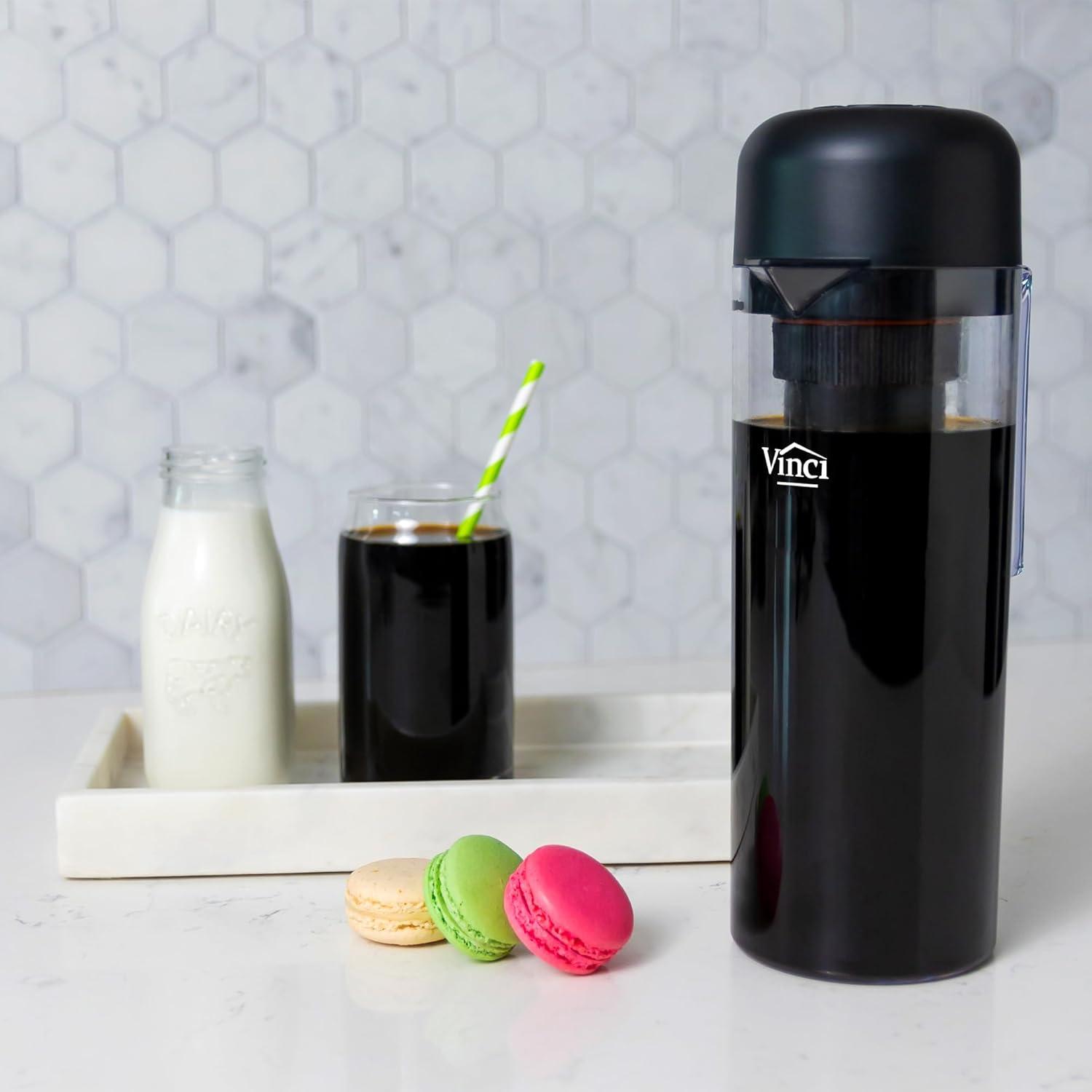
When you pick up the plastic carafe it feels noticeably lighter than a glass pitcher, so lifting and pouring become automatic parts of your routine rather than a careful two-handed task. The outer shell’s finish is closer to a soft matte than a glossy shine, which tends to hide minor water marks but shows fingertip oils when light hits it; on busy mornings you frequently enough pause to wipe a smudge before serving. Because the unit sits fairly low and compact on the counter, you can slide it into the fridge door or tuck it behind other containers without rearranging shelves, and the lid’s fit keeps condensation and stray drips from turning into a daily annoyance while you move it between bench, fridge, and bag.
In day-to-day use the materials steer a lot of small habits: the lightweight carafe makes refilling and rinsing quick, but you also notice faint coffee tinting and the occasional hairline scratch after repeated handling. You tend to use a soft cloth for quick wipe-downs and, when you have time, drop the carafe on the top rack of the dishwasher—those are part of the background cadence of upkeep rather than special care. A few simple, lived observations you might relate to:
- Lightweight lift: easy to carry with one hand even when partly full.
- Finish visibility: matte shell hides rings but picks up fingerprints and oils.
- Routine maintenance: quick wipes most days, dishwasher on slower days keeps it feeling fresh.
How you operate it: buttons, Circle Flow controls, and the self-clean function under your touch
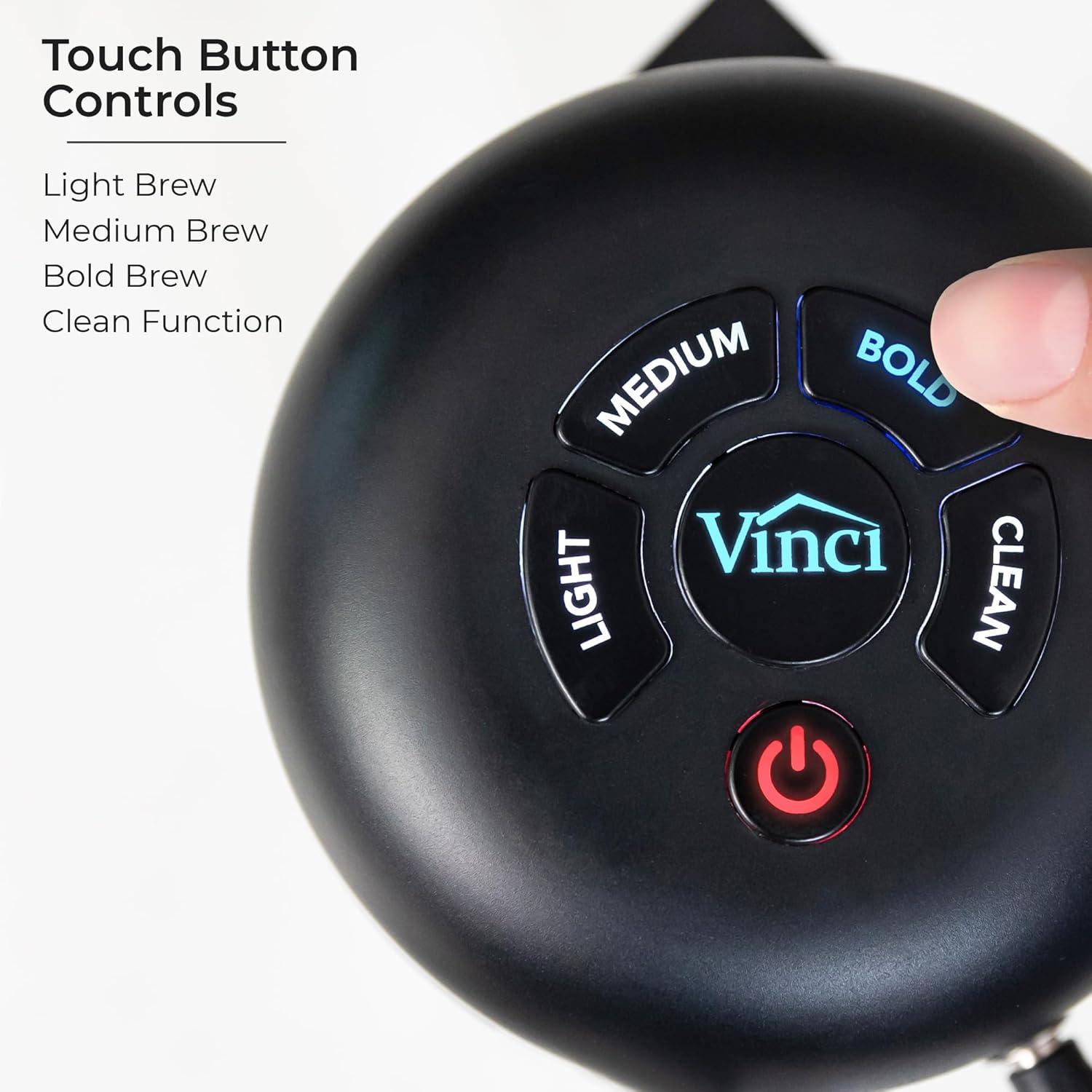
you interact with the unit using a small, flat control panel on the head—soft-touch buttons rather than mechanical toggles—so most of what you do is a gentle press. The layout groups the essentials together: a Power button, a Strength/control button that cycles through the brew options, a Start/Stop button, and a dedicated Clean button, plus a separate control labeled for the patented Circle Flow action. When you tap the strength control you’ll see the display update to show the corresponding brew time (it tends to list the minutes), and pressing the Circle Flow control immediately changes the subtle pattern of indicator lights; you can feel that the unit is responding even before the motor hums.if you prefer a quick glance, the panel’s little icons and a brief numeric readout make it easy to confirm the setting you selected without having to open anything up or guess which mode is active.
- Power — wakes the panel and readies the head.
- strength / Time — cycles through options; the display shows the time tied to each choice.
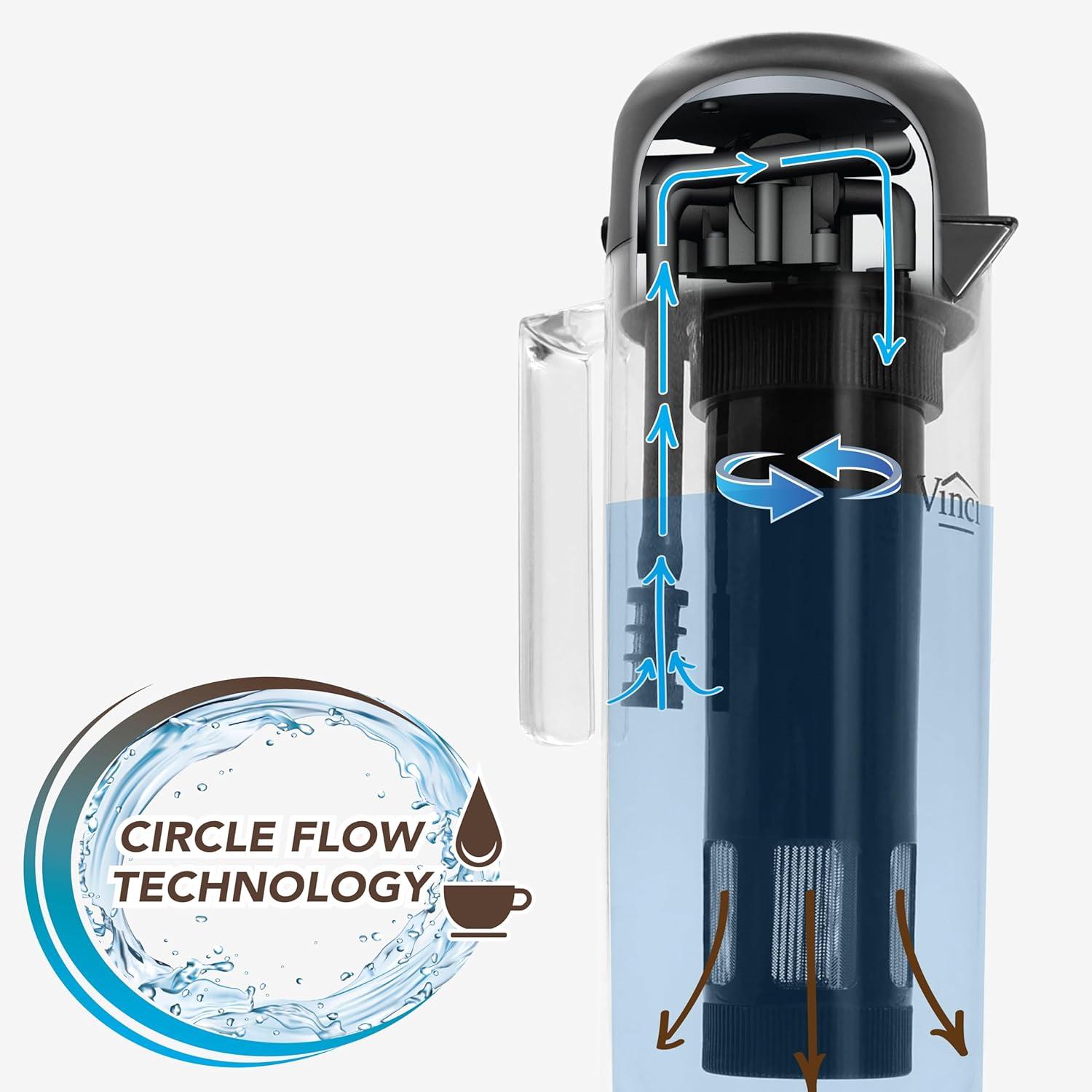
- Circle Flow — a separate control that alters the machine’s extraction pattern.
- Start/Stop and Clean — begin or halt a run, or launch the cleaning cycle.
Pressing the clean button feels no different than the other buttons, but the machine’s response is more noticeable: lights on the panel start to move and the display either flashes or counts down for a short cycle, making it obvious that the self-clean routine is underway. You’ll also notice small pauses in the motor noise and occasional tiny shifts in the indicator pattern during that cycle, which is useful to know if you’re nearby doing other things. In routine use you’ll find the panel gives enough feedback—audible beeps, changing lights, the display readout—so you rarely have to open the top just to check status.
| Control | Panel behavior when pressed |
|---|---|
| Start/Stop | Display shows time remaining; lights steady during operation |
| Circle Flow | Indicator pattern shifts immediately; extraction sound changes slightly |
| Clean | panel flashes or counts down for the cycle; short audible signals mark start/end |
A morning to evening timeline for you: brewing fast, changing strengths, and managing a 37 oz batch
On a weekday morning you can set a cycle as you get ready and come back to coffee that’s already poured into your travel mug. If you pick Bold it tends to give you the heavier, punchier cup you reach for before the day really starts; Medium or Light fit better for a second pour or a gentler mid-morning top-up. A full batch frequently enough means you pour two or three servings right away and tuck the rest into the fridge with its lid on — that way you’re not constantly restarting the machine. In practice you’ll also find yourself doing small, familiar adjustments: nudging a pour if you want more crema, re-running the same grounds later for a milder second steep, or simply grabbing a glass and adding ice. The cleaning control sits in the background of this routine, something you notice mainly at the end of the day when you put the carafe away and want the unit ready for tomorrow.
Later in the afternoon and into evening you’ll manage the remaining batch more as a resource than a single serving — decanting into smaller bottles for work or splitting what’s left between a few glasses for guests.That 37‑ounce fill tends to require a little fridge real estate and occasional top-offs,so you’ll plan pours around meals or meetups rather than trying to sip it all at once. For a quick reference, the table below shows a typical timeline you might follow over a day and the kinds of settings you pick for each moment:
| Time of day | Typical setting | What you do |
|---|---|---|
| Early morning (around when you wake) | Bold | Start a cycle, pour a travel mug, chill the rest |
| Midday | Medium | Top up a glass or run the same grounds for a softer batch |
| Late afternoon / evening | Light | Use leftovers over ice or split into bottles for later |
These notes describe a routine you’ll probably shift around — some days you’ll make two smaller cycles, other days you’ll stretch a single batch through the afternoon — and small limits, like fridge space and how quickly the flavor changes once opened, simply shape how you handle the carafe during the day.
How it fits your routine and what to expect from its speed,acidity control,and real-world limits
Speed shows up as a practical rhythm more than a headline feature: readiness, a short brewing cycle, and a pitcher ready to chill fit neatly into a busy morning or a mid-afternoon refill. The faster cycles mean a machine can be started while other tasks run — breakfast, packing a bag, switching laundry — and a chilled pitcher will be available soon after. In everyday use this tends to translate into treating the brewer as a quick-turn appliance rather than a slow, set-it-and-forget-it steep: some households run a bold cycle ahead of the day and then rerun a lighter cycle with the same grounds to stretch production, while others use single quick cycles to top up a communal fridge bottle. Cleaning and occasional rinsing become part of that rhythm too, sliding into normal kitchen upkeep rather than an involved chore.
Acidity control and real-world limits appear when the brewer is used across different beans, grind sizes, and repetition patterns. The low-acid impression is most noticeable with medium- to dark-roasted beans and on longer extraction settings; lighter roasts or shorter cycles will trend toward brighter, more acidic notes. Extraction consistency can vary day to day — bean freshness, grind coarseness, and how many times the same grounds are reused all influence the outcome — and that variability is what defines the device’s practical limits. Small practical observations from regular use: flow can require a quick check if a batch seems significantly weaker, and plastic storage can hold scents in some kitchens unless it’s part of the regular rinse routine. The table below summarizes typical in-kitchen outcomes by setting as seen in routine use:
| Setting | Typical cycle | Perceived result in routine use |
|---|---|---|
| Light | Short cycle (around ten minutes) | delicate, brighter cup; less concentrated |
| Medium | Medium cycle (roughly a quarter-hour) | Balanced clarity and smoothness |
| Bold | Longer cycle (a couple of dozen minutes) | Richer mouthfeel, noticeably less acidity |
For full specifications and configuration details, see the complete product listing here.
Where you place it and how its footprint, height, and cleanup shape your daily kitchen habits
In real kitchens the unit usually ends up where filling and storing are easiest: close to the sink for quick water top-ups and near the fridge when a finished batch needs chilling. Its base takes up roughly the same area as a small blender, so it rarely dominates a counter, but the overall height often brings it close to the bottom of upper cabinets; on some counters the lid sits near cabinet trim, which can prompt shifting it a few inches or placing it on a lower shelf. Placement decisions tend to be pragmatic and situational — on busy mornings it’s left out for the whole day, while at other times it gets moved to a sideboard or tucked behind a toaster to free working space.
Cleaning and storage behavior shapes how the unit is treated in daily routines: the ability to run a quick cleaning cycle and to place the carafe on the top rack of a dishwasher means it often gets rinsed or run through a load right after use, which in turn increases the chance it stays on the counter rather than being packed away. Small habits show up over time — letting the filter drip briefly before putting the lid on, wiping the base after a spill, or occasionally running the self-clean option overnight. Key placement and upkeep notes are easy to spot at a glance:
- Counter access: nearer the sink shortens refill and rinse steps.
- fridge storage: having a nearby shelf reduces transfers when chilling a batch.
- Under-cabinet fit: clearance can determine whether the unit stays out or is stowed.
| Location | practical note |
|---|---|
| Next to sink | Easier filling and quick rinse after brewing |
| Counter corner | Leaves main prep space free but adds a step to reach it |
| Fridge shelf | Stores brewed coffee with lid on; requires one-handed transfer |
See full specifications and configuration details on the product listing
How it Settles Into Regular Use
In daily routines you notice the VINCI Express 2 Electric Cold Brew Coffee Maker tucked into its corner on the counter, the plastic carafe catching the light and the odd fingerprint that accumulates as cups are nudged past. Over time the ways you interact with it become small, familiar motions — loading and pausing, rinsing now and then — and the surface shows the faint, lived-in marks of regular use. It is indeed present in the rhythm of mornings and the slow afternoons, not loud but steady, shaping how you move through the kitchen. over time you find it simply settles into routine.
As an Amazon Associate I earn from qualifying purchases. Amazon and the Amazon logo are trademarks of Amazon.com, Inc, or its affiliates. All images belong to Amazon