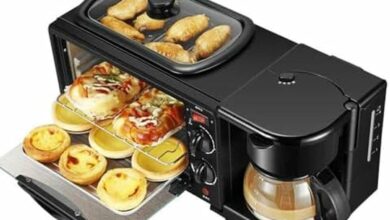
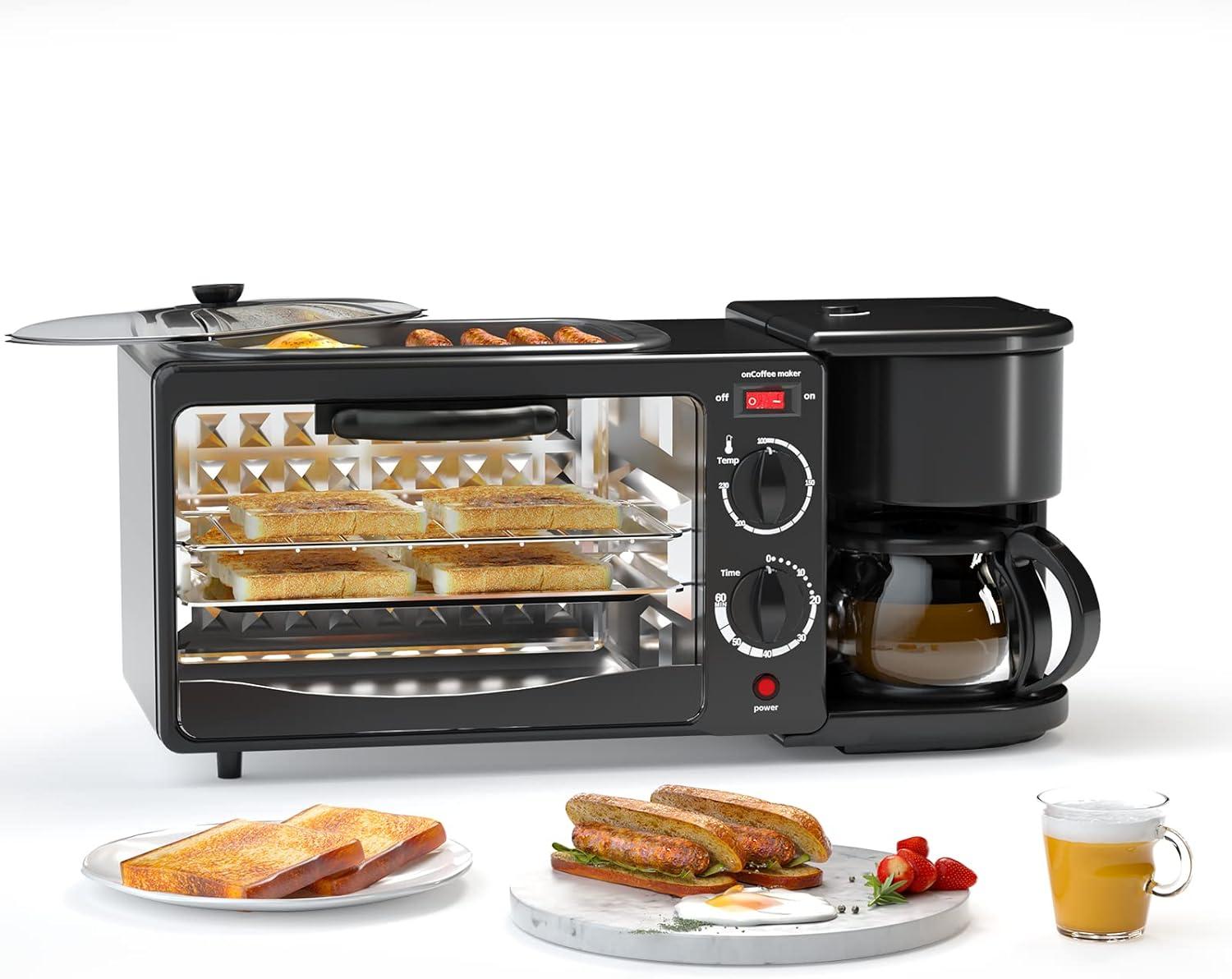
You lift the hinged lid and feel a modest but definite weight—nothing toy-light, the surfaces cooler than you expect under your palm. From a few feet away the black box reads tidy and compact; up close the griddle’s matte finish and the oven tray’s soft scrape give the thing a layered,workmanlike presence. Knobs click with a short, mechanical snap and the glass carafe murmurs when you slide it back, small sounds you notice between sips of morning quiet. On first use the Mihoho Breakfast Station registers as several familiar kitchen pieces stitched into one object, each seam and hinge making itself known as you move through the routine.
First glance at your morning setup: the breakfast station sitting on the counter
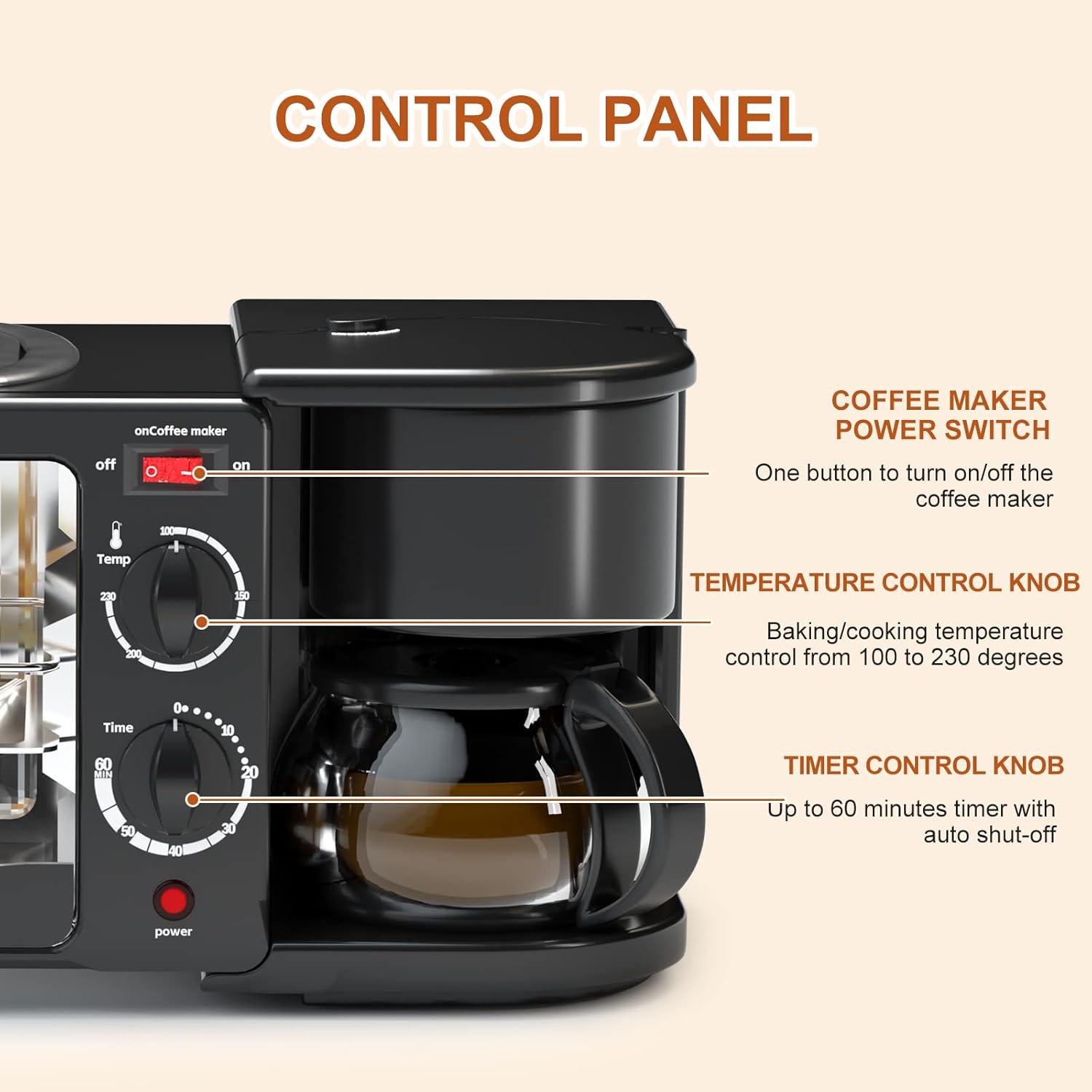
When you first glance at your morning setup, the unit reads like a small, multi-purpose appliance rather than a single-purpose toaster. It sits squarely next to the kettle and a jar of spoons, its silhouette breaking up the counter with a mix of metal, glossy plastic and a glass carafe that catches the kitchen light. From this angle you notice zones: a low-profile oven/toaster opening, a flat cooking surface on top and a little footprint for the coffee carafe. Control knobs and indicator lights face outward, so the settings are visible without having to turn the whole thing; the power cord tends to disappear behind it unless you pull it forward. Crumbs and a faint sheen of oil on the top surface are immediately obvious — part of its everyday presence that nudges you toward a swift wipe or a gentle shake of the crumb drawer before you start.
Looking closer, details that matter in routine use become clear. The glass carafe sits on a small warmer and the reusable filter basket peeks out when you lift the lid; the griddle surface has a slight non-stick sheen and a shallow lip that keeps juices from running off. You can spot the wire rack and the baking tray stored nearby if you habitually slide items in and out. A short list of visible cues helps orient you quickly:
- Carafe and filter — easy to see fill level and access the basket.
- griddle area — shows recent use by light discoloration or droplets.
- Toaster slot and controls — front-facing, readable at a glance.
| Component | Immediate cue |
|---|---|
| Glass carafe | Condensation or warmth when recently brewed |
| Top griddle | Visible crumbs or oil sheen after cooking |
| Control panel | Knobs and lights indicate the last-used setting |
These are the small, everyday observations that shape how the station feels on your counter before you even press a button, and which tend to determine the quick rituals you fall into — a swipe of a cloth, a glance at the lights, a tug to free the cord — rather than a intentional maintenance session.
Running your hand along the die‑cast grill and plastic trim: weight, finish and tactile details
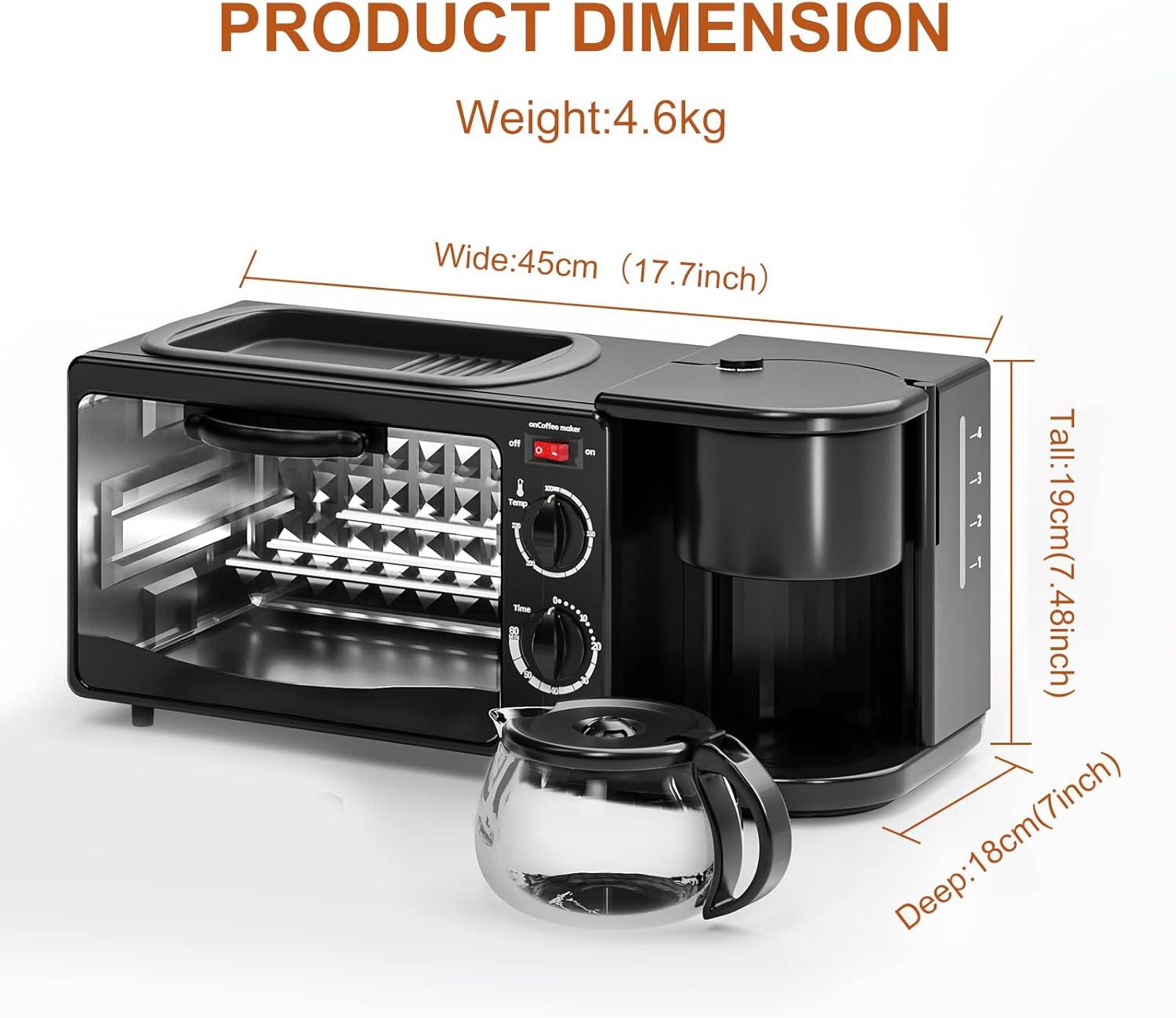
When you run your hand along the die‑cast grill,the first impression is weight and solidity: the metal feels dense under your palm,with a cool,almost inert temperature when the unit has been sitting.The surface itself is mostly smooth but not glassy — there’s a faint, fine‑grained texture from the casting and any non‑stick layer that makes your fingers glide rather than skid. As you move closer to the cooking ridges you’ll notice the raised profile of the griddle pattern, small steps your fingertips follow; the transitions at the edges are rounded rather than sharp, and where the metal meets the adjacent trim there’s a narrow seam or lip that your finger can detect as a subtle change in plane.
The plastic trim reads very differently under your hand: noticeably lighter, with a warmer, slightly softer feel. The finish tends to be matte and a bit grippy, so fingerprints don’t slide off as readily and the surface can feel a touch tacky compared with the metal. Thin sections of trim can have a little flex if you press, and you can feel molded details such as screw covers or vent slots under your fingertips. In everyday handling — picking the unit up, nudging it back on the counter, or wiping it after use — those textural differences become practical cues: metal for mass and thermal inertia, plastic for contour and give.
- Weight — die‑cast: dense; trim: light and yielding
- Finish — die‑cast: fine texture/smooth glide; trim: matte/grippy
- Edges & seams — rounded metal edges, detectable seam where materials meet
Finding a home for it in your kitchen: footprint, cord routing and how it shares bench space
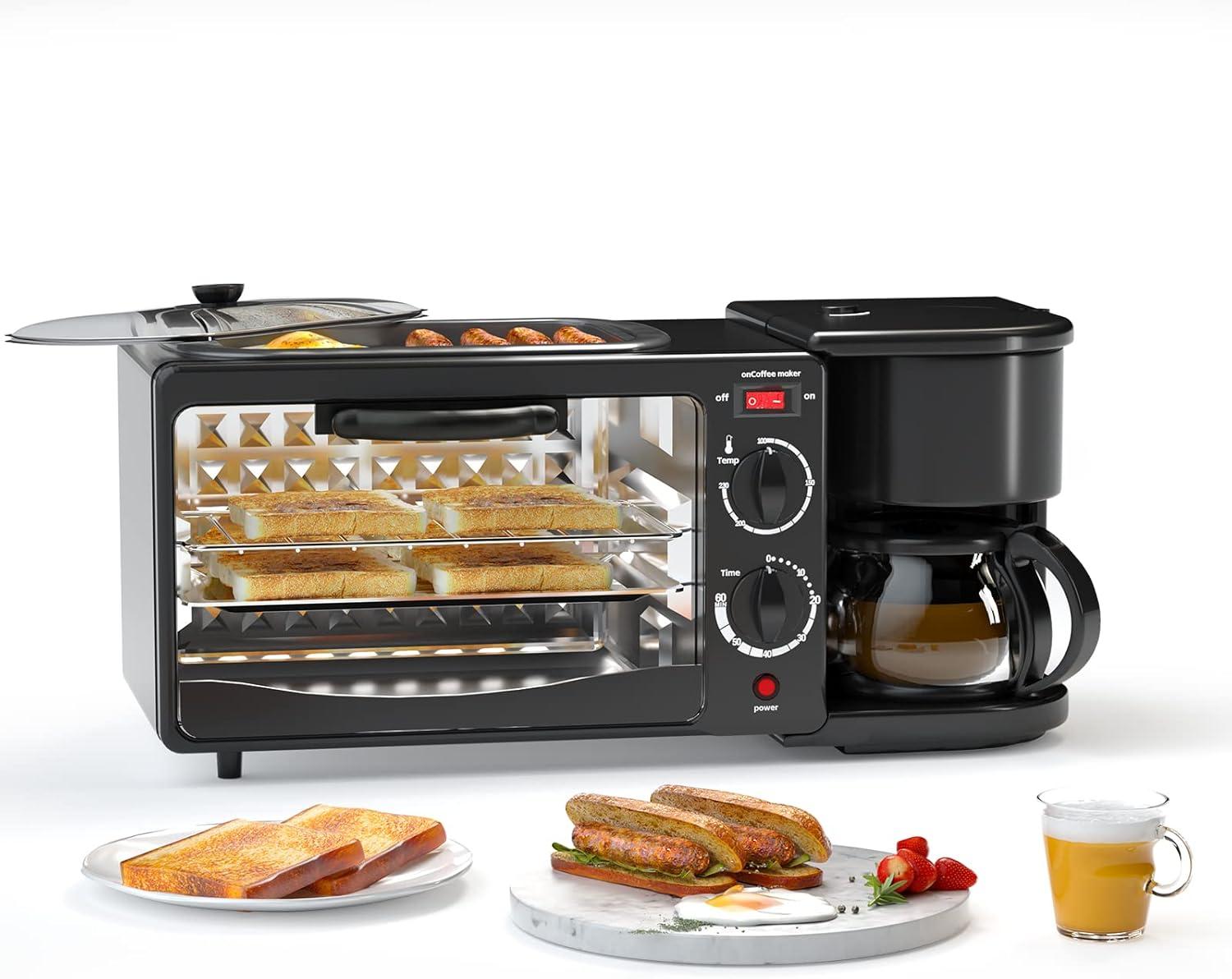
The unit settles on a stretch of counter like a compact appliance cluster rather than a narrow,surface‑only toaster.It needs a bit of forward-facing clearance when the tray or pan is being accessed and a few inches of breathing room at the back so the plug and any heat can dissipate without pressing up against a wall. Cord routing tends to be straightforward: the lead comes out of the rear and is long enough to reach a nearby outlet,but it can feel awkward if the only socket is directly behind a tall backsplash or cupboard. In everyday use the presence of the machine slightly redefines the surrounding work area — plates, a knife and a coffee cup frequently enough migrate to the adjacent section while cooking is happening, and occasional nudges to the arrangement are normal.
- clearance — allow front access for loading and unloading; back clearance helps with ventilation and plugging in.
- Cord routing — rear exit means the nearest outlet determines lateral placement; the cord can be tucked along the back edge when not in use.
- Shared bench space — the adjacent bench becomes an active staging area during use and for routine wiping after cooking.
| Bench scenario | Practical placement note |
|---|---|
| Small galley counter | Placed near an outlet with room in front; may require shifting other items temporarily. |
| Under cabinets | Allow a little extra height and rear clearance to avoid crowding the cabinet face. |
| Island or open bench | works well with easy access on all sides but will occupy a visible, central spot. |
The product listing with full specifications and configuration details can be examined here.
From toast to eggs to coffee: how you move between each function during a rushed breakfast
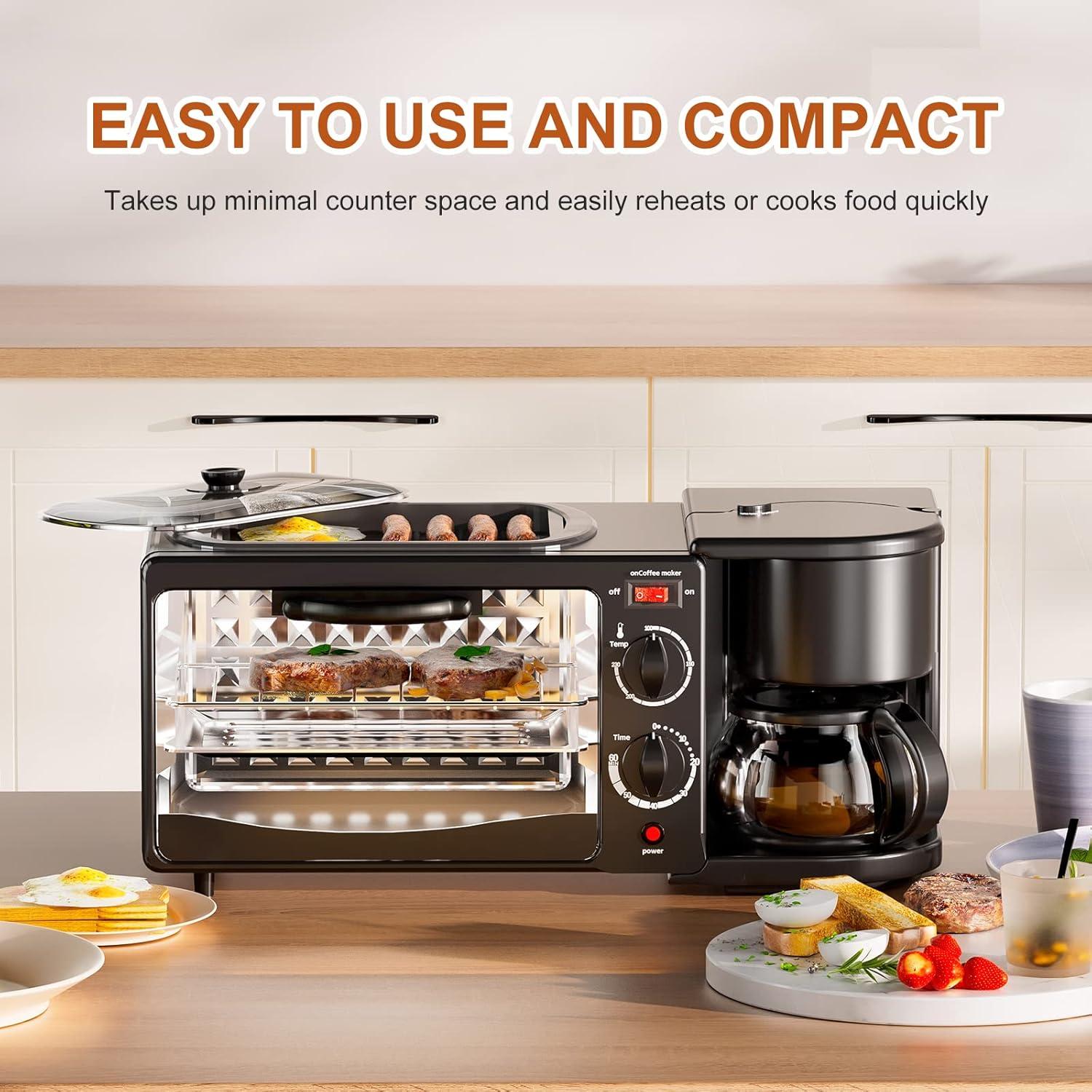
On a rushed morning you tend to choreograph actions around what finishes first rather than following a strict sequence. Frequently enough the coffee gets the earliest start and hums away while you sort bread and eggs; the smell rising lets you time the other tasks without watching every control. If you’re juggling more than one burner on the griddle, you’ll find yourself rotating food and nudging items into different zones as things brown at different rates — a quick glance at the surface tells you when to lift the toast or slide the pan aside. Common morning patterns you fall into include:
- Start the coffee, then prep food: coffee goes on, you prep eggs; by the time the carafe is full, you’re flipping bacon.
- Toast first,then finish on the griddle: bread goes in,you use its few minutes to fry an egg or warm sausage.
- All at once when time is tight: everything runs concurrently and you shuttle utensils between surfaces, checking doneness in short bursts.
The handoffs between functions are less about buttons and more about small habits: keeping a spatula within reach, watching a steam plume, or pausing to tip a slice so the other side browns evenly. You notice tiny trade-offs in that rhythm — pans can get crowded and you sometimes clear a corner mid-cook to make space, or you snag the carafe while the griddle is still hot and set it down on a nearby cloth. Cleaning and upkeep are woven into that same tempo: crumbs and grease appear as part of the scene and you adjust your motions around them rather than treating them as a separate task, so the whole sequence feels like a single, slightly rushed routine.
How this appliance stacks up against your morning needs and where practical limits appear
On a typical morning routine the appliance tends to consolidate several tasks that would or else run separately, so breakfast components frequently enough come together without constant attention. Coffee brews while bread browns and the griddle warms, which reduces the number of trips between countertop and stove. Observed trade-offs appear when timings for different items don’t line up exactly; eggs or bacon that finish faster may need a brief hold or a quick flip to avoid overcooking, and larger batches require staging rather than truly simultaneous cooking. The combination of functions shows up in practical use as a single workflow punctuated by small adjustments, for example:
- coffee: comes up hot alongside the rest but the glass carafe size limits continuous pouring during a busy run.
- Toasting/oven baking: produces consistent results for a few slices at once; handling more than a small group means running a second cycle.
- Griddle/grill items: cook quickly but may need repositioning to keep even browning across the surface.
Routine upkeep appears as part of living with the unit rather than an occasional chore — grease and crumbs congregate where the cooking areas meet, so wiping and repositioning trays tend to be built into breakfast rhythm. Warm-up and cool-down intervals can interrupt back-to-back preparations on the same morning, and countertop placement matters as moving the unit during a run is inconvenient.The following table captures common morning tasks and where practical limits typically show up:
| Morning task | Practical limit observed |
|---|---|
| Preparing multiple hot items at once | Works for small volumes; larger quantities usually need an extra cycle |
| Brew-and-cook simultaneous workflow | Coffee availability during a cook cycle is finite; topping up disrupts the sequence |
| Quick weekday turnarounds | Small timing mismatches meen occasional plate juggling or quick reheats |
view full specifications and current listing details
After the meal — taking it apart, wiping surfaces and stowing trays in your cabinets
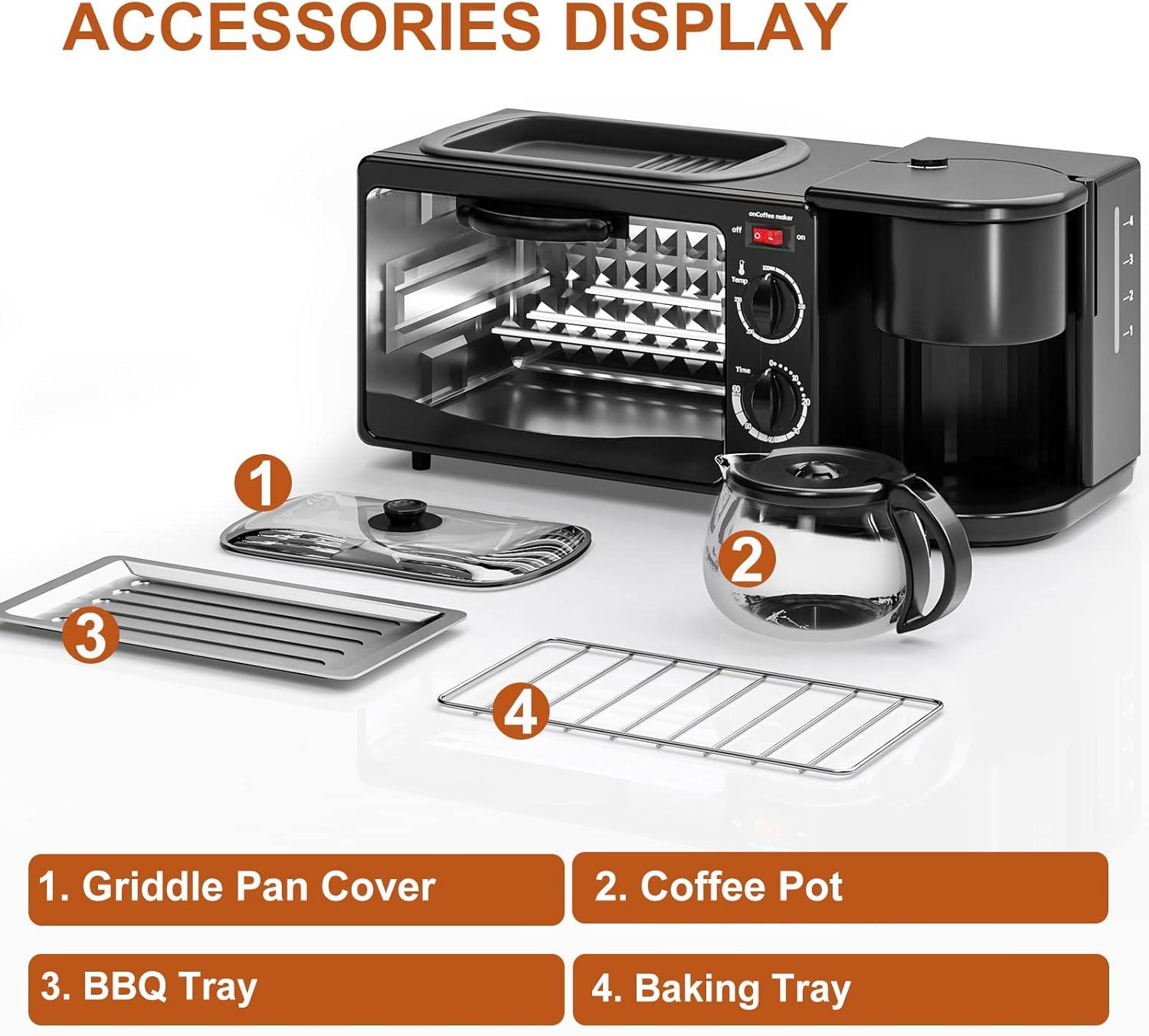
When the meal winds down you tend to leave the whole unit to cool for a few minutes, then lift out the removable bits in whatever order feels natural — the griddle or frying pan, the wire rack and the toast tray, the little crumb catcher underneath.Those pieces often still carry a sheen of oil or tiny egg bits, and the glass carafe will usually have a ring from the coffee. You wipe the main housing with a damp cloth and a quick pass across the control panel, feeling for any stubborn crumbs along the seams; the nonstick surfaces wipe differently from the painted housing and can feel slick under your hand. Rinsing or giving a quick scrub to the griddle and carafe usually happens at the sink right after wiping, though sometimes you let the filter sit to cool and rinse later if you’re juggling dishes.
Putting everything away becomes part of the routine: trays and the wire rack often stack or nest, the carafe goes upright in a cabinet, and the reusable filter slips into a drawer or stays beside the sink. You tend to tuck the power cord away with a loose coil rather than wrapping it tightly, and the crumb tray often ends up nearest the front so it’s easy to grab next morning. A short checklist you might run through before closing the cabinet is helpful to keep things tidy:
- Crumb tray — emptied and dry
- Griddle/pan — wiped and nested with trays
- Carafe & filter — rinsed and stored upright
| Part | Typical storage spot |
|---|---|
| wire rack & baking tray | Stacked inside a shallow cabinet shelf |
| Nonstick griddle/pan | Nested with trays or laid on a shelf towel |
| Glass carafe | Upright in a cabinet or on a counter cubby |
Its Place in Daily Routines
Over weeks of mornings it finds a modest corner on the counter, less an appliance in a box than a habitual part of how the day begins. The Breakfast Station, toaster with Frying Pan, Portable Oven Breakfast maker with Coffee Machine, Non Stick Die Cast Grill/Griddle for Bread Egg Sandwich Bacon Sausages (Black) slides into the rhythm of small actions — a quick wipe, a scatter of crumbs, the quiet timing of coffee and toast.Edges show the faint wear of daily use, knobs ease under frequent touch, and the cooking surface keeps the soft, lived‑in traces that map routine meals rather than their specs. Over time it simply settles into routine.
As an Amazon Associate I earn from qualifying purchases. Amazon and the Amazon logo are trademarks of Amazon.com, Inc, or its affiliates. All images belong to Amazon